You can convert your living room into a bedroom by placing a quality sofa bed or wall bed against your main wall, then using tall bookshelves or folding room dividers to create a distinct sleeping zone.
Layer your lighting with bedside lamps and dimmable overheads for privacy control.
Add storage ottomans and nesting tables to hide blankets and pillows, keeping clutter minimal.
The key is honest space measurement and furniture that actually supports sleep—not just looks good.
Stick around to discover specific arrangement strategies that work.
[link-whisper-related-posts]Assess Whether Your Living Room Can Double as a Bedroom
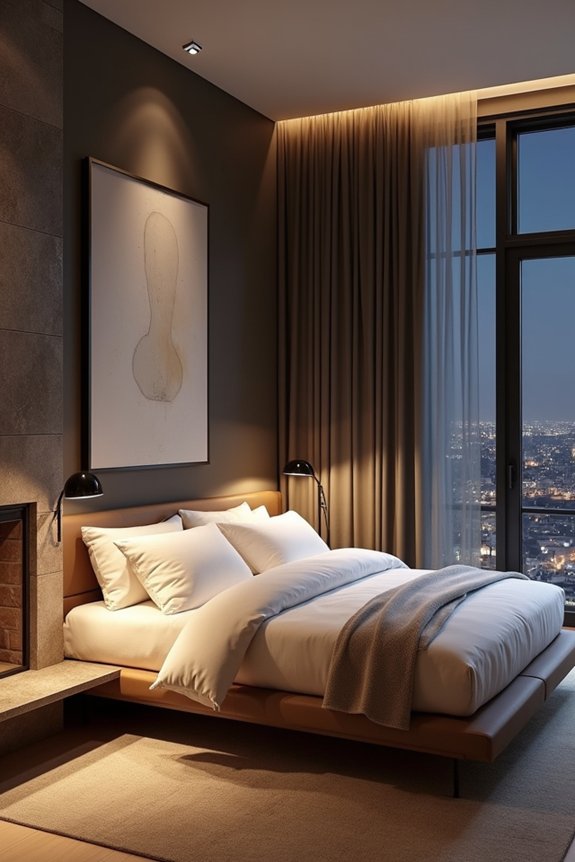
How can you know if your living room has what it takes to pull double duty? Start by measuring your space honestly. You’ll need enough square footage to accommodate both living and sleeping zones without feeling cramped. Consider your room’s layout, natural light, and existing furniture.
Next, think about multifunctional furniture options like sofa beds or wall beds that work efficiently in your space. These pieces let you reclaim floor area during the day. Evaluate whether space zoning works for your lifestyle—can you create distinct areas using rugs, shelving, or lighting?
Finally, assess reversible setups. Since you’re probably renting or wanting flexibility, confirm any changes are temporary and non-permanent. Ask yourself: Can I restore this room quickly if needed? If your answers feel positive, you’re ready to make your living room work as a bedroom.
Create Distinct Zones Without Building Walls
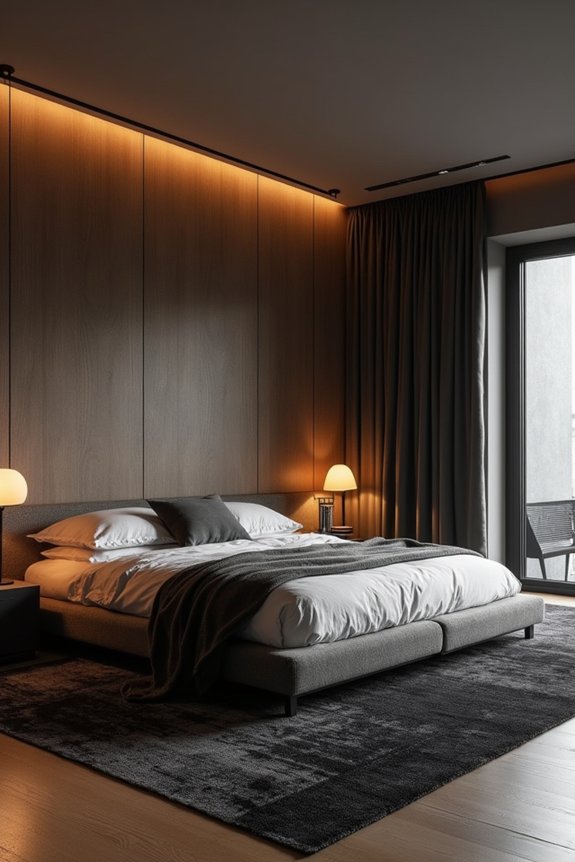
Why settle for one purpose when your living room can serve two functions elegantly? Zoning divides shared spaces effectively. A simple bookshelf becomes a practical tool—it creates visual boundaries while offering storage, making the room feel purposefully divided rather than cramped.
Curtains or sliding barn doors work well for non-permanent separation, giving you privacy without long-term commitment. If you’re space-conscious, loft beds with desks beneath maximize vertical space, freeing floor area for your living zone.
What works well: layering rugs, adjusting lighting, and using color contrast (lighter living areas, calmer sleeping zones) naturally defines spaces. Folding room dividers are practical too—they’re inexpensive, movable, and renter-friendly for daily adjustments.
You’re creating distinct zones that feel deliberate and personal, not improvised.
Choose Multifunctional Furniture That Actually Works
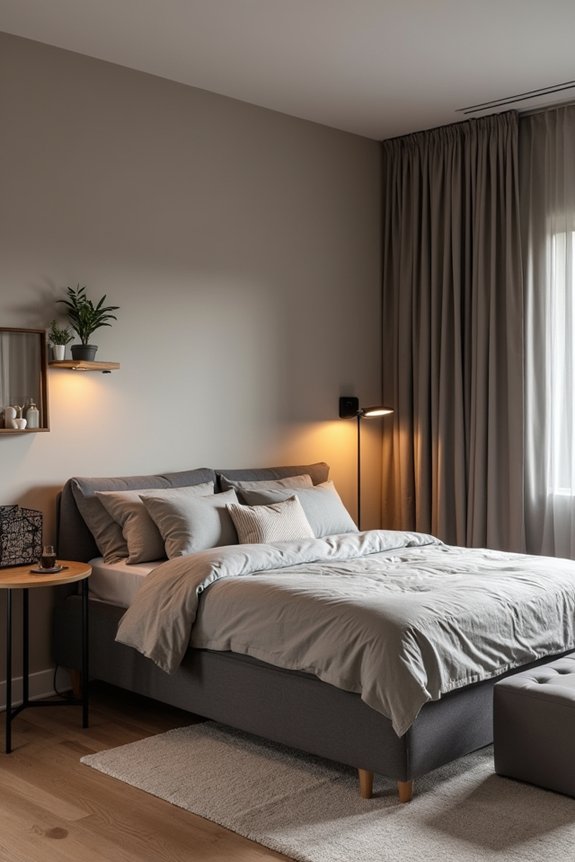
When you’re living in a space that pulls double duty as bedroom and living room, you can’t just grab any sofa bed from the first store you visit—I learned this the hard way after a lumpy futon disaster. You’ll want to invest in pieces with actual quality mattresses and built-in storage, like a wall bed with shelving or a storage ottoman that doubles as seating, because comfort during sleep matters just as much as style during the day. The real benefit comes when you choose furniture that reconfigures easily for guests or work needs, letting you shift your room’s whole vibe without feeling cramped or exhausted.
Prioritize Quality Sleep Support
The right furniture can genuinely turn your living room into a comfortable bedroom—and I’m not just talking about throwing a blanket over your couch. I’ve learned that investing in quality sleep support matters when your living room doubles as your bedroom. A high-quality sofa bed or storage bed with a full mattress prevents you from waking up with back pain. Look for options with proper padding that reduces motion transfer, so you sleep soundly every night.
| Furniture Type | Best Feature | Daily Comfort |
|---|---|---|
| Sofa bed | Easy transition | Excellent support |
| Storage bed | Hidden organization | Quality mattress |
| Bed-in-a-sofa | Space-saving design | Motion control |
Choose furniture with warranties guaranteeing durability. Your sleep deserves that commitment.
Versatile Furniture for Dual-Use
How do you fit a bedroom and living room into one space without feeling cramped? The answer lies in choosing furniture that pulls double duty.
I’ve discovered that sofa beds work well for this situation. They give you comfortable seating during the day, then convert into a genuine bed at night. If you want something even more space-efficient, murphy beds fold up against your wall when you’re not sleeping, freeing up lots of floor space for living.
Room dividers are helpful too. They create a distinct sleeping zone without permanent walls, letting you maintain that open, airy feeling. Pair these multifunctional pieces with tall shelving units to maximize vertical storage, and you’ll have adequate room to move around comfortably.
Comfort Over Style Choices
Why settle for a stylish couch that leaves your back aching after a week of sleeping on it? I’ve learned that mattress quality trumps appearance when your living room doubles as your bedroom. A solid sofa bed with genuine foam support beats trendy designs that sacrifice sleep. I recommend testing any piece you’re considering—lie on it for at least ten minutes to feel the difference.
Modular furniture gives you flexibility without compromising comfort. You can reconfigure sections to create distinct day and night zones while maintaining proper spinal support. I prioritize pieces combining storage with sleeping capability, like beds with built-in drawers beneath.
Your rest matters more than social media aesthetics. Invest in furniture that supports your body through nightly sleep cycles. You get both function and comfort.
Hide Clutter and Maximize Storage
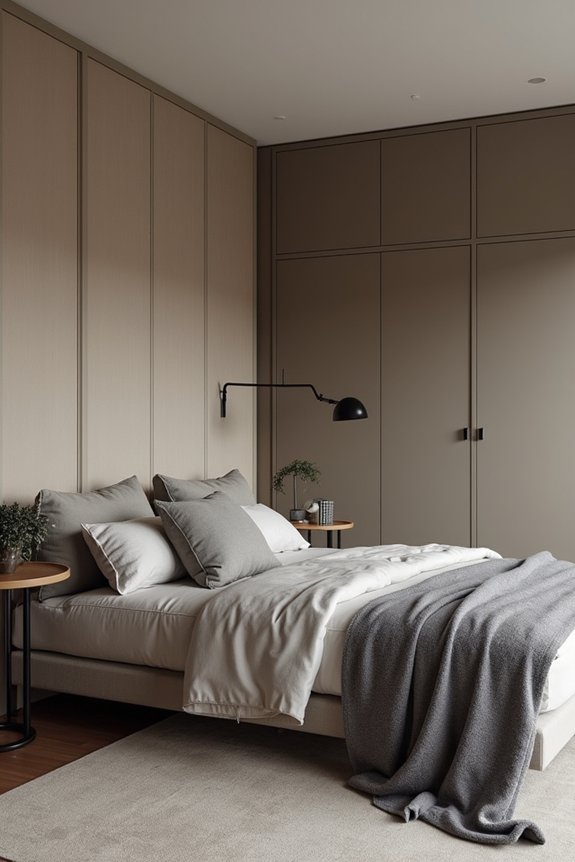
When you’re living and sleeping in the same room, clutter doesn’t just pile up—it takes over, turning your peaceful retreat into a chaotic storage unit. I’ve learned that smart storage solutions make your space functional and calm.
| Storage Solution | Space Saved | Hidden Items |
|---|---|---|
| Vertical bookcases | 40% floor area | Books, decor |
| Under-bed containers | Full floor reclaim | Seasonal clothing |
| Storage ottomans | Dual function | Blankets, pillows |
| Wall-mounted shelves | Zero footprint | Personal items |
| Lofted bed | Maximum recovery | Documents, luggage |
Multifunctional furniture like sofa beds and storage ottomans work double duty—they’re practical and attractive. Sliding doors or curtains create hidden zones that visually divide your room while keeping belongings out of sight. I maintain daily reset routines with labeled containers, which helps me transition smoothly between living and sleeping modes. You’ll find that organizing strategically makes everything feel more manageable and welcoming.
Layer Lighting and Dividers for Privacy
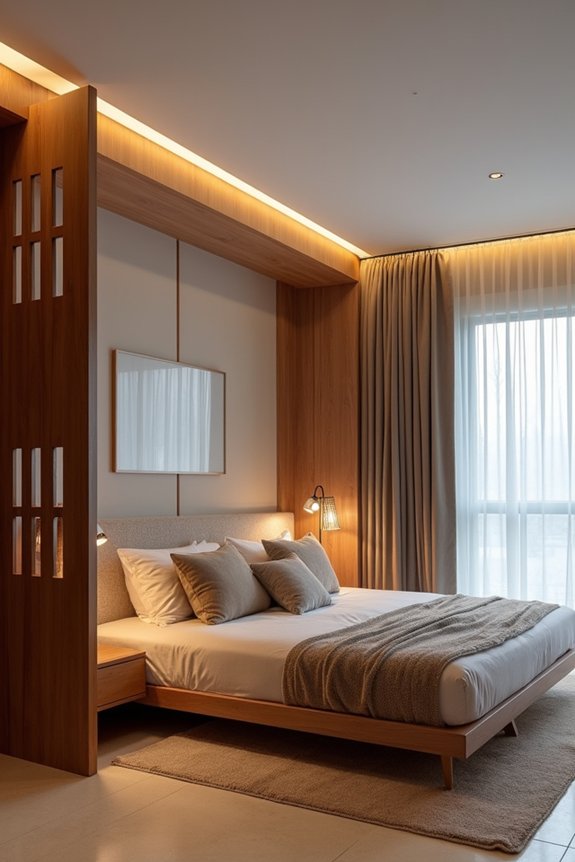
Creating distinct zones in a combined living-bedroom takes more than just furniture arrangement—it’s about layering your lighting and strategically placing dividers to carve out privacy without closing off your space. Bedside lamps, floor lamps, and dimmable overhead lights work together to signal where sleeping happens. A room divider or folding screen creates that visual boundary while keeping your space feeling open. Curtains or sliding doors offer flexible privacy—draw them when you’re ready to sleep, open them when you want the area to breathe. Consider adding a bookshelf as a lightweight divider; it stores your stuff while letting light and sightlines flow through. Rugs anchor each zone too, making the separation feel natural and planned.
Arrange Furniture for Comfort and Function
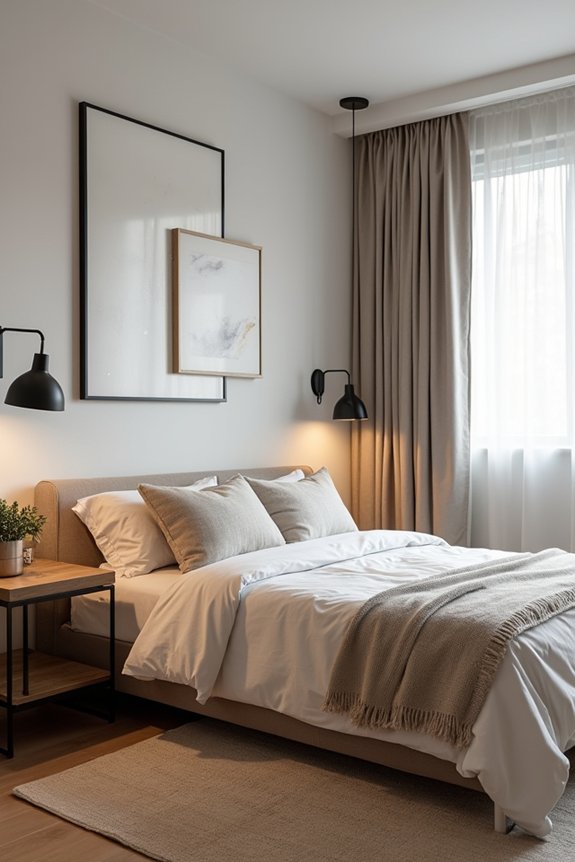
Now that you’ve set up your lighting layers, it’s time to position your furniture so it actually works for both sleeping and living. Start by placing your multifunctional piece (like a sofa bed or daybed) as the anchor, then arrange a compact desk or shelving unit perpendicular to it to create a natural zone without needing walls. This layout gives you a clear sleeping side and a functioning living side, all within the same room.
Layout Zoning Without Walls
How do you separate a bedroom from a living room when walls aren’t an option? Smart zoning allows you to divide cramped spaces into functional areas. Room dividers like folding screens create visual boundaries without permanent construction. A sofa bed serves double duty—seating by day, sleeping surface by night. Position these elements strategically to define each zone’s purpose.
| Method | Purpose | Best For |
|---|---|---|
| Folding Screens | Visual Separation | Quick, Moveable Dividing |
| Sofa Bed | Dual Function | Space-Saving Sleeping |
| Open Shelving | Storage + Division | Added Organization |
| Lighting | Perceptual Zones | Ambiance Control |
Combine these techniques—pairing room dividers with distinct lighting and rugs—to create psychological separation. You’re not just arranging furniture; you’re designing a space that balances your social and private needs.
Multifunctional Furniture Placement
What’s the best approach to making a living room function as a bedroom without major renovations? You’ll want to strategically place multifunctional furniture that serves multiple purposes. Here’s how I’d approach space optimization:
- Position a sofa bed against the main wall, anchoring your living zone during the day
- Add a room divider or tall bookshelf to carve out a distinct sleeping area
- Use storage ottomans that hide blankets and pillows underneath
- Place nesting tables that tuck away when you need floor space
- Install a wall bed if you’re serious about maximizing square footage
Success comes when you arrange pieces that shift easily between configurations. I’ve found that keeping pathways clear and allowing natural light to reach both zones makes the layout work well. You’re creating flexibility without sacrificing functionality.
Don’t Make These Common Mistakes
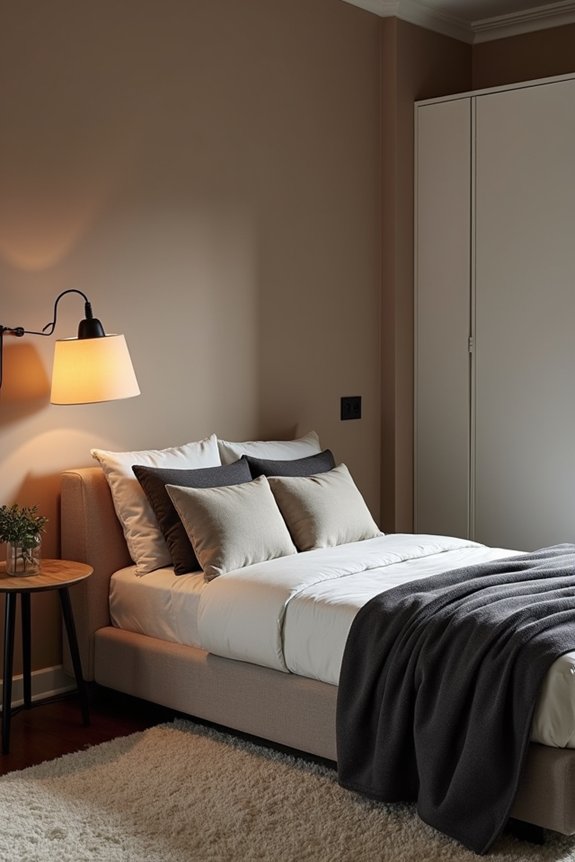
Converting a living room into a bedroom requires more than just moving a sofa and calling it a day. I’ve learned that certain mistakes can really undermine your comfort and the space’s function. First, don’t blur zones by keeping living room furniture like sofas in your sleeping area—you need a distinct bed as your anchor point. Second, avoid layouts where exterior doors open directly into your sleep space; this kills privacy and creates awkward traffic patterns. Third, resist overpacking with bulky multi-purpose pieces that suffocate your room and make moving around difficult. Fourth, skip flimsy movable partitions that won’t give you real visual or acoustic separation. Finally, don’t underestimate lighting. Install adequate bedside lamps and ambient options, plus consider sliding doors for privacy control. These choices matter for your sleep quality and daily peace of mind.