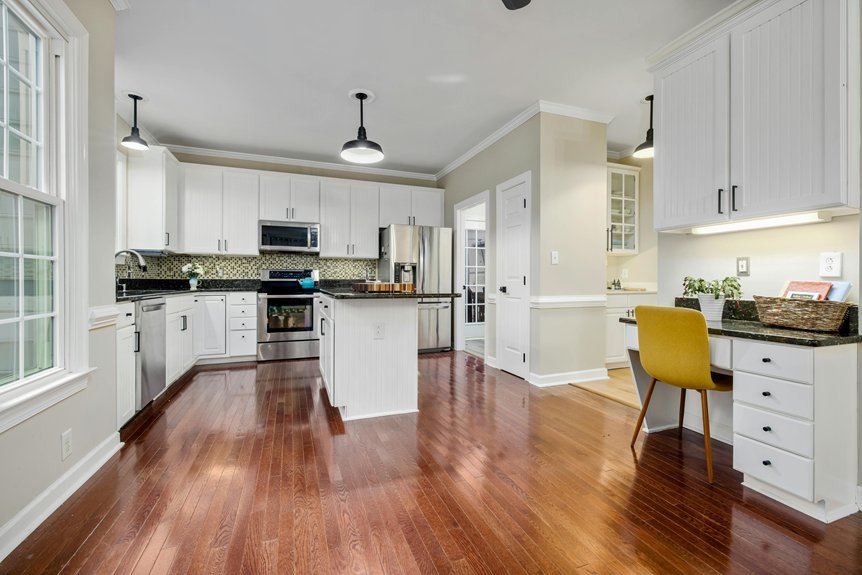
Kitchen desks aren’t fading because they solve how you actually live now. They carve focused work zones into open kitchens without sacrificing cooking space or connection to family. A 30-inch desk with integrated storage keeps clutter separate from meal prep, while warmer woods and bronze hardware add visual intention rather than appearing tacked-on.
Scale matters—match your island proportions and countertop height at 36 inches for visual continuity. The real staying power comes from personalized designs that age well and outlast seasonal trends, with more details ahead about getting yours right.
[link-whisper-related-posts]Kitchen Desks Bridge the Work-From-Home Reality
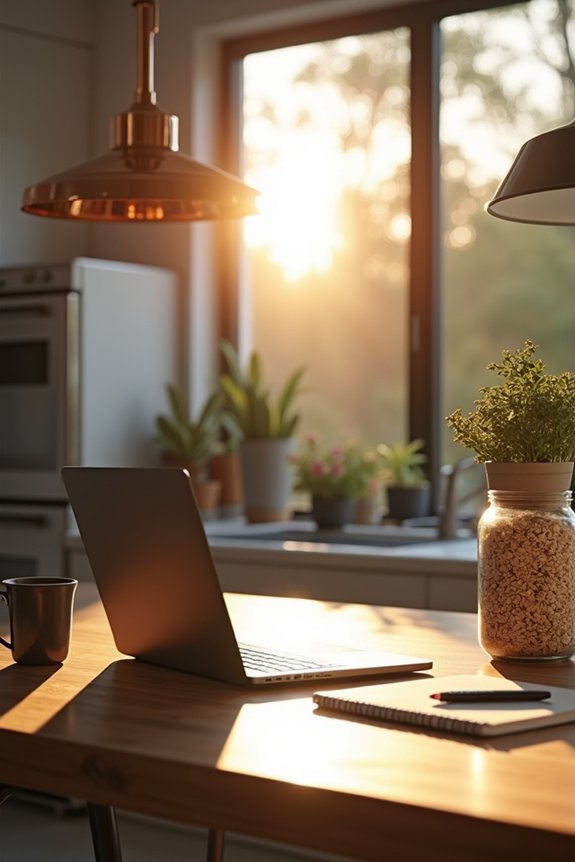
How’re you managing work calls while dinner’s simmering on the stove? That’s the reality many of us face now. Kitchen desks aren’t just trendy—they’re practical solutions for the work-from-home lifestyle that’s here to stay.
By integrating a dedicated desk into your kitchen, you’re creating a purposeful workspace that doesn’t sacrifice cooking functionality. Unlike sprawling open-plan layouts that blur boundaries, a compact desk area gives you focus during video conferences while keeping you connected to family life.
Think of it as smart design: a pass-through work surface or corner desk maintains natural light and openness while establishing clear separation between professional tasks and meal prep. You’re not choosing between work or cooking—you’re doing both efficiently in one connected space.
Hybrid Routines Demand Flexible, Accessible Workspace
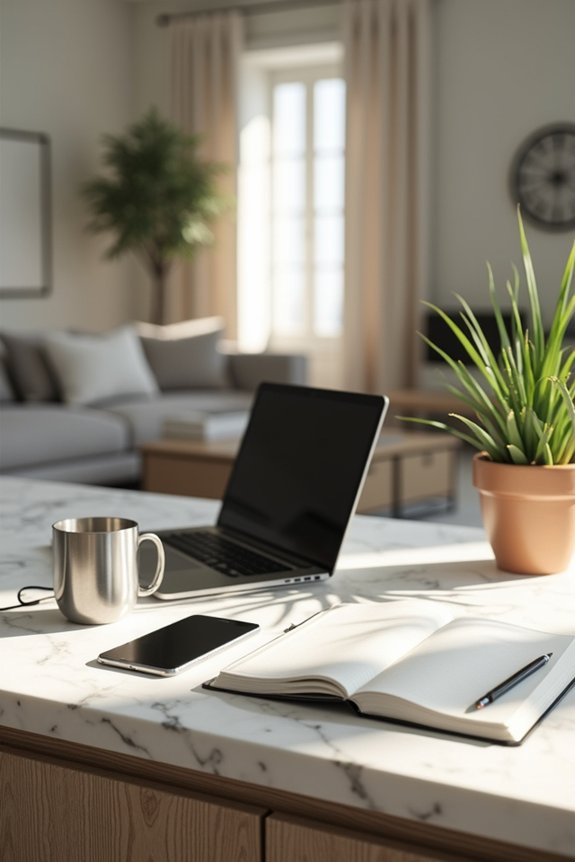
When does your kitchen desk actually need to work hardest—during that morning standup or while you’re prepping lunch? That’s exactly why hybrid routines demand flexible workspace solutions. Your kitchen can’t choose between being a work zone and a cooking space anymore; it needs to be both at the same time.
Broken-plan layouts preserve light and connection while carving out defined areas for focus. Strategic partitions—think low shelving or subtle room dividers—create separate corners without sacrificing openness. You get privacy for concentrated work, then naturally transition to social cooking without major reconfiguration.
This flexibility addresses real noise concerns too. Your family’s lunchtime prep won’t derail afternoon video calls. Your flexible workspace adapts to whatever your day demands, letting you participate fully in both work and home life within one evolving kitchen environment.
Kitchen Desks Reduce Visual Clutter and Support Daily Workflow
Where does all your stuff actually belong in a kitchen that’s constantly switching between work mode and cooking mode? Kitchen desks answer this question effectively. They create a dedicated zone for meal planning, paperwork, and charging devices—keeping visual clutter away from your prep area. When your papers, pens, and phone live on a desk instead of scattered across counters, your kitchen functions better.
This separation changes how kitchens work. Your cooking zone stays focused on actual cooking, while your desk handles the administrative side of feeding yourself and your family. A well-placed desk integrates with storage, minimizing mess while boosting efficiency. You’re not sacrificing openness either; modern designs maintain that light, connected feeling while giving everything—and everyone—their proper place.
Integrated Cabinetry Creates Seamless Design Flow
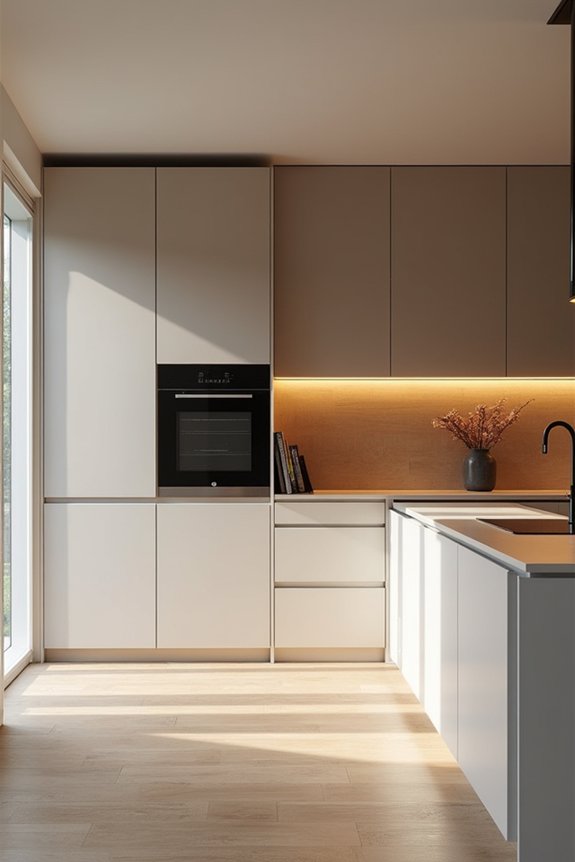
Most kitchen desks work best when they’re not fighting for visual attention, and that’s where integrated cabinetry becomes your advantage. When you align your desk storage with surrounding walls and finishes, you give your space room to exist naturally. A unified design creates a calm feeling—like everything belongs together rather than competing for notice.
Integrated cabinetry hides hardware and blends panels to match your kitchen’s materials, whether that’s shiplap, paint, or stone. This approach moves your workspace from an intrusive element into part of the overall design. You’re not just organizing papers and supplies; you’re building a kitchen that demonstrates thoughtful planning and careful attention to detail. That kind of design consideration makes both function and appearance work without strain.
How Kitchen Desks Carve Out Focused Work Zones in Open Plans

How do you stay focused on bill-paying or remote work when your kitchen’s cooking action is happening just ten feet away?
A strategically placed desk carves out your own focused zone without destroying that open-plan feel you value. You’re creating what I call a “broken-plan” approach—light and connection stay intact while you get a legitimate work nook away from the main cooking activity.
| Zone Type | Distance | Benefit |
|---|---|---|
| Desk Area | 8-12 feet | Reduces cooking distractions |
| Pass-through | Open sightline | Maintains visibility |
| Cabinetry | Strategic placement | Defines boundaries |
| Lighting | Dedicated task light | Supports focus |
Your kitchen desk isn’t fighting against openness; it’s working with it. Strategic cabinetry and thoughtful placement preserve airflow and sightlines while giving you exactly what you need: a designated spot where work actually happens.
Hidden Storage Keeps Clutter Out of Sight
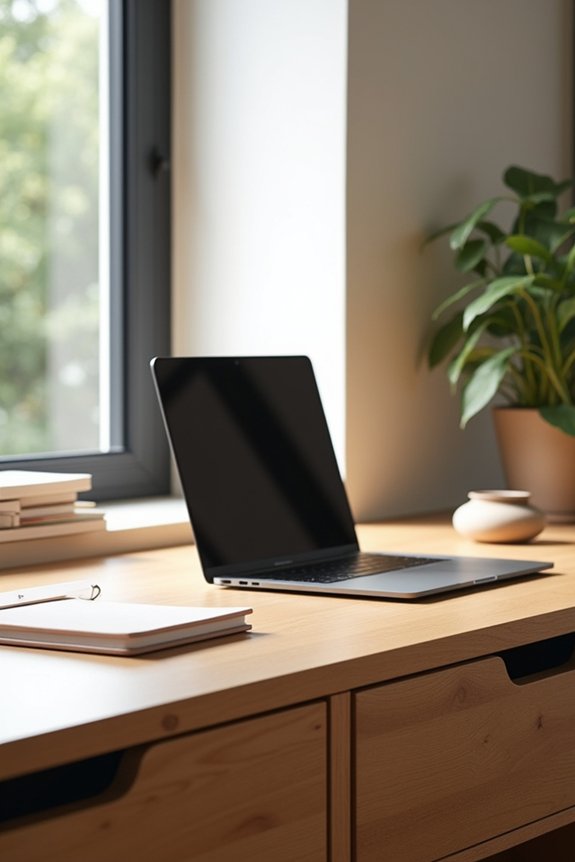
Now that you’ve carved out your focused work zone, you’ll notice something: stuff accumulates fast. Your desk needs breathing room, and that’s where hidden storage becomes useful. I’ve found that concealed pantries and pull-out organizers keep gadgets and bulk items tucked away, preventing visual clutter from building up in your kitchen space.
The benefit comes when you prioritize what stays visible. Integrated appliances and drawer-based solutions handle the items that’d otherwise pile up on counters. You’re not sacrificing function—you’re protecting it. Hidden storage means your workspace stays clean and organized, supporting the focused work your desk demands.
This approach aligns with what many people want post-pandemic: controlled environments that feel calm, not cluttered. Your kitchen desk works better when surrounded by restraint, not exposed mess.
Kitchen Desk Materials: Warmer Woods and Textured Finishes
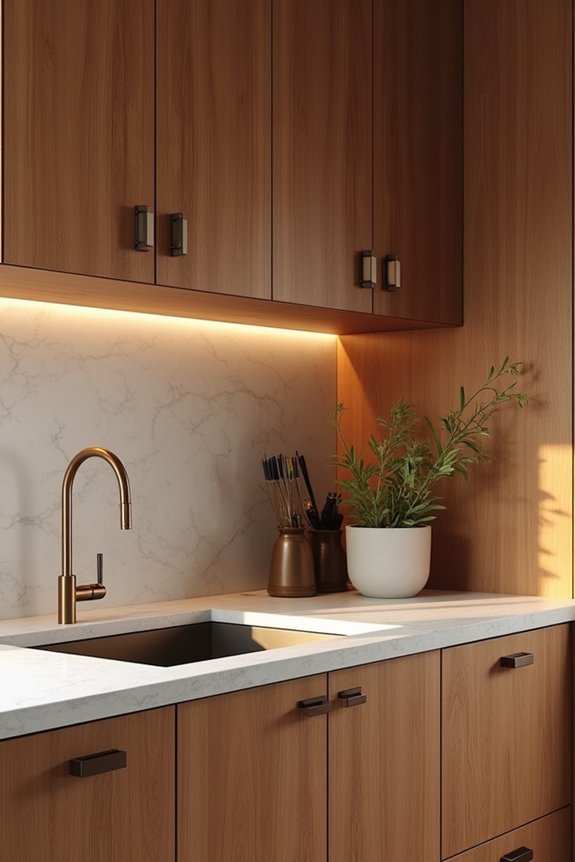
If you’ve noticed kitchens looking less clinical and more inviting lately, you’re onto something—the shift toward warmer woods and textured finishes is reshaping how we design our desk zones. I’m talking about moving away from those stark white and grey palettes that dominated a few years ago, swapping them instead for rich walnut, oak, or reclaimed wood that works well as a functional surface. When you layer in bronze hardware and three-dimensional surfaces with natural patina, you’re creating a thoughtful, lived-in look that makes your kitchen desk feel like a genuine workspace rather than an afterthought.
Warmth Through Natural Woods
Why’ve kitchen desks stayed so stubbornly minimal and cool-toned for the past decade? I think we’re finally ready for something warmer. Natural wood brings a lived-in feeling that stark white oak can’t match. Walnut, darker woods, and eucalyptus offer richness that makes your desk feel like it belongs in your kitchen, not a showroom.
I’ve noticed these natural-wood options pair beautifully with curved edges and textured details—think brass accents or reclaimed surfaces. They’re intentionally imperfect, which somehow makes them feel more real. This warmth isn’t just about how it looks; it’s about creating a space where you actually want to work and gather. Your kitchen desk becomes an anchor point, welcoming you home instead of looking clinical.
Texture and Layered Finishes
Beyond choosing the right wood, what really matters for a kitchen desk is how you finish it—and I’m not talking about a single coat of stain. Layered finishes create depth and character that flat surfaces simply can’t match. You’re building texture by mixing materials: brass hardware patinas alongside reclaimed wood, fluted panels catching light differently throughout the day.
| Material | Texture Type | Visual Impact | Warmth Level |
|---|---|---|---|
| Reclaimed Wood | Natural grain | High depth | Very warm |
| Brass Hardware | Aged patina | Medium shimmer | Warm |
| Fluted Panels | Dimensional ridges | Dynamic shadows | Moderate |
| Irregular Tiles | Uneven surface | Organic feel | Warm |
This approach creates a desk with presence—surfaces that shift and respond with time rather than staying static and predictable.
Bronze Hardware Complementing Surfaces
Once you’ve settled on your wood choice and layered your finishes, bronze hardware becomes your tool for pulling the whole look together. I’ve found that bronze hardware makes kitchen desks feel like carefully considered spaces. When you pair warm bronze pulls and handles with patinated wood surfaces, the metals catch light differently, creating depth that flat finishes simply can’t achieve. This approach moves you away from predictable stainless steel toward something richer, more deliberate. Bronze works beautifully against lighter woods too, offering those sophisticated contrasts that make your desk feel collected rather than matchy. The textured finishes you’ve already chosen suddenly have a companion that strengthens them. You’re not just selecting hardware; you’re completing a narrative about taste and thoughtfulness in your kitchen space.
Kitchen Desk Proportion: Getting Scale Right for Your Space
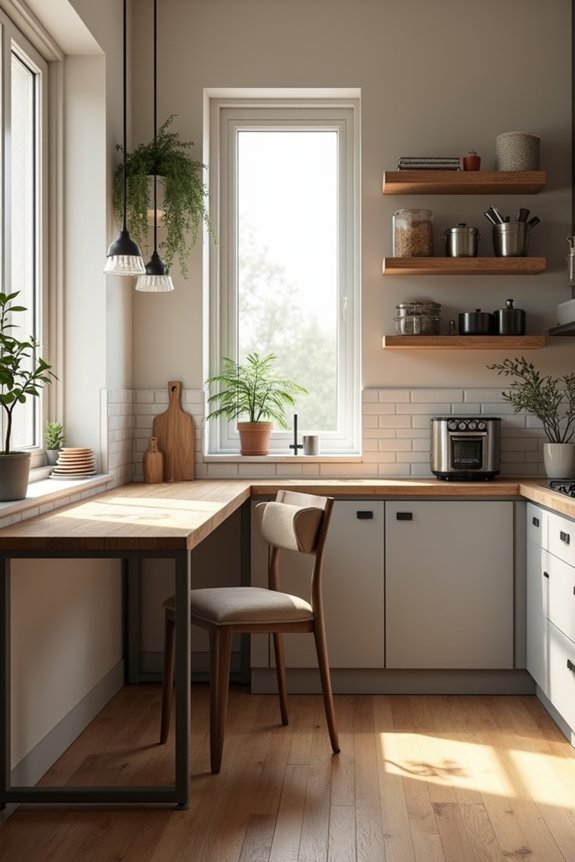
Getting your kitchen desk’s size just right is one of those design moves that affects how your space feels and functions. I’ve learned that proportion matters in design—your desk should scale with your island and cabinetry, not overpower them. Think about your kitchen’s total square footage first. A compact galley kitchen? A 24-30 inch desk works well. Larger open-plans can handle 36-48 inches comfortably. The desk height should match your countertops at 36 inches, creating visual continuity. Consider your workflow too. Position it away from cooking zones so you’re not bumping elbows while someone’s prepping dinner. When everything’s properly proportioned, your desk becomes an intimate zone that enhances airiness rather than eating up valuable real estate.
Curated Kitchen Desk Details Over Formulaic Design
Why do so many kitchen desks feel like they’re checking boxes instead of telling a story?
Most kitchen desks check boxes. The best ones tell a story.
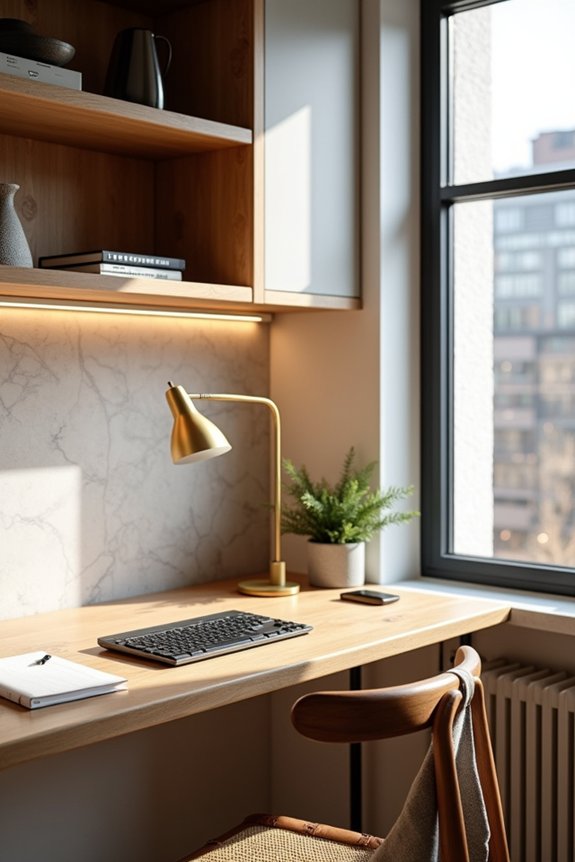
I’ve noticed that bespoke desks—ones with real thought behind them—stand apart. Instead of defaulting to flat white oak or sterile grey, you’re mixing warmer woods with deliberate metal finishes. That’s where the work shows.
Details matter more than trend-chasing. A textured brass pull, a live-edge shelf, or subtle three-dimensional surfaces create depth that photographs can’t fully convey. These aren’t afterthoughts; they’re purposeful choices that make your desk feel lived-in and genuine.
When you embed storage, adjust worksurface depth, and define task zones with consideration, functionality becomes beautiful. Your desk stops being furniture and becomes part of how you actually live.
Why a Personalized Kitchen Desk Beats Following Trends
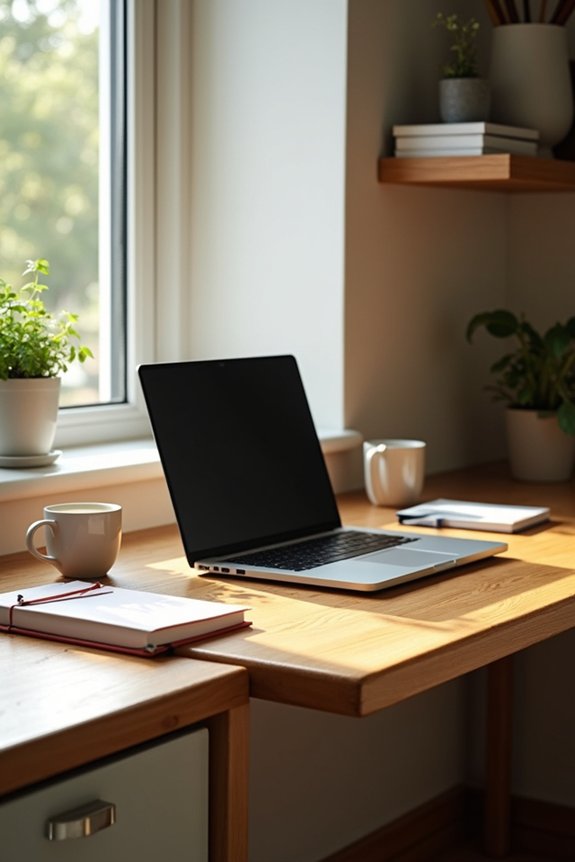
How many times have you scrolled through design feeds and felt the pull to copy what everyone else is doing? I get it. But here’s what I’ve learned: chasing trends exhausts you. A personalized workspace actually wins long-term. Instead of swapping out your kitchen desk every season, invest in durable design pieces that reflect *you*—natural wood finishes, warm textures, authentic materials that age well. Forbes nails this: legibility and function matter infinitely more than fleeting aesthetics. When you design around your actual needs—morning coffee while checking emails, afternoon study sessions—your desk becomes genuinely useful, not just a photo opportunity. Your personalized workspace tells your story. It’s durable, lived-in, and honestly? That’s far more beautiful than whatever’s trending this week. Your kitchen desk should work for you, not against the clock.