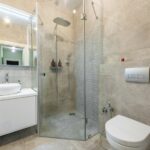
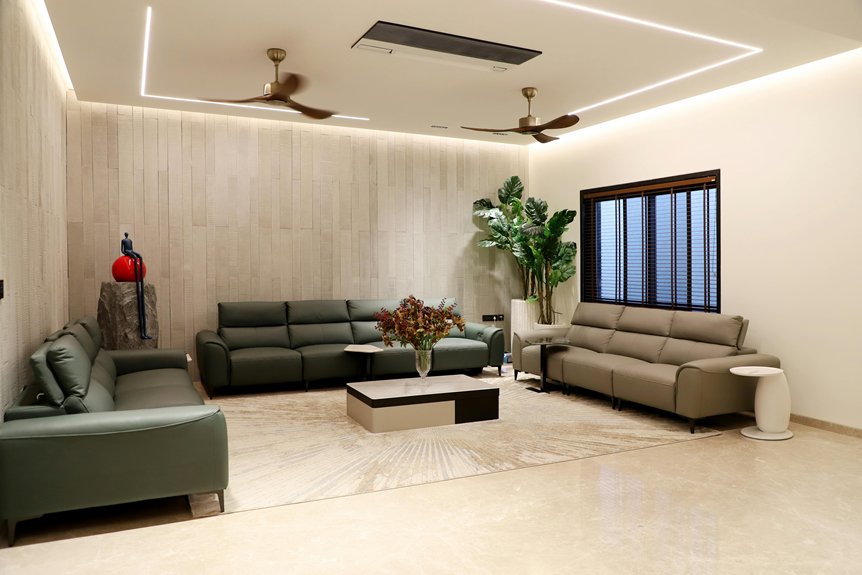
Minimalist interior design strips away everything unnecessary, leaving only items that serve a purpose or bring you joy. It centers on intentional living—think neutral palettes of whites and grays, clean lines, and natural materials like wood and stone. The goal is creating calm, uncluttered spaces that reduce stress and free up mental energy. Hidden storage and multi-functional furniture keep things organized without visual noise. It’s less about sterile perfection and more about purposeful choices that make your home peaceful.
[link-whisper-related-posts]What Is Minimalist Interior Design?
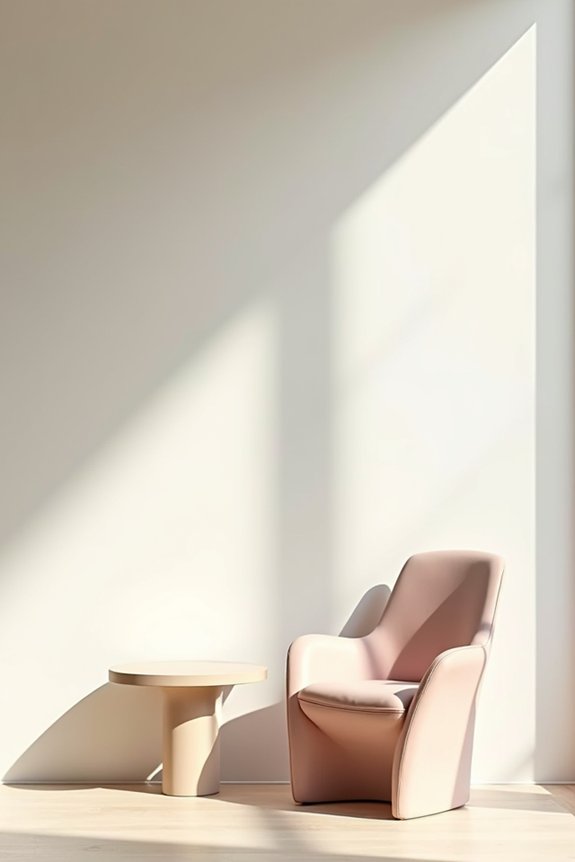
Ever wonder why some spaces feel calm while others make you want to escape? That’s minimalism at work. I’ve discovered it’s more than just owning less—it’s about creating uncluttered spaces that have room to breathe. Minimalism strips away everything unnecessary, leaving only what serves a purpose or brings you joy.
The approach features a neutral color palette of whites, grays, and soft beiges that soothe your mind. You’ll find functional furniture designed for living, not just looking pretty. Natural materials like wood and stone ground the aesthetic, while an open floor plan maximizes light and movement.
I’ve learned that minimalism isn’t about deprivation. It’s about intentionality. By surrounding yourself with essential items and clean lines, you’re joining a group of people who value clarity, purpose, and peace in their daily environments.
The Philosophy Behind Less Is More
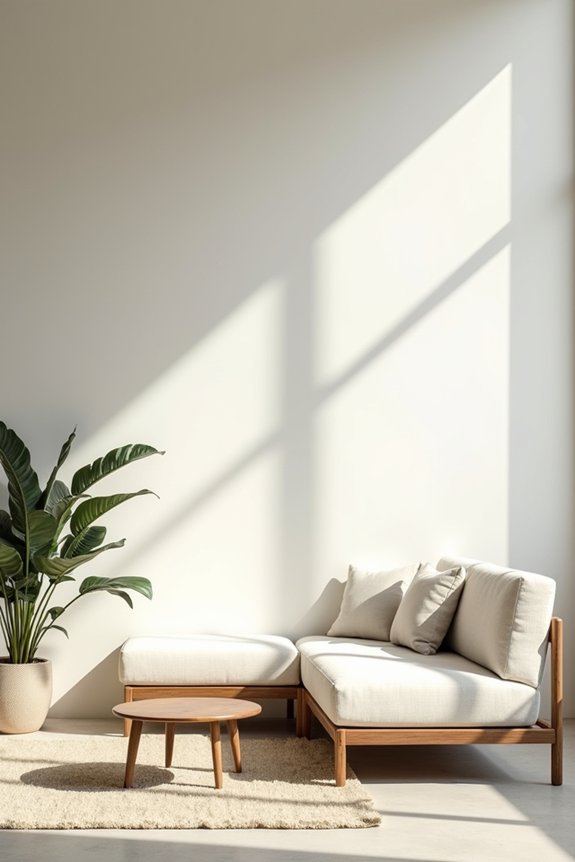
Why do we hold onto things we don’t really need? I’ve asked myself that question countless times while staring at my overstuffed closet. The philosophy behind minimalism changes how we think about our spaces and lives.
Minimalism centers on intentional living. Here’s what draws people like us to this approach:
- Reduced stress from visual clutter and fewer possessions
- Lower costs through mindful purchasing decisions
- More time for meaningful activities instead of organizing stuff
- Cleaner spaces that feel calm and welcoming
Key Characteristics That Define Minimalist Design
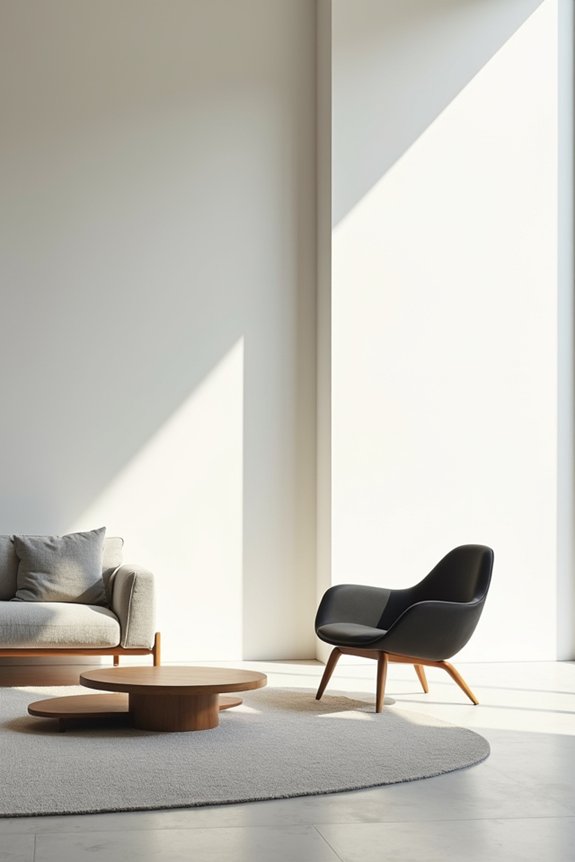
When I first explored minimalist design, I realized that clean lines and neutral color palettes aren’t just aesthetic choices—they’re the foundation that makes everything else work. You’ll notice how straight edges, unadorned surfaces, and shades of white, gray, and beige create a calm backdrop that lets your space function clearly, like a blank canvas ready for deliberate choices. These two characteristics work together to remove visual clutter, so your eye settles on what actually matters in the room.
Clean Lines And Simplicity
How’d you like to walk into a room and actually breathe? That’s what clean lines and simplicity deliver. I’ve found that when you strip away the unnecessary, you’re left with spaces that feel calm and work well for daily living.
Here’s what makes this work:
- Straight-edged furniture – unobtrusive pieces like platform beds and floating shelves that don’t distract
- Neutral color palette – whites, beiges, and grays that create visual quiet
- Uncluttered spaces – every item earning its spot through functional design
- Smooth surfaces – flat walls and flat-front cabinetry without patterns
When I removed decorative clutter from my own home, I noticed something shifted. The room felt bigger and calmer. That’s what simplicity does. You’re not sacrificing comfort; you’re building it through purposeful choices and honest design.
Neutral Color Palettes Matter
Now that we’ve talked about clean lines, it’s time to talk about the colors—or rather, the intentional lack of them. Here’s where neutral colors become your best friend. A monochrome palette using whites, beiges, and soft grays creates breathing room in any space. Natural materials like wood and marble work beautifully within this scheme, contributing warmth without demanding attention.
Texture variation plays an important role in the design. By layering different fabrics and finishes, you build depth that prevents spaces from feeling sterile. Think woven throws, smooth marble counters, rough stone walls—each element contributes to a calm atmosphere.
Lighting deserves consideration as well. Abundant natural light and thoughtful artificial lighting preserve that peaceful neutral atmosphere. You’re creating a sanctuary where form and material genuinely matter more than color ever could.
Why Minimalist Spaces Feel So Peaceful
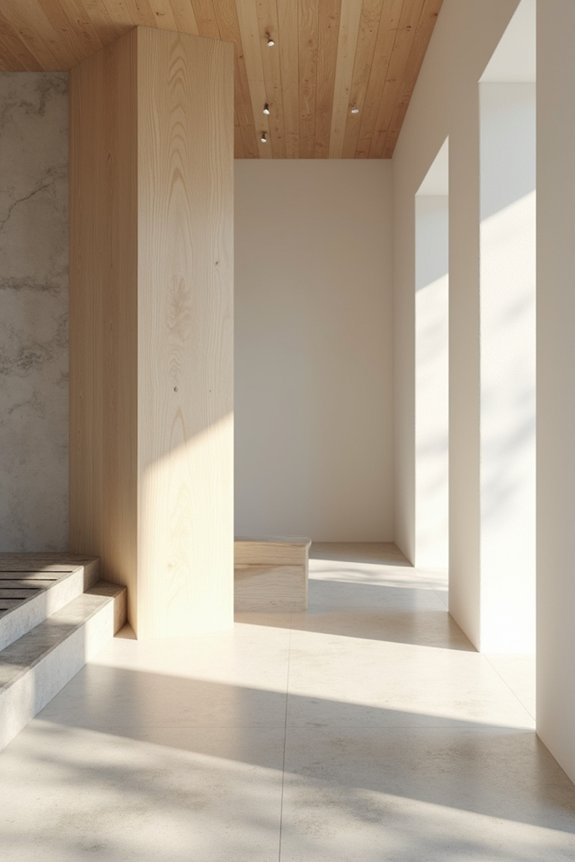
Ever notice how you can actually breathe easier in a room that isn’t stuffed with stuff?
I’ve discovered that minimalist spaces feel peaceful for some pretty specific reasons. Here’s what makes them work:
- Clean lines and uncluttered surfaces reduce visual noise, so your eyes—and brain—aren’t working overtime
- Natural light streaming through large windows creates an airy atmosphere that calms you down
- Thoughtful textures like wood, stone, and linen add depth without cluttering the space
- Purposeful storage systems keep everything edited and organized, preventing overstimulation
When you’re in a minimalist space with a neutral palette, you’re not fighting distractions. Instead, you can focus on what actually matters. That’s when real calm kicks in. You’re encouraged to slow down, breathe, and be present. It’s part of a lifestyle that values intention over excess.
What to Actually Include in a Minimalist Room
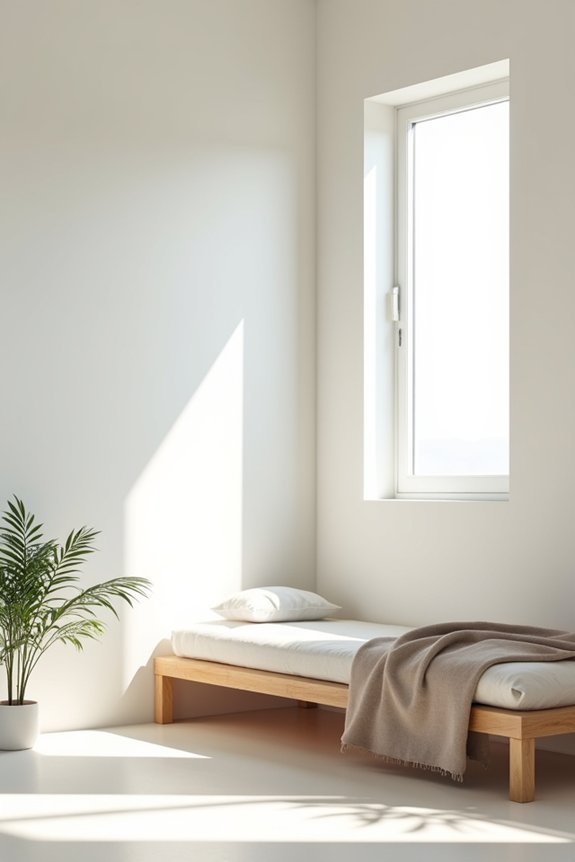
Now that you understand why minimalist spaces feel so calming, you’re probably wondering what actually goes into creating one—and I get it, because the whole “less is more” thing can feel confusing when you’re staring at an empty room. The truth is that knowing what to include matters just as much as knowing what to leave out, and it comes down to three key ideas: choosing essential furniture pieces, prioritizing quality over quantity, and thoughtfully selecting the personal items and accents that belong in your space. Let’s walk through each of these so you can build a minimalist room that’s both functional and genuinely reflects who you are.
Essential Furniture and Pieces
What actually belongs in a minimalist room? It’s about choosing pieces that truly earn their space. You’ll want to invest in high-quality furniture with clean lines that won’t clutter your visual field.
Here’s what I’d recommend:
- A low-profile sofa or modular seating that adapts to your needs
- Multi-functional pieces like ottomans doubling as coffee tables or storage
- Height-adjustable shelves and concealed storage solutions
- Natural wood or stone accents paired with your neutral color palette
Each item should serve a purpose. Skipping excess decor creates breathing room. Strategic storage keeps clutter hidden, while high-quality minimalist furniture functions as both practical design and a comfortable retreat. Your room becomes exactly what you need—nothing more, nothing less.
Quality Over Quantity Approach
How do you decide what stays and what goes when you’re building a minimalist space? I’ve learned that quality over quantity means choosing pieces that genuinely serve you. Each item should earn its place through functionality or meaningful beauty—nothing sits around looking pretty without purpose.
| Category | Ask Yourself | Keep or Remove |
|---|---|---|
| Furniture | Does it serve a function? | Keep if yes |
| Decor | Does it spark joy? | Keep if genuine |
| Storage | Is it hidden from view? | Keep integrated |
| Color | Does it fit neutral palette? | Keep if cohesive |
| Accessories | Do I use it regularly? | Keep if functional |
I prioritize natural materials like wood and linen that age beautifully. My uncluttered space feels calm because everything has purpose. Storage solutions hide away belongings, preserving that peaceful, open feeling I want. This minimalist approach produces real results.
Personal Items and Accents
I’ve learned that purposeful accents keep minimalist decor from feeling sterile. Here’s what I include:
- A single high-quality sculpture or artwork that genuinely speaks to you
- One potted plant in a neutral ceramic vessel for living texture
- A framed photograph or print featuring something meaningful
- Natural materials like linen pillows or a wooden box for warmth
Your neutral palette shouldn’t feel cold. By choosing high-quality pieces made from natural materials—wood, cotton, wool—you create a sense of calm that feels inviting. These thoughtful accents belong in your space because they’re *yours*, not because design rules demand them.
The Mistakes That Kill a Minimalist Interior
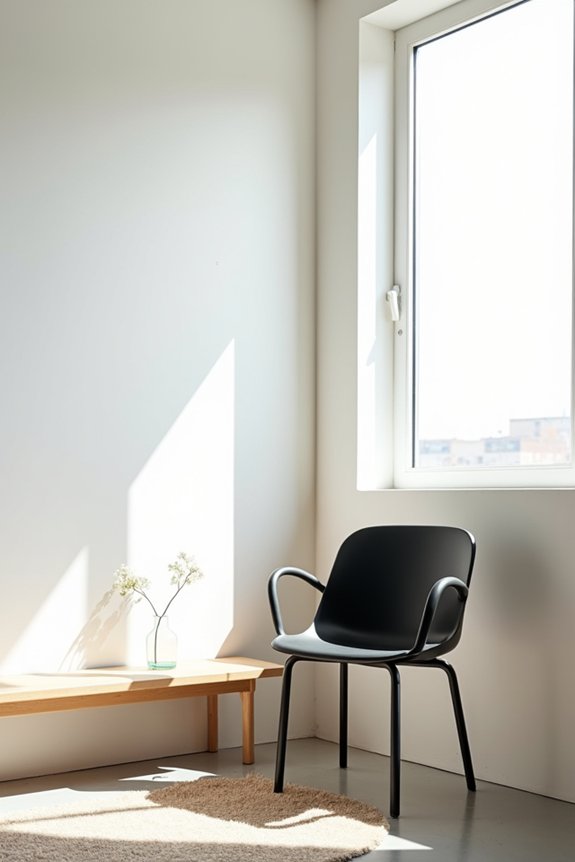
Even the most well-intentioned minimalist spaces can lose their effectiveness when we slip into common pitfalls that chip away at their core purpose. I’ve seen how excessive decor and clutter immediately contradict what minimalist interior design stands for. The real culprits? Poor storage solutions that let visible items undermine your calm, sterile white walls lacking warmth with natural materials like wood or linen, and inconsistent furniture choices that feel trendy rather than timeless. We also disrupt our monochromatic palette by introducing busy patterns that steal visual peace. The solution is straightforward: invest in hidden storage and multi-functional pieces, anchor your space with natural textures, choose classic furniture over trends, and keep your color story consistent. Small adjustments restore that serene balance we’re all seeking.
Creating Warmth Without Sacrificing Simplicity
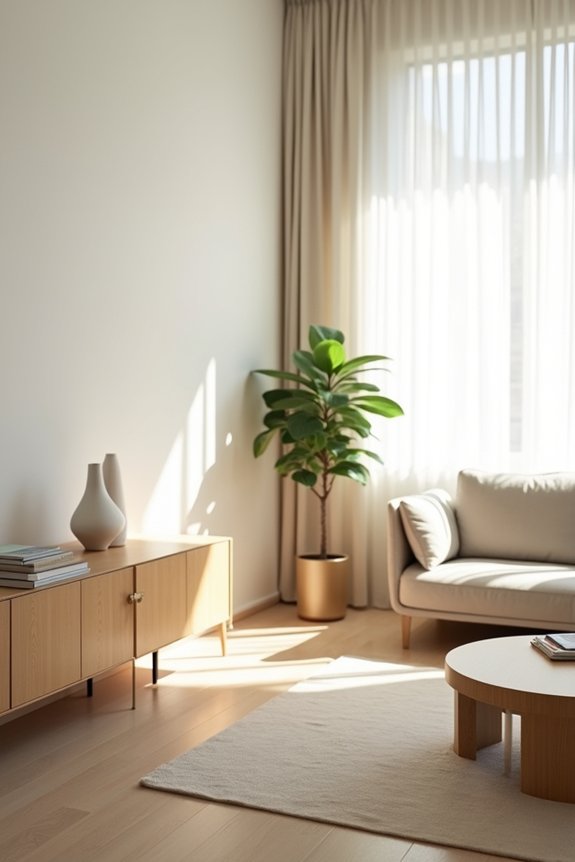
When’s the last time you walked into a minimalist room and actually felt comfortable staying there?
I’ve learned that minimalist warmth comes from smart layering, not clutter. Here’s how I create spaces that feel inviting:
- Layer your monochrome palette – Mix grays with varied fabrics like linen and wool to add depth without visual chaos
- Choose natural materials – Wood accessories and stone surfaces soften stark elements while keeping lines clean
- Invest in high-quality pieces – One beautiful linen sofa beats five mediocre ones
- Add purposeful accents – A single meaningful artwork or ceramic vase gives personality without feeling crowded
The approach is simple: trade quantity for quality. Textures in tiles and timber create visual interest where ornate decoration would overwhelm. By combining these elements thoughtfully, you can maintain simplicity while creating a space where you actually want to be.
How to Approach Minimalism in Different Rooms
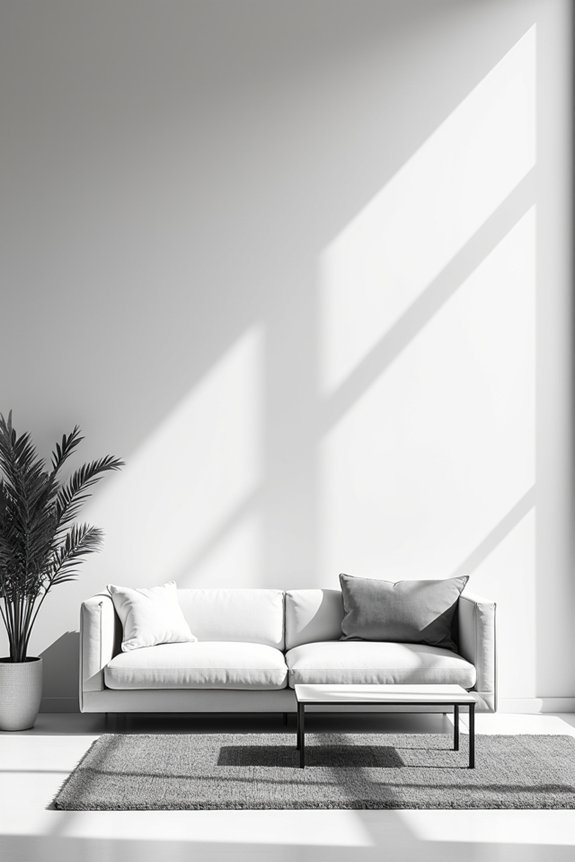
How do you apply minimalist principles when each room in your home has different needs? Understanding your space’s function helps. In bedrooms, prioritize a neutral color palette and clean lines with an open floor plan that feels restful. Living areas benefit from natural materials like wood and linen that ground the space while maintaining simplicity. Kitchens work best with unobtrusive storage solutions—think concealed cabinets and drawer organizers that keep countertops clear. Bathrooms need practical organization too; use matching containers and minimal accessories. The key is adapting minimalist interior design consistently across rooms while respecting each space’s purpose. You’re not sacrificing function for aesthetics; you’re creating spaces where everything has a reason to be there.
Common Questions About Minimalist Style
Now that you’ve got a handle on applying minimalist principles room by room, you’re probably wondering about the specifics—like whether you really have to live in an all-white box or if minimalism works for families with kids.
Minimalist interior design is way more flexible than you’d think. Here’s what I’ve learned:
- Neutral palettes aren’t boring — soft grays, warm whites, and natural materials create depth
- Families thrive with minimalism — clutter control reduces stress for everyone
- Functional furniture serves double duty — think storage benches and modular pieces
- Open floor plans adapt — they work in apartments and houses alike
You don’t need perfection; you need intention. Your minimalist space should reflect your life, not restrict it.
Your Step-by-Step Minimalist Redesign Plan
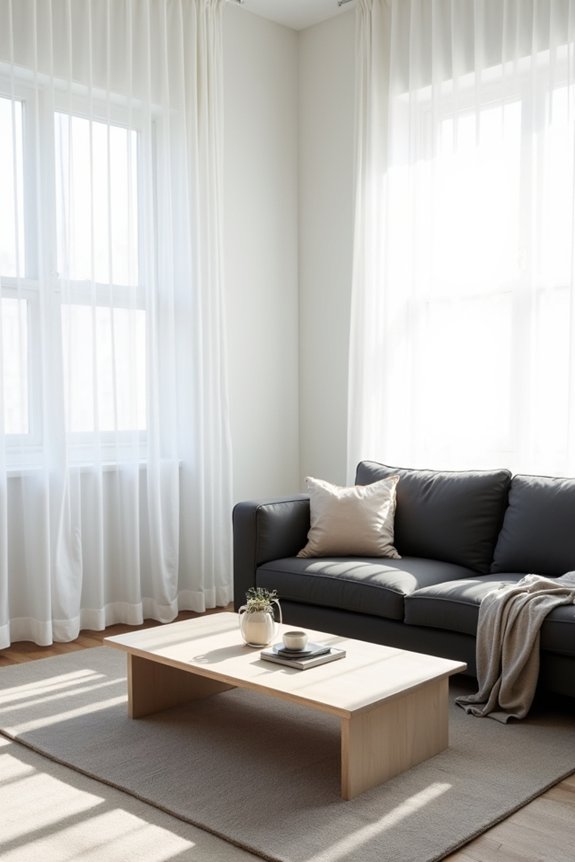
Ready to create a calm, intentional home? Start by decluttering ruthlessly—keep only what serves you. Next, choose your neutral color palette: whites, grays, or warm beiges work beautifully. Add one accent color through textiles or art for visual interest.
Then, select functional furniture with clean lines. A simple wooden table or linen sofa becomes your foundation. Introduce natural materials like wool throws and wood shelving to warm your minimalist interior design.
Finally, arrange your open-plan layouts to maximize light and flow. Keep surfaces clear and your walls mostly bare. One meaningful artwork or ceramic vase creates impact without clutter.
This journey takes patience, but you’re building a sanctuary that reflects who you are.