
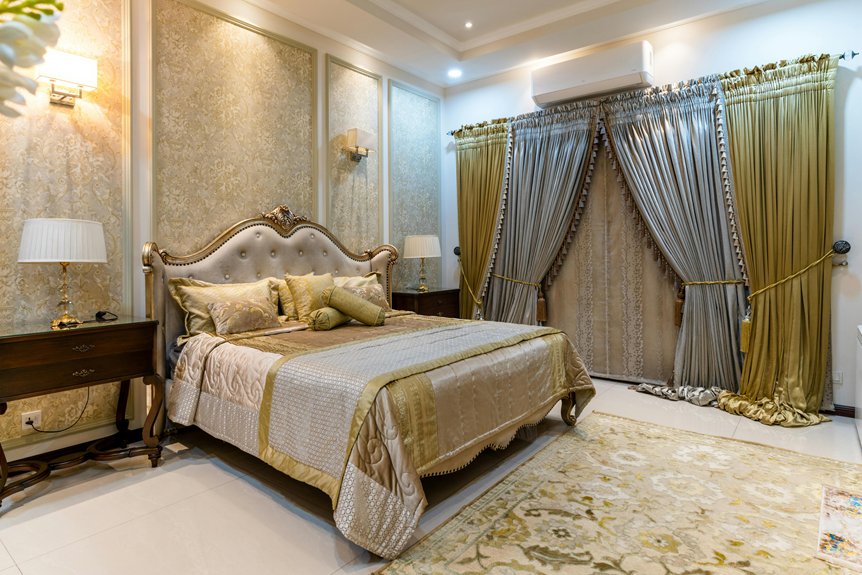
Start with a statement headboard—upholstered or uniquely shaped—that sets the mood. Layer neutral textures like crisp cotton sheets, linen throws, and velvet pillows for depth. Paint walls in calming shades like Pale Powder or Juno Peach, then add warm 2700K lighting with bedside sconces. Incorporate glass nightstands and transparent accents to brighten tight spaces. Finish with natural materials, mirrors, and accessories like trays and flowers. Each element works together to create your bedroom retreat.
[link-whisper-related-posts]Design Your Bedroom With a Statement Headboard
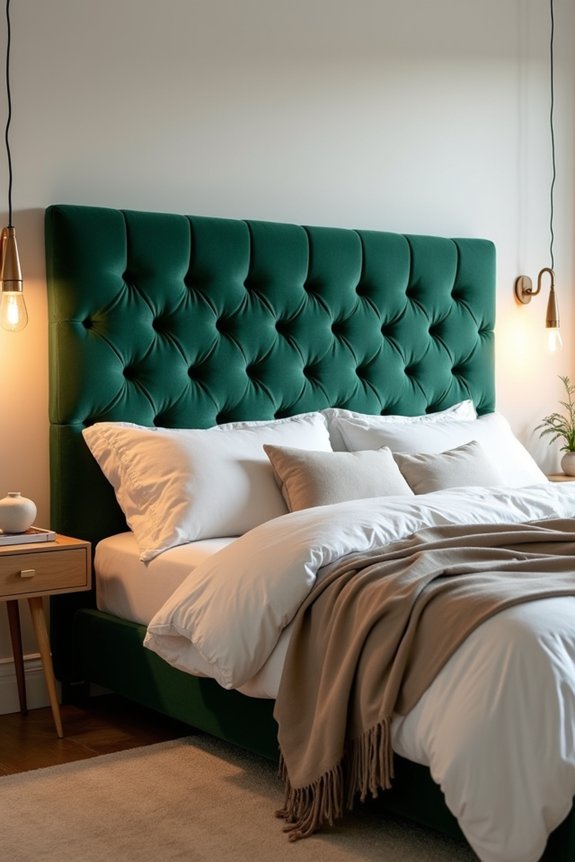
Your headboard is the focal point of your bedroom—it’s the first thing you see when you walk in, and it’ll set the mood for the whole space. A statement headboard makes a real difference, whether you choose something upholstered, oversized, or uniquely shaped.
Adding texture behind your headboard increases its visual appeal. Try wallpaper or panel molding to create visual interest and bring in a more refined aesthetic. You could layer a fabric headboard with a textured backdrop, which adds depth and sophistication to your bedroom.
For practical impact, consider built-in nightstands paired with your headboard. This combination creates a unified bedside area that’s both beautiful and functional. A sculptural, custom design—think Donald Judd-inspired—lets you blend artistic form with practical storage in one piece.
Layer Textures With Quilts and Soft Furnishings
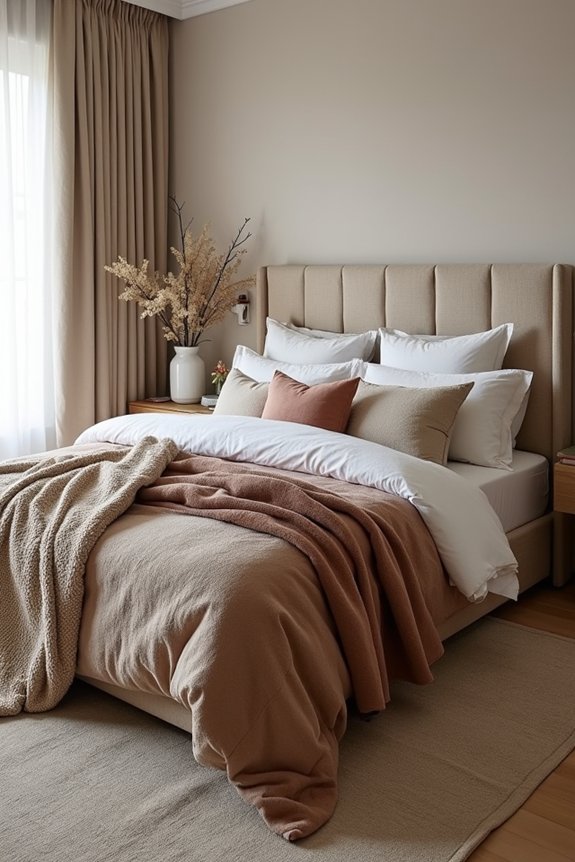
Once you’ve established your headboard, it’s time to build on it by layering textures that’ll make your bed feel inviting and comfortable.
I’ve found that combining layered textiles creates depth in a bed. Start with quality linens, then add throws and quilts in complementary colors. Here’s what works: vintage quilts can be repurposed as custom pillows, bringing pattern and warmth without overwhelming your space.
The textures you layer create visual and tactile richness. Pair soft furnishings with a soothing backdrop like Juno Peach by Benjamin Moore, which harmonizes well with blush accents and soft tones. Top it off with simple plexiglass artwork above your bed—it complements everything without competing with your patterns.
This approach creates a restful bedroom environment.
Choose Your Paint Color First
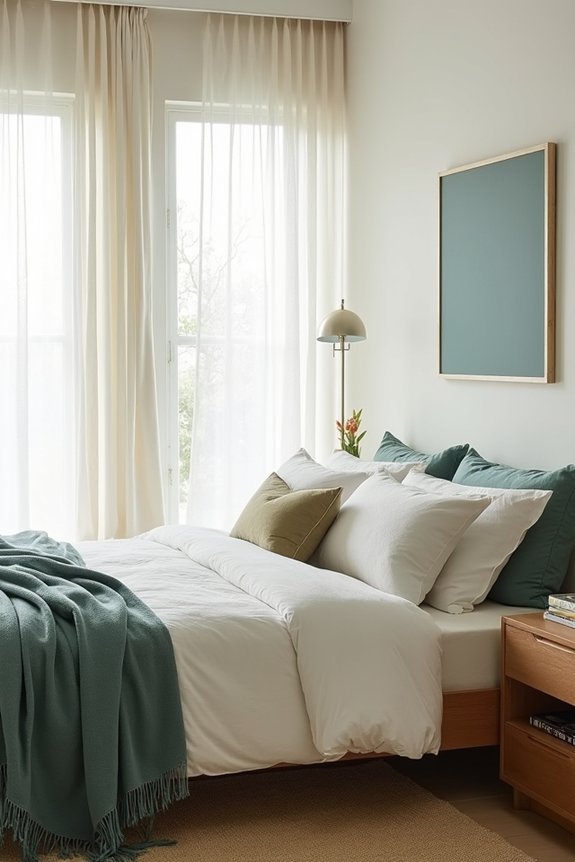
I’ve learned that picking your paint color before anything else is like setting the emotional temperature for your whole room, and it helps everything else fall into place. You can go for a mood foundation with warm, inviting shades like Juno Peach by Benjamin Moore, stick with classic neutrals such as Pale Powder or Wevet for a cohesive feel, or embrace rich colors like deep Paean Black or moody teals if you want drama and coziness. The smart move is grabbing sample pots (those 100ml ones come with free delivery and a color card) so you can test your choice on your walls before committing to the full paint job.
Establish Your Mood Foundation
How’s this—when you walk into a bedroom that feels relaxing, there’s usually one thing doing the work: the paint color. I’ve learned that selecting your paint first creates the foundation for everything else. Consider starting with calming options like Greige or Soft Neutrals, which give you breathing room to layer textures later. You might try an all-over color approach with something like Pale Powder, unifying your walls and ceilings for that tranquil atmosphere you’re after. Here’s the trick: lighter shades actually make smaller bedrooms feel bigger, while deeper hues add cozy warmth when balanced right. Pair your chosen color with natural materials—linen, jute—so your paint doesn’t feel flat and disconnected from the rest of your space.
Light and Airy Palettes
Now that you’ve got your mood foundation in place, it’s time to get specific about which paint colors’ll actually deliver that calm, open feeling you’re after. I recommend exploring soft neutrals like Skimming Stone, Cromarty, Wevet, and Cabbage White—they’re effective for creating a light and airy bedroom. These pale powders work beautifully as your all-over colour approach, establishing a cohesive foundation that influences everything else: your wallpaper, textiles, and furniture choices follow naturally from here. The trick is weighing your room’s natural light carefully. More sunlight? Go slightly bolder. Less light? Lean toward warmer undertones. Your neutral palette becomes the backbone of a serene space where every element reads as calm and coordinated. Choose your paint first, and watch your whole room develop accordingly.
Rich Colors for Drama
Want your bedroom to feel like a sanctuary that wraps around you? Rich colors create that intimate drama you’re craving. Start by grabbing sample pots—100ml options let you test deep hues like Paean Black or Preference Red without committing your entire paycheck. I’d suggest painting a small wall section first; you’ll see how the color shifts with your lighting.
Apply your chosen hue across walls, trim, and ceiling. This unified approach heightens luxury and creates a space that feels distinctly yours. Worried it’ll feel too heavy? Balance it with lighter textiles and metallic accents. Pair moody teals or dark neutrals with natural wood textures for contemporary warmth.
Your bedroom becomes a personal retreat where you belong.
Select Layered Lighting for Ambiance
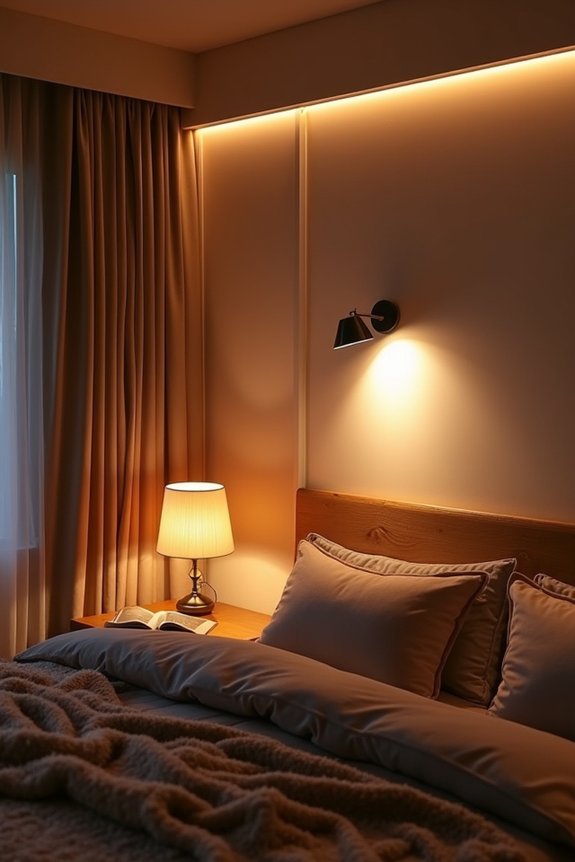
Why settle for a single overhead light that makes your bedroom feel more like an office than a sanctuary? Layered lighting creates a more relaxing environment worth spending time in.
Create depth by combining ambient, task, and accent lights. I pair bedside sconces with table lamps and add a sculptural ceiling fixture for soft, diffuse illumination. This approach eliminates harsh glare that disrupts relaxation.
| Lighting Type | Purpose | Example |
|---|---|---|
| Ambient | Overall brightness | Ceiling fixture |
| Task | Focused work | Bedside sconce |
| Accent | Highlights features | Floor lamp |
Choose dimmable options with warm color temperatures around 2700–3000K. Position lights strategically to showcase your headboard or artwork while avoiding screen reflections. This ambience creates the calming atmosphere your bedroom needs.
Balance Patterns With Neutral Backdrops
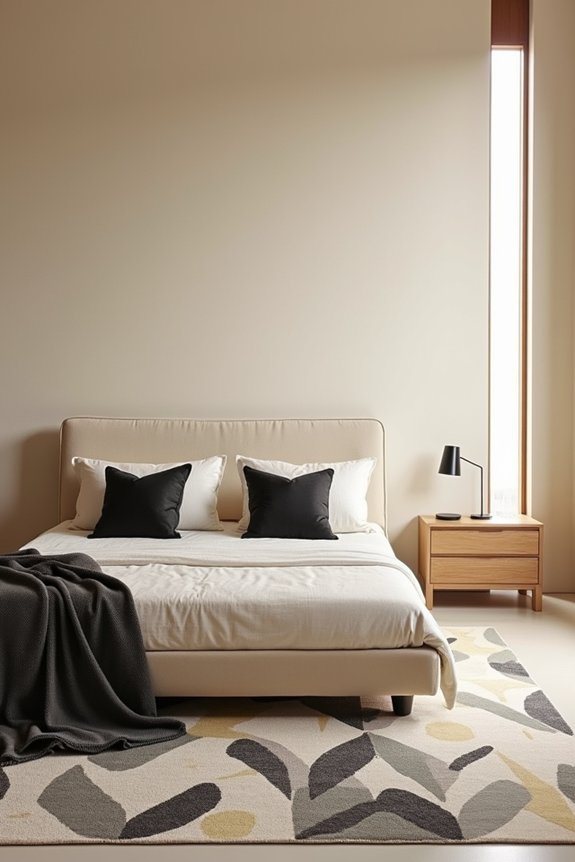
I find that a bedroom feels restful—not chaotic—when you let your neutral walls and bed frame provide a calm foundation while your patterned pieces (think oversized striped curtains or a bold geometric rug) become the focal points. When you layer in textures like a quilted throw or velvet pillows against that backdrop, you build visual interest without demanding too much attention, which helps you avoid that cramped, overstuffed feeling. The approach is choosing just a few statement patterns rather than scattering them everywhere, so your space feels deliberate and welcoming instead of overwhelming.
Pattern Selection and Scale
How do you keep a bold patterned bedspread from taking over your entire room? Understanding pattern scale matters. Bigger rooms can handle larger motifs—think oversized polka dots or geometric prints—while smaller spaces need restrained repeats instead.
Here’s what works: choose one dominant pattern as your focal point, maybe your bedding or a feature wall. Then keep everything else solid or tonal. This creates breathing room and prevents visual chaos.
Layer patterns through textiles strategically. Use curtains, pillows, and throws rather than stacking multiple patterned furniture pieces. When you’re intentional about where patterns land, they improve your space instead of overwhelming it. Color harmony ties everything together, making your bedroom feel organized and welcoming—exactly where you want to relax.
Neutral Foundation Strategy
A neutral foundation gives you the freedom to experiment with patterns without worry. I’ve found that muted linens and soft plaster walls create the perfect canvas for your personality to come through. Start by choosing calming base colors—think warm whites, soft grays, or gentle beiges—that won’t compete with your decorative choices.
Once you’ve established this serene backdrop, layer in textures that make your space feel inviting. Add linen bedding, a jute rug, and cozy throws. These natural materials work together beautifully, creating depth while maintaining that peaceful vibe you’re after.
The real value comes when you introduce selective color pops or metallic accents against this neutral foundation. A few carefully chosen pieces become focal points without overwhelming your calm space. You’re creating balance, not clutter.
Layering Textiles and Accessories
Once you’ve locked in your neutral foundation, layering different fabrics on top of each other builds depth and visual interest.
Here’s what I do:
- Mix crisp cotton sheets with a textured duvet for tactile contrast
- Add a linen cover and chunky knit throw for variety
- Layer velvet or silk pillows against your neutral backdrop
- Place a wool carpet beneath to anchor everything together
The key is playing with weave variations. When I combine chenille throws with cotton basics, the room feels richer. I keep most pieces neutral—soft grays, creams, whites—then introduce one accent color like moody teal through smaller accessories. This approach keeps things balanced while preventing overwhelm. You’re creating a space that feels both sophisticated and comfortable.
Pick a Platform Bed for Clean Lines
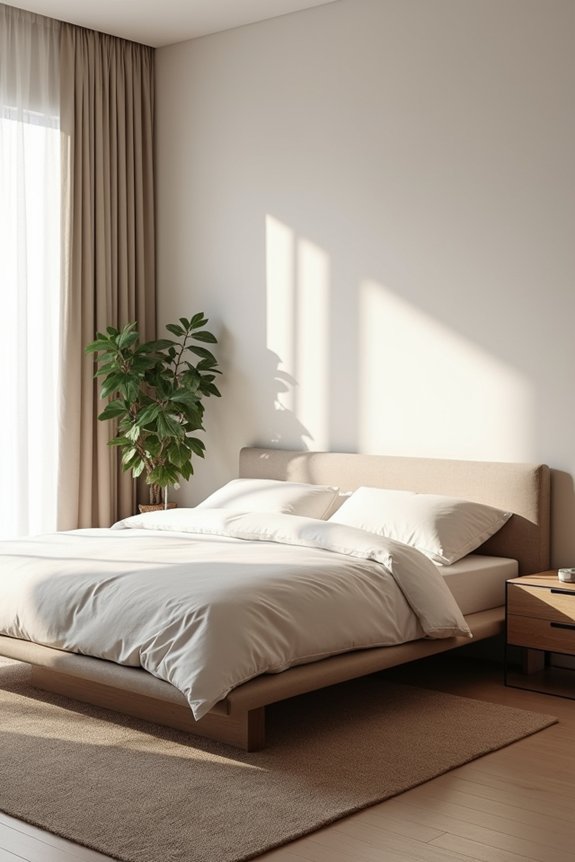
When you’re ready to refresh your bedroom into a calm, purposeful space, there’s something valuable about choosing a platform bed. I’ve discovered that this furniture style delivers clean lines that make rooms feel bigger and more organized.
A platform bed eliminates the need for a box spring, which honestly simplifies everything. You’re left with a streamlined silhouette that reduces visual clutter and pairs beautifully with light, airy surroundings. What I love most is how it creates breathing room—literally and visually.
The architectural simplicity means your bold lighting, built-ins, or statement headboards become the real focal points. When I paired mine with neutral textiles and a restrained color palette, my bedroom became a spa-like retreat. That’s the benefit of clean lines: they support your vision without demanding attention themselves.
Incorporate Glass and Lucite to Lighten Your Space
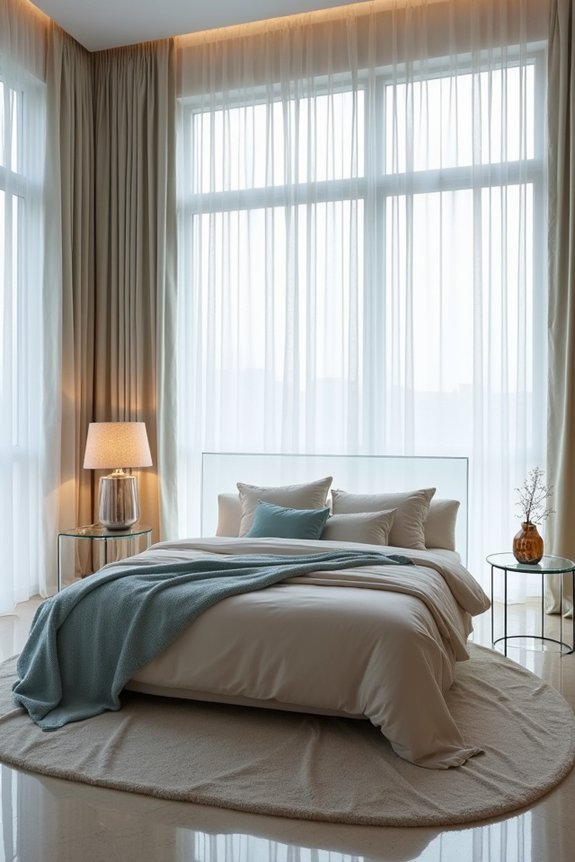
If you’re working with a smaller bedroom like mine was, I’ve found that transparent materials like Lucite and glass help make the space feel bigger and brighter. Modern Lucite accent pieces—think a sleek nightstand, bench, or even a decorative room divider—take up minimal visual real estate because you can literally see right through them, which makes your room appear airier. I started by swapping out my chunky wooden side table for a clear acrylic one, paired it with my existing wooden dresser, and the whole space felt lighter and more contemporary while keeping that cozy warmth I wanted.
Transparent Materials Reduce Visual Weight
How’s this for a design plot twist: the most powerful way to expand your bedroom isn’t by knocking down walls—it’s by choosing furniture you can practically see through.
I’ve discovered that transparency works well in tight spaces. When you swap heavy pieces for Lucite and glass accents, you’re not just updating your room—you’re completely changing how it feels.
Here’s what makes transparent materials so effective:
- Lucite nightstands let underlying textures peek through, adding luxury without bulk
- Glass headboards brighten your space while keeping sightlines open
- Clear bedside lamps illuminate without crowding your bedroom
- Transparent accent pieces create modern focal points that enhance perceived space
The approach? Pairing these see-through elements with organic furnishings like wooden side tables or stone surfaces. You’ll maintain warmth while ditching the heaviness. Your small bedroom suddenly feels airy, modern, and genuinely spacious.
2. Modern Lucite Accent Pieces
The appeal of transparent materials becomes more apparent when you move beyond just one or two pieces—that’s where modern Lucite accents provide a distinct advantage. Pairing a Lucite headboard with a sleek glass-top nightstand creates a reflective quality that amplifies your natural lighting without feeling excessive. Small touches matter too: an acrylic side table or transparent chair shell adds subtle luxury that won’t crowd your space. These pieces integrate well with built-in lighting, diffusing ambient glow throughout your room. The result is a bedroom that feels airier and more spacious, even in tight quarters. You’re not just decorating—you’re strategically lightening your entire environment while maintaining the modern, minimal aesthetic that works well for contemporary interiors.
Anchor Your Room With Natural Textures and Materials
Nature’s palette—think warm wood tones, soft linens, and weathered plaster—creates a foundation that grounds your bedroom in comfort and authenticity. Layering natural textures and materials turns a plain room into a space worth spending time in.
What to consider:
- Plaster walls with woven fabrics provide an earthy, tactile backdrop that promotes calm
- Linen and jute bedding add softness and depth without excess
- Wooden benches or slatted windows bring warmth while offering practical storage
- Rattan, wool carpets, and botanical accents complete the richly layered atmosphere
These elements work together as a cohesive whole. When you combine these natural materials, you build a space that belongs to you—comfortable, grounded, and welcoming.
Add a Large Mirror and Accent Bench
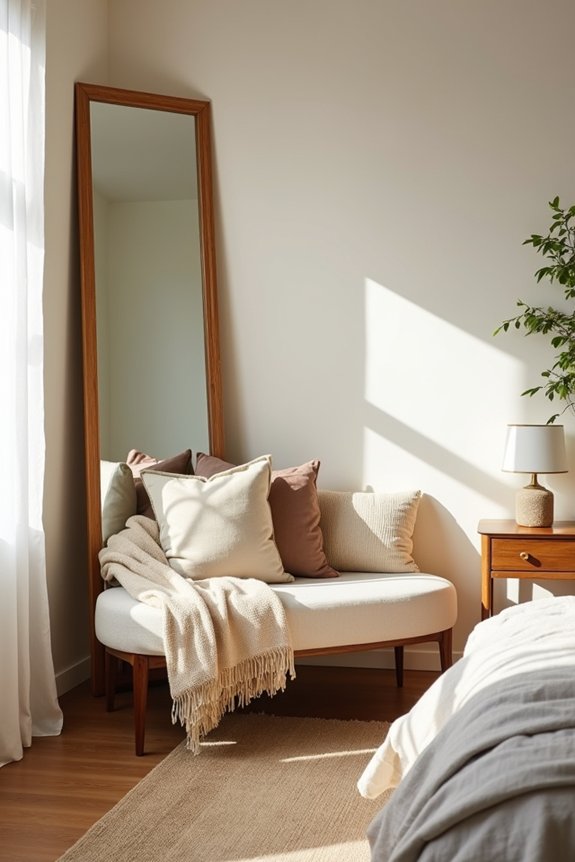
When you’re looking to amplify light and create the illusion of more breathing room, a strategically placed mirror becomes your bedroom’s hidden advantage. I’ve discovered that pairing a large mirror with a wooden bench changes both functionality and how your entire space feels.
| Feature | Benefit |
|---|---|
| Large Mirror | Reflects natural light and expands space visually |
| Wooden Bench | Provides seating and grounds the layout |
| Bench Storage | Accommodates extra items beneath the mirror |
| Mattress Alignment | Creates balanced, organized composition |
| Built-in Integration | Eliminates clutter from floor-standing pieces |
This combination works because your bench aligns perfectly with mattress height, grounding the arrangement while the mirror serves as your visual centerpiece. You’re investing in both beauty and practicality—exactly what a thoughtfully designed space provides.
Finish With Curated Accessories: Trays, Flowers, and Hardware
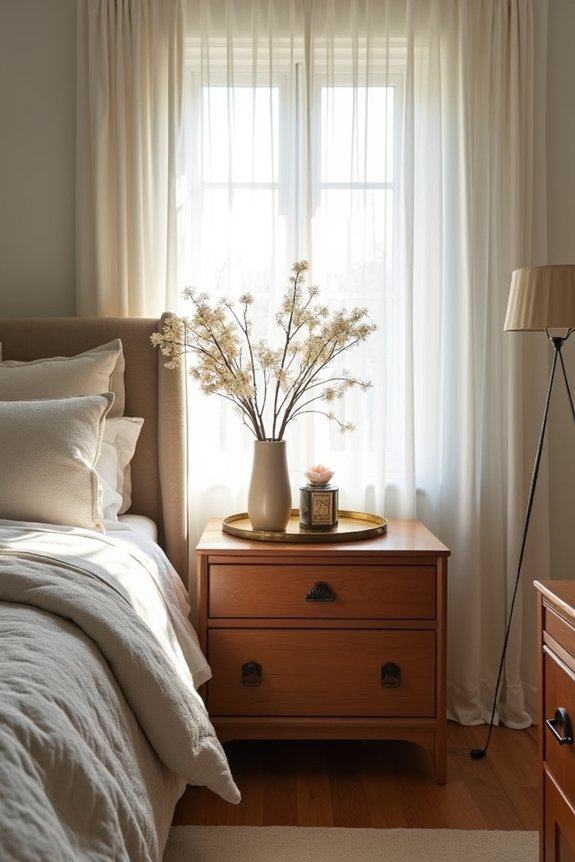
How do you move a bedroom from nice to genuinely luxurious? I’ve found that finishing touches matter. Small, purposeful details add polish without creating clutter:
- Decorative trays on nightstands corral essentials while adding visual interest
- Fresh flowers or orchids paired with candles create serene energy
- Hardware finishes like aged copper or brass plates refine textures
- Metallic accents mixed with natural materials balance warmth and sophistication
I started by swapping basic switch plates for flush-to-wall brass options—this single change noticeably improved my entire room. Then I added a small decorative tray to my dresser, arranged fresh orchids nearby, and the space felt more considered and refined.
These curated accessories work together, creating visual cohesion that suggests luxury rather than announces it. You’re building a space that genuinely reflects who you are.