I’ve redesigned my kitchen’s overlooked real estate above the cabinets into a display zone that draws attention. Start by measuring your ceiling height, then arrange odd-numbered groupings—think a tall succulent, medium basket, and small plant—mixing textures for visual rhythm. Add warm wood accents, secure lightweight faux plants with museum-grade dampeners, and layer in occasional-use glassware or plate collections. Install dimmable LED strip lights (2700K) for ambiance, and you’ll reclaim counter space while keeping everything low-maintenance. There’s plenty more styling tricks available to improve your kitchen’s appearance.
[link-whisper-related-posts]Assess Your Space Before Decorating Above Cabinets
Why does the area above your kitchen cabinets often feel like wasted real estate? It’s likely because we overlook its potential. Before you start decorating the space above your cabinets, take a moment to assess what you’re working with.
First, measure your upper cabinets and note the ceiling height. High ceilings need strategic planning—you’ll want to draw the eye upward without creating a cluttered, top-heavy appearance. Consider your kitchen’s existing color palette, backsplash, and lighting too.
Next, think practically. What daily items need accessible storage versus what can live up high? This balance matters. Also evaluate your actual ceiling—is it textured or smooth? Bright or dim?
These observations help you choose decorations that feel purposeful and intentional. You’re creating a space that matches your preferences while maintaining harmony with your kitchen’s existing design.
Add Plants Above Kitchen Cabinets Safely
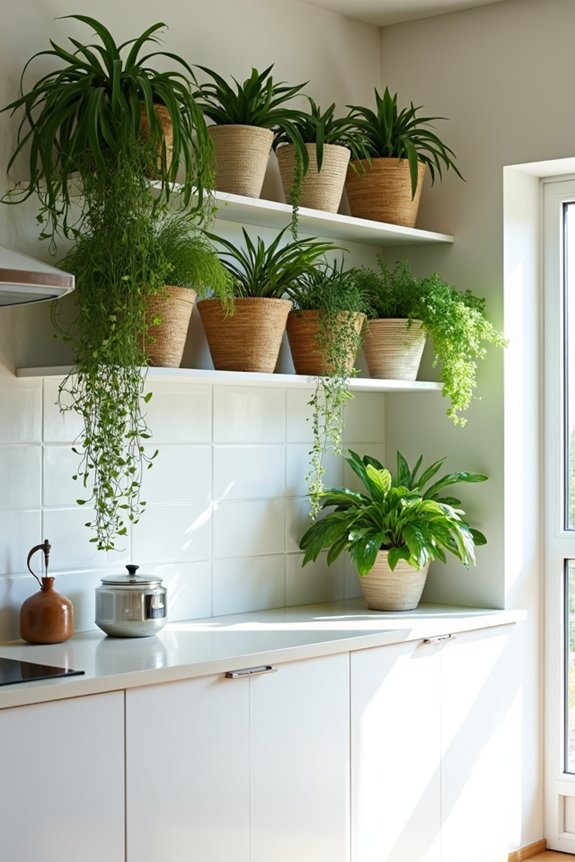
I’ll be honest—adding plants above your kitchen cabinets sounds nice until you realize the heat from your stove and tricky lighting can turn them crispy fast, so let’s talk about choosing tough plants like succulents that won’t demand constant watering. You’ll want to anchor those pots securely (especially if you’re placing them near edges) and keep them far enough from direct heat to prevent leaf damage. With the right setup and low-maintenance options, you can create a lush, designer look without stressing about plant care or safety concerns.
Light and Heat Challenges
Because heat rises from your stove and light can be spoty above cabinets, you’ll want to pick plants that don’t mind tough conditions—think succulents, pothos, or snake plants that thrive on neglect.
| Plant Type | Heat Tolerance | Light Needs | Care Level |
|---|---|---|---|
| Succulents | High | Bright, indirect | Low |
| Pothos | Medium | Low to medium | Low |
| Snake plants | High | Low to medium | Low |
| Faux plants | Excellent | Any | Minimal |
Heat-loving plants handle stove warmth better than delicate varieties. Succulents actually prefer warmer spots, making them suitable kitchen companions. If you’re concerned about fussy plants, faux options eliminate guesswork entirely. They’ll look fresh without wilting under kitchen conditions. Whatever you choose, you’re creating a display that works with your space, not against it.
Low-Maintenance Plant Options
When decorating above your kitchen cabinets, keeping things simple works well. I’d recommend choosing succulents or pothos—they’re forgiving plants that don’t demand constant attention. They thrive with minimal watering, which makes life easier.
Consider faux plants too. They’re perfect for high placement since you won’t worry about watering mishaps or safety concerns. Pairing them with real greenery adds authenticity.
Select lightweight pots in grays, blacks, or natural tones that match your kitchen’s style. Arrange plants at varying heights to draw eyes upward and create visual flow.
Keep everything away from direct heat and open flames—this protects your plants and reduces maintenance stress.
Securing Plants for Safety
How do you keep plants from tumbling down during an earthquake or when you’re enthusiastically cooking below? Securing your plants is important for safety. Here’s what I do: I use museum-grade dampening materials—these adhesive strips anchor lightweight planters so they won’t budge during tremors or vibrations. Choose durable, lightweight containers that match your cabinet color for a cohesive appearance. Avoid heavy glass pots or ceramic pieces that could become dangerous projectiles. I position my succulents and pothos in minimal planters that are easy to maintain and nearly impossible to tip. By selecting secure mounting solutions and lightweight options, you’re protecting your family while keeping your kitchen looking fresh and organized. Safety and style work together when you plan thoughtfully.
Stack Height and Textures Above Your Cabinets
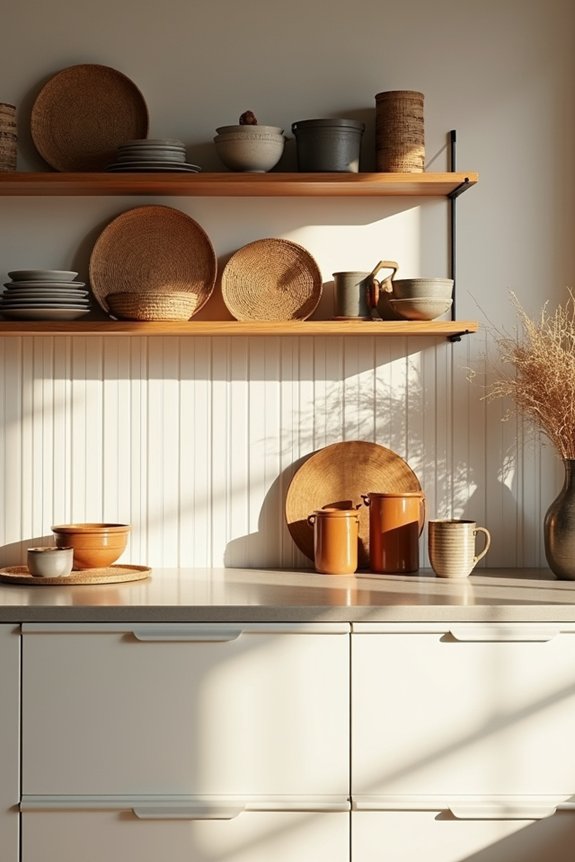
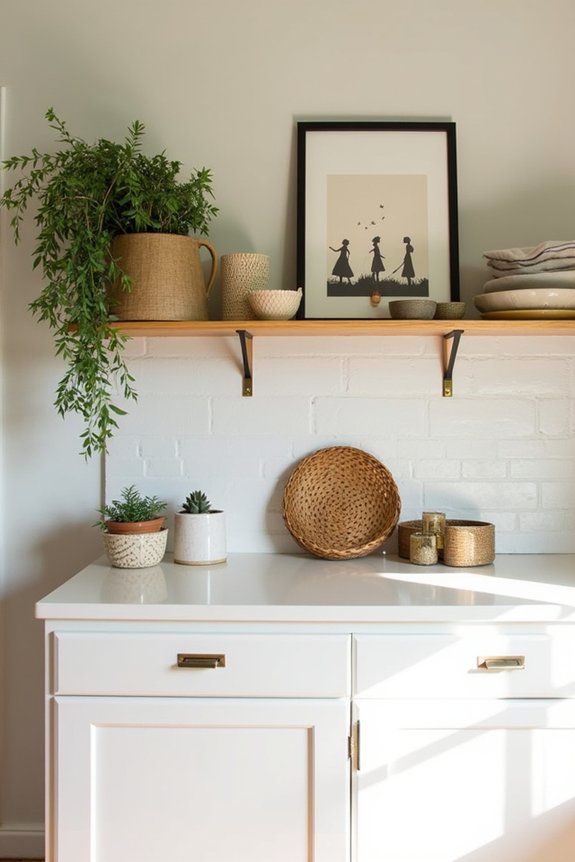
Ever notice how some kitchen spaces feel perfectly balanced while others look like a haphazard storage unit? I’ve learned that stacking items at varying heights changes cabinet decor from chaotic to organized. I arrange three objects in odd numbers—say, a tall ceramic vase, a medium woven basket, and a small succulent plant. This rhythm draws your eye upward naturally. Mixing textures matters tremendously: pair smooth glazed pottery with woven baskets and greenery. I alternate materials so nothing feels monotonous. The key is creating visual interest without clutter. When I step back, my kitchen looks well-organized, not overcrowded. By repeating these textures throughout your space, you’ll build consistency that ties everything together.
Use Artwork and Color Above Cabinets
I’ve found that balance works well when you pair bold artwork with plenty of white space—think a few key pieces rather than crowding every inch, which keeps your kitchen feeling open and refined. Layering different heights of frames, sculptures, or vintage signs creates visual interest without feeling cluttered, and that’s where warm wood accents help by connecting everything back to your cabinetry. The key is letting color from your artwork work with (not against) your backsplash and cabinet finish, so your eye moves naturally instead of getting stuck on conflicting tones.
Balancing Color With White Space
What’s sitting above your kitchen cabinets right now—dust, or something that actually makes you smile when you look up?
Balancing color with white space is where thoughtful design happens. You don’t need to cram every inch with stuff. Instead, strategically place frames above cabinets and decorative pieces that echo your color palette—maybe warm wood tones, soft grays, or brushed metallics that tie into your backsplash.
Think of it like breathing room for your eyes. A few carefully chosen items, grouped in odd numbers, create a designer feel without overwhelming the space. Leave generous white gaps between objects so nothing feels crowded or dated.
This approach keeps your kitchen looking current while drawing attention upward, making the whole room feel deliberate and cohesive.
Layering Height And Artwork
Now that you’ve got breathing room and a cohesive color story going, it’s time to add dimension. Vertical arrangements are your key asset for drawing eyes upward. Grab framed art in tall, portrait orientations—these pieces balance your cabinet height beautifully. Group items in odd numbers (three or five work great) to create visual interest that feels deliberate. Mix one larger focal piece with smaller objects around it. This gallery-like approach prevents your space from feeling cluttered while letting your personality come through. Bold or color-rich artwork introduces character, and when you anchor it with your existing cabinetry colors, everything comes together. You’re building layers that fill empty space with purposeful design.
Warm Wood Accents Matter
Warm wood accents matter because they create a clear connection between your cabinet space and the rest of your room. Pairing natural-tone cutting boards, wicker baskets, and wooden bowls establishes visual harmony between your cabinetry and ceiling. These wood accents work best in odd-number groupings at varying heights—think three pieces instead of two. Above cabinets, layer in artwork featuring honey, amber, or terracotta tones to complement the wood without competing with neutral cabinetry. Add greenery in earthy ceramic pots alongside your wood pieces. Finish with soft LED puck lights positioned behind the wood accents to highlight grain details and create a warm glow. This approach turns overhead space into an inviting, well-designed zone that feels like a place you belong.
Display Plate Collections and Serveware
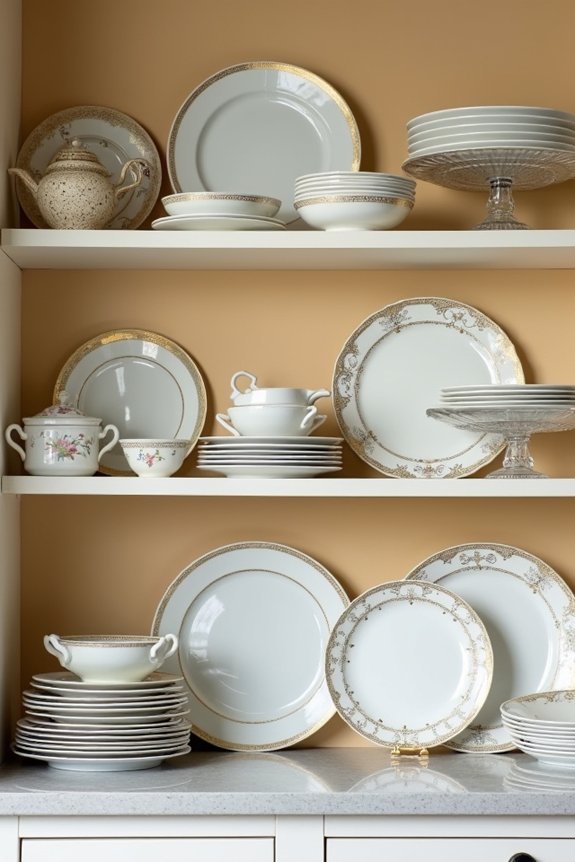
Have you got a collection of beautiful plates gathering dust in a cabinet somewhere? It’s time to bring them out! Display-plate-collections are perfect for decorating above your kitchen cabinets and creating that designer look you’ve been wanting.
I arrange my plates in odd numbers at varied heights—three here, five there—to draw the eye upward. Glass-front cabinets work wonderfully for showcasing them while keeping dust and kitchen grease at bay. I feature a Talavera charger as my focal point, balancing its rich colors with my backsplash.
The right styling happens when I pair plates with complementary items like woven baskets or candle stands. This texture prevents everything from looking flat and repetitive. Every few months, I rotate different patterns to keep things fresh. Your collection deserves to be seen!
Use Above-Cabinet Space for Serveware Storage
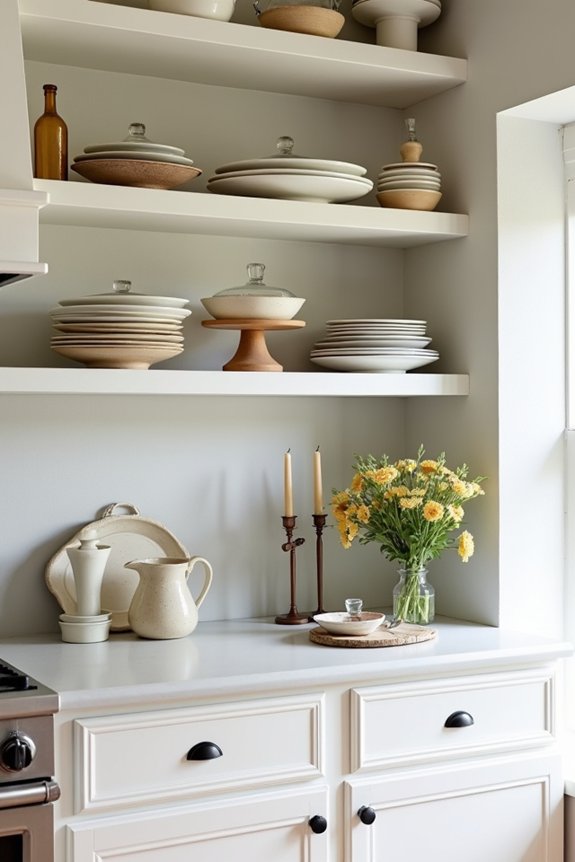
I’ve found that stashing bulky serving pieces like oversized tureens and mixing bowls up there frees up so much cabinet and counter space you’ll notice the difference. Since you probably don’t pull out fancy glassware and serveware every week, tucking them above the cabinets keeps them safe from daily dust and grease while putting rarely-used items where they belong. Matching baskets or labeled bins make the whole setup look organized rather than cluttered, so your kitchen stays neat from floor to ceiling.
Bulky Serving Ware Storage
When you’ve got those gorgeous cake stands, large tureens, and oversized serving bowls taking up valuable cabinet and counter space, you’re missing out on a real opportunity—that often-forgotten zone right above your kitchen cabinets.
The space above your cabinets works well for bulky serving ware storage. Here’s how to organize it:
- Store pieces upright to maximize vertical room without crowding countertops
- Group items by height to create varying elevations and visual interest
- Use decorative baskets to conceal rarely used serveware from dust
- Secure fragile pieces with museum putty to prevent accidents
This approach keeps your daily serving essentials within reach while protecting delicate items. Rotate your display seasonally, swapping out pieces to maintain balance. You’ll recover valuable counter space—and your kitchen will have a more organized appearance rather than feeling cluttered.
Occasional Use Glassware Display
Where do you stash those beautiful champagne flutes you pull out only for celebrations, or the delicate dessert cups that seem too fancy for everyday use? Above-cabinet space is perfect for occasional-use glassware that deserves showcasing.
I recommend displaying these pieces in uniform, clear glass to keep things visually light and cohesive. Stand tall glassware or stack dessert cups to create height without the clutter. This approach lets your special pieces shine while keeping everyday items within easy reach below.
The key is securing lighter pieces so they stay put through cooking vibrations and heat. Consider rotating seasonal or event-specific glassware periodically—it keeps your display fresh and maintains storage efficiency.
This display strategy turns that awkward above-cabinet gap into a functional showcase for the glassware you genuinely love.
Choose Low-Maintenance Decor for Easy Cleaning
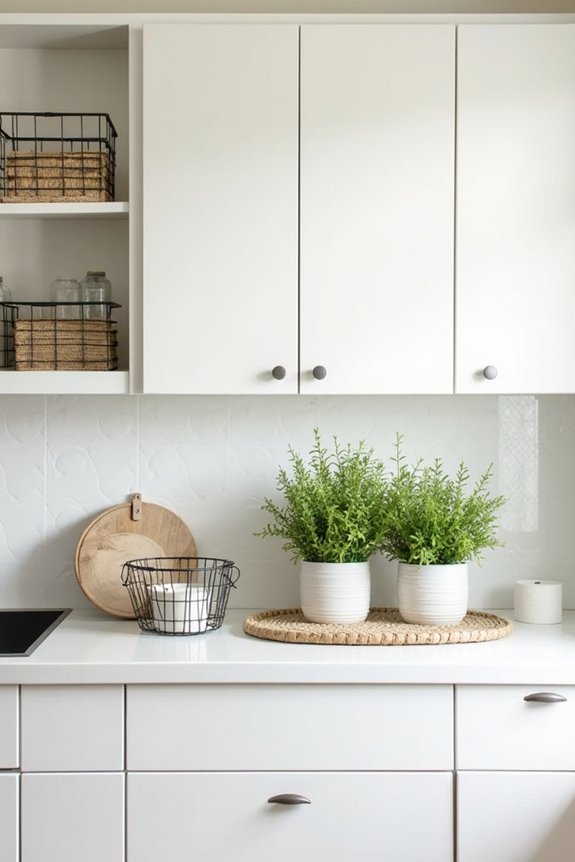
How do you keep your kitchen cabinet tops looking fresh without spending hours dusting and fussing? Choosing low-maintenance decor reduces your cleaning workload. You’ll want pieces that don’t require constant attention, so you can enjoy your space instead of maintaining it.
- Use faux plants or hardy succulents that need zero watering
- Select uniform storage containers in matching colors to minimize dust collection
- Install LED strip lights that illuminate without generating heat
- Rotate seasonal accents monthly rather than swapping everything constantly
I rely on faux plants because they stay vibrant year-round without wilting. Low-maintenance decor means less time cleaning and more time appreciating your kitchen’s appearance. When you choose practical pieces, you’re investing in a space that works for your lifestyle, not against it.
Warm Up Above-Cabinet Displays With Wood and Baskets
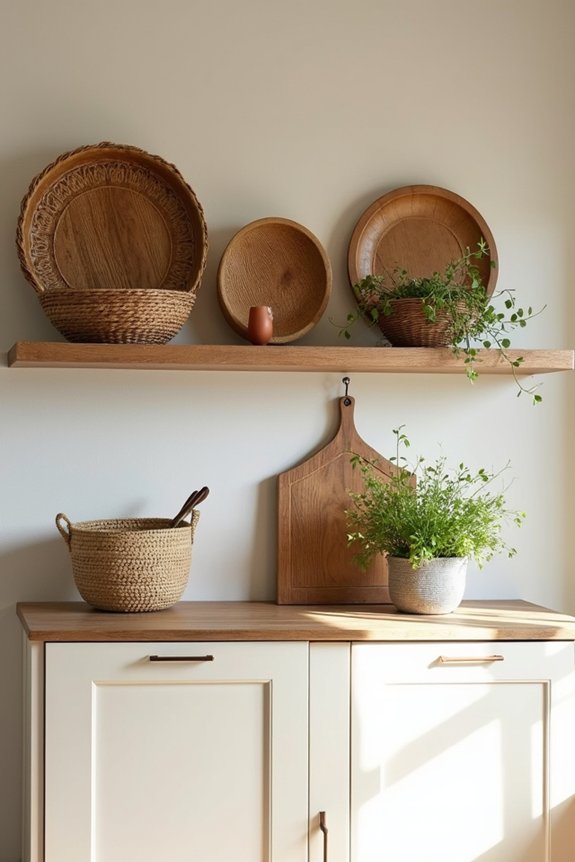
Now that you’ve got your low-maintenance pieces in place, it’s time to add some personality to that empty space. Incorporating wood tone elements creates an instant connection with your cabinetry below. Woven baskets in natural shades work well—they bridge your upper and lower cabinets while adding texture and depth.
Start by placing a larger basket on one end, then balance it with wooden cutting boards or natural-toned bowls on the opposite side. This odd-number grouping looks intentional and well-designed. The key is letting these warm materials do the heavy lifting. You’re not crowding the space; you’re strategically anchoring it with pieces that echo your kitchen’s existing tones.
This approach keeps everything cohesive while making your kitchen feel inviting.
Light Your Above-Cabinet Display for Ambiance
You’ve arranged your baskets and wooden pieces, but there’s still something missing—and that something is light. The right lighting improves your display, creating warmth that invites people into your space.
- Install LED strip lights under your cabinet soffit to cast a gentle glow on your display items
- Choose warm-toned bulbs (2700K) that complement your wood tones and create a cozy atmosphere
- Use dimmable fixtures so you can adjust brightness for everyday cooking or special occasions
- Position lights strategically to avoid glare on glassware while highlighting your favorite pieces
I’ve found that soft, ambient lighting prevents that top-heavy feeling while making your collection shine. Pair your fixtures with your existing color palette—whether that’s warm woods, neutrals, or metallics. This matching approach keeps your lighting working with your overall design rather than against it, making your kitchen feel thoughtfully styled and inviting.
Protect Above-Cabinet Displays With Doors or Covers
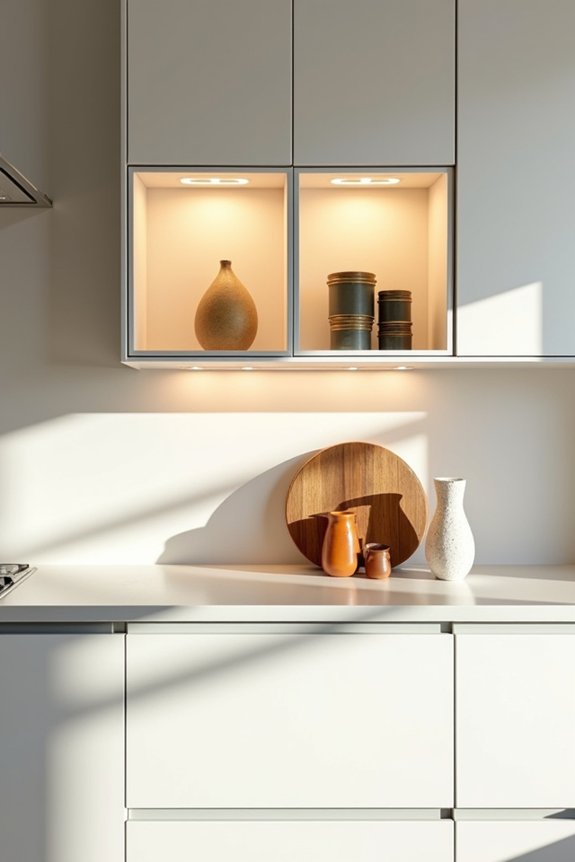
What’s the one thing that can ruin an above-cabinet display faster than you’d think? Grease and dust from cooking. I’ve learned this the hard way, and you probably have too.
Grease and dust from cooking can ruin an above-cabinet display faster than you’d think. I’ve learned this the hard way.
That’s where doors or covers come in handy. You can install masonite panels or wallpapered covers that look like a soffit, protecting your treasured items while maintaining a polished kitchen aesthetic. If you’re displaying collectibles, clear-glass doors let everything shine while shielding contents from cooking residues.
Here’s what works well: a track-driven door system makes accessing seldom-used items effortless without disturbing your décor. Match your door color to dark grey lower cabinets for a unified look that visually lowers the gap.
Beyond aesthetics, doors reduce maintenance significantly. You’ll spend less time cleaning around cabinet tops and more time enjoying your space.