

Yes, bathroom doors are typically narrower than standard doors. You’ll find most bathrooms use 28- to 34-inch doors, while standard interior doors measure 36 inches. Why the difference? Bathrooms are space-challenged rooms packed with plumbing, fixtures, and storage needs, so narrower doors maximize usable wall real estate. A 34-inch door gives you a 32-inch clear opening—meeting accessibility standards without eating up precious floor space. If you’re curious about alternatives like pocket doors or how these rules change for different bathroom sizes, there’s plenty more to explore.
[link-whisper-related-posts]Yes: Bathroom Doors Are Typically 28 to 34 Inches Wide, Compared to 36-Inch Standard Doors
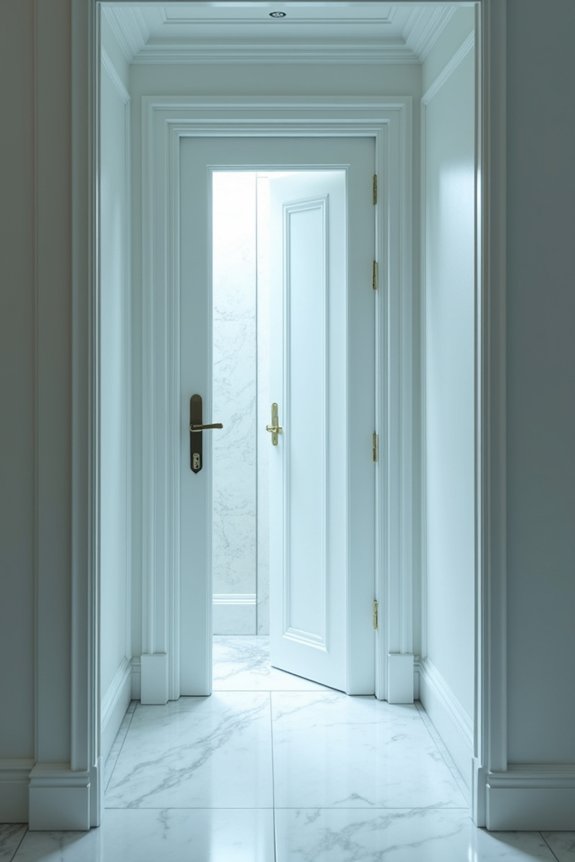
Why do bathroom doors feel narrower than the ones throughout the rest of your home? Well, you’re noticing something real. Most bathroom door widths range from 28 to 34 inches, while standard doors typically measure 36 inches. This difference isn’t accidental—it’s thoughtful design.
Here’s the deal: a 34-inch door actually gives you a 32-inch clear opening, which works perfectly for bathrooms. Designers use this space optimization strategy to maximize wall real estate for fixtures and storage. In tight layouts, some folks even go with 28-inch doors.
You’ll rarely find 36-inch interior doors in bathrooms unless the home embraces universal design principles. The narrower door swing lets you fit more essentials into smaller spaces. It’s practical planning that addresses your bathroom’s unique layout challenges.
How Bathroom Doors Compare to Bedroom Doors
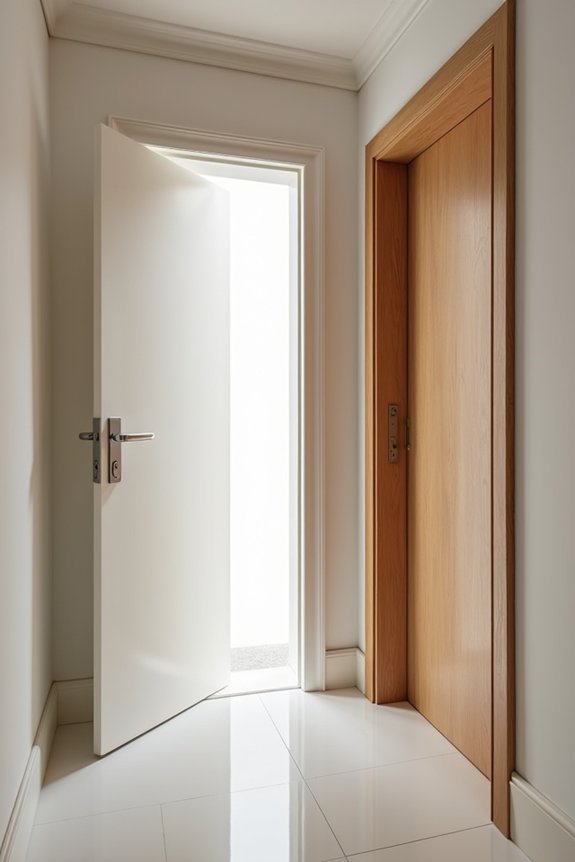
When you’re standing in your bathroom doorway compared to your bedroom threshold, you’ll notice a difference—bathroom doors are narrower than their bedroom counterparts.
Here’s why this matters:
- Door width differences: Bathroom doors typically measure 28 to 34 inches wide, while bedroom doors commonly range from 32 to 36 inches, providing bedrooms with additional width.
- Space-saving solutions: Bathrooms often use pocket doors or sliding options to maximize usable space, whereas bedrooms rely on traditional swinging doors that need more clearance.
- Accessibility standards: Both follow NKBA and ADA guidelines recommending 32-inch clear openings, but bedrooms maintain wider passages for furniture movement.
This difference reflects real-world constraints—bathrooms balance plumbing layouts with accessibility needs, while bedrooms prioritize flexibility and comfort. Understanding these distinctions helps you plan renovations thoughtfully.
Why Bathrooms Need Narrower Doors: Plumbing, Space, and Codes
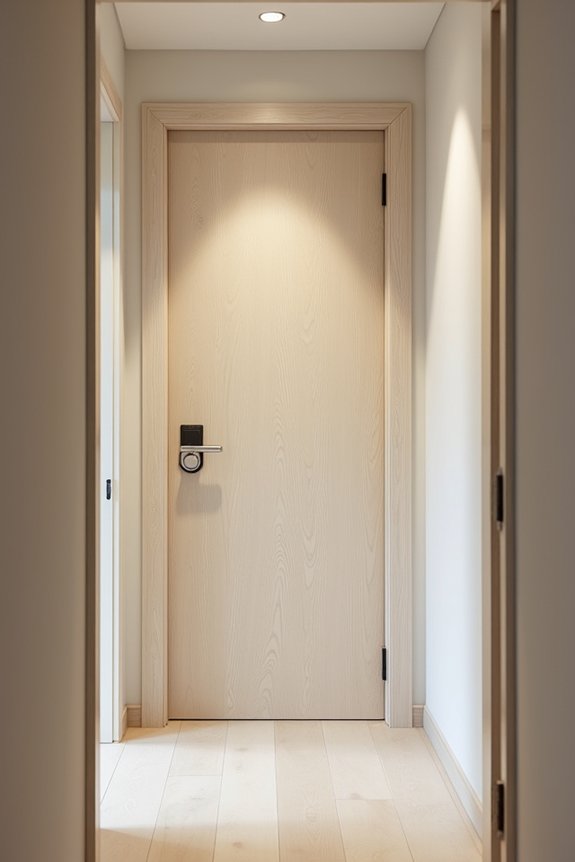
Have you ever wondered why your bathroom door feels snug compared to other rooms in your home? Here’s the truth: plumbing and limited space drive these decisions. Your bathroom door width typically ranges from 24–28 inches because pipes, vents, and fixtures demand real estate. Standard door width—that 32-inch clear opening you find elsewhere—simply won’t work in tight layouts.
Building codes actually give us flexibility here. The IRC sets no minimum bathroom door width, letting designers prioritize plumbing access over wide doorways. That’s why pocket doors and sliding doors are valuable options; they save clearance space entirely.
Now, accessibility considerations do push toward wider openings (32–36 inches), and that’s valid. But honestly? Most bathrooms choose narrower doors to keep sinks, toilets, and plumbing where they belong—making your space work smarter, not harder.
Accessibility Standards: When Wider Doors Matter
So here’s where the conversation shifts—accessibility requirements actually change the bathroom door equation entirely. You see, the ADA mandates a minimum 32-inch clear opening, but here’s the thing: that’s really the bare minimum. When I think about genuine accessibility, I’m talking about real-world needs:
- A 36-inch door width provides comfortable wheelchair access and walker maneuverability in bathroom dimensions
- NKBA guidelines recommend wider doors for larger bathrooms, creating usable entry spaces beyond legal requirements
- Sliding or pocket doors eliminate door swing clearance concerns in tight spaces, offering practical alternatives
The reality? Standard 34-inch bathroom doors often fall short. If you’re designing for inclusivity—whether it’s for aging parents, visitors with mobility challenges, or your future self—pushing toward that 36-inch wider door matters. Accessibility isn’t just code compliance; it’s about welcoming everyone into your home.
Pocket and Barn Doors: Reclaiming Space Without Sacrificing Access
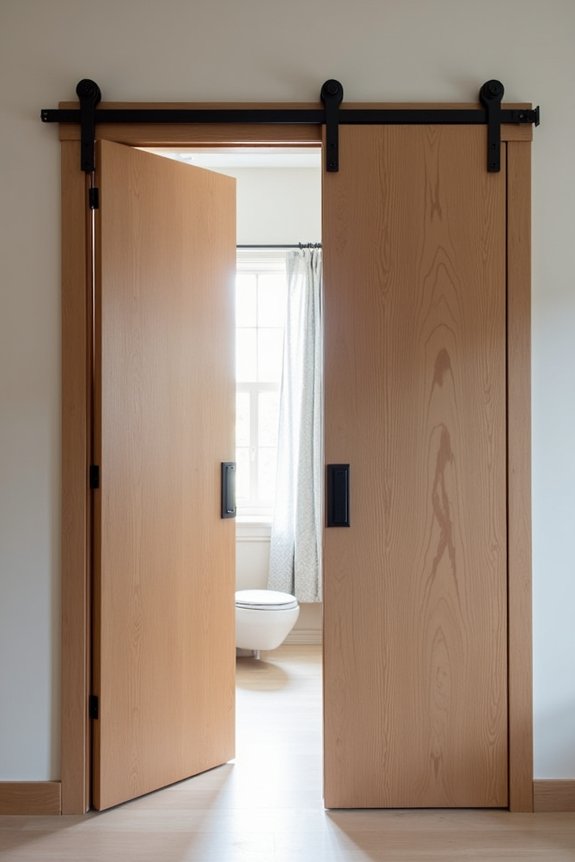
What if I told you that your bathroom door itself could be the solution to your space problem? Pocket doors and barn doors are practical choices for tight bathrooms. I’ve found that pocket doors slide directly into a wall cavity, completely eliminating the swing space that traditional interior doors demand. Barn doors offer a contemporary alternative that mounts on visible hardware, preserving valuable floor area while adding visual interest.
Both options work well when you choose solid-core door widths designed for bathroom applications. The key is checking your wall thickness and verifying quality door hardware supports smooth operation. You’re reclaiming precious square footage without compromising accessibility or privacy—no awkward clearances needed anymore. These sliding doors make cramped bathrooms more functional spaces, offering a practical solution worth considering.