There’s no single winner here—it really depends on you. U-shaped kitchens dominate for storage and workflow, while galley layouts crush efficiency in tight spaces. Open-concept designs work well if you’re entertaining, though they sacrifice pure functionality. L-shaped kitchens balance flexibility well, and one-wall setups work great for compact homes. Your cooking frequency, family size, and social priorities should guide your choice. The best layout matches *your* actual rhythm, not some universal ranking. Stick around to discover which design truly fits your lifestyle.
[link-whisper-related-posts]How the Work Triangle Determines Kitchen Efficiency
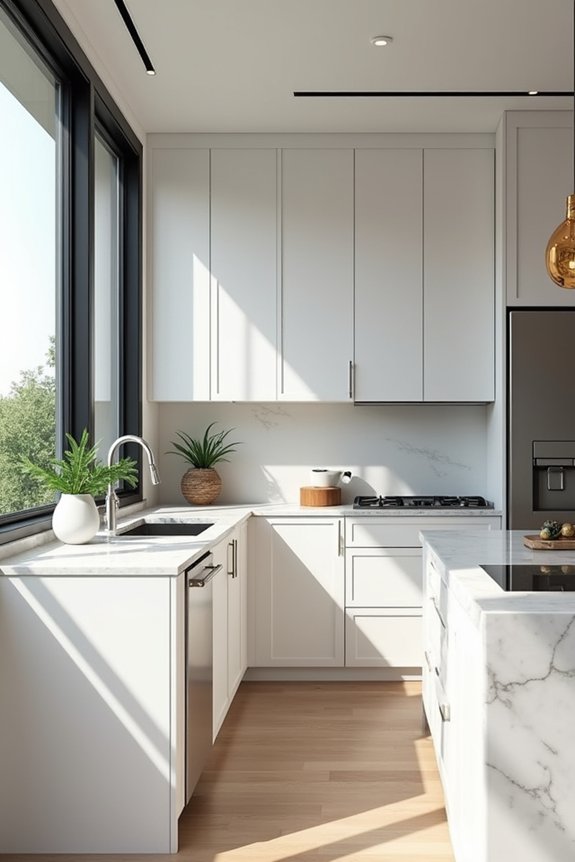
Why does moving around your kitchen sometimes feel like a marathon? The answer lies in your work triangle—the invisible line connecting your fridge, sink, and hob. This triangle determines your workflow efficiency more than anything else.
When you strategically plan appliance placement, you’re creating three distinct zones: prepping, cooking, and cleaning. The closer these stations sit to each other, the fewer steps you’ll take. In a well-designed kitchen layout, positioning your sink near the center between your fridge and range cuts daily movement significantly.
You’re not just arranging appliances; you’re designing your daily rhythm. A well-planned work triangle means you’ll spend less energy shuttling between stations and more time enjoying what you’re cooking. That’s a practical improvement for how you experience your kitchen.
U-Shaped Kitchens: The Storage and Workflow Champion
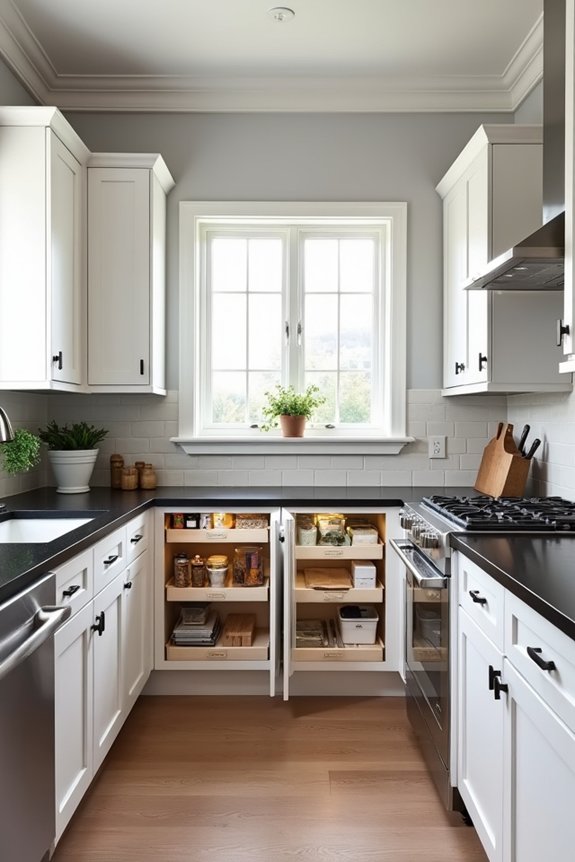
If you’ve ever dreamed of a kitchen that feels spacious yet functional, you’ll want to pay attention to the U-shaped layout—it’s one of the most practical designs available. This configuration maximizes storage and workflow efficiency by utilizing three connecting walls. Your refrigerator sits on one end, the range on another, and the sink nestles near the center, creating that efficient work triangle we discussed earlier. You’ll gain plentiful cabinet space on all sides, which provides excellent organization options. In larger kitchens, adding an island enhances your prep areas further. The benefit? Multiple cooks can work comfortably without bumping elbows. Matching cabinetry across all walls creates visual harmony, while an accent back wall serves as your kitchen’s focal point, pulling everything together.
L-Shaped Kitchens: Flexibility Without Sacrificing Flow
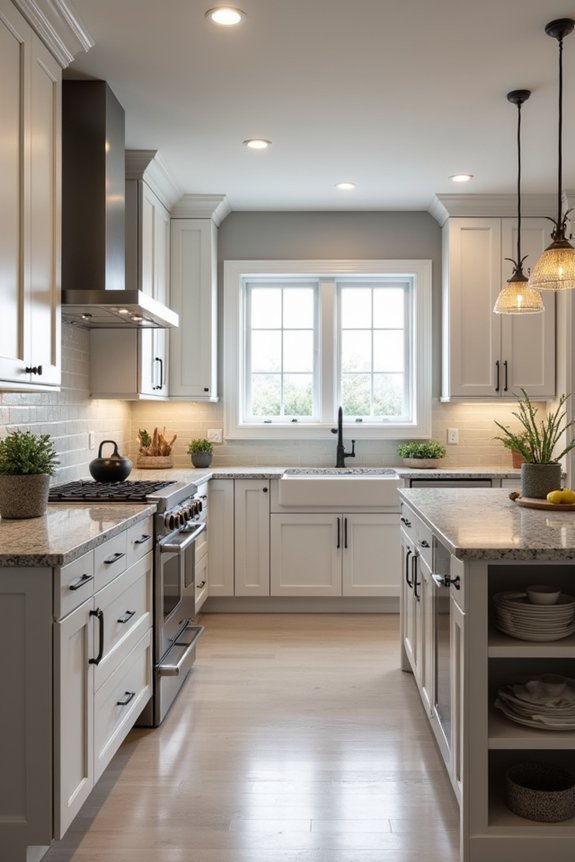
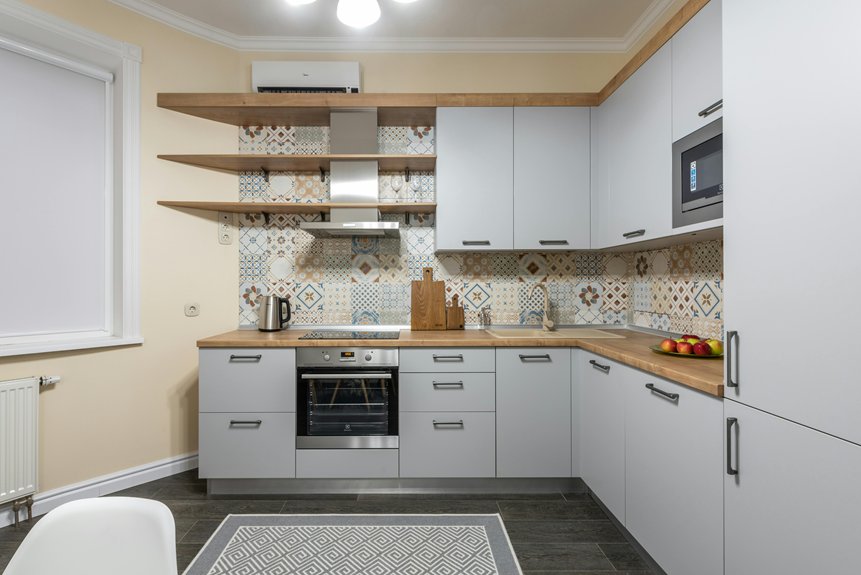
If you’re working with a smaller space or want a kitchen that doesn’t lock you into one rigid setup, the L-shaped design offers a practical solution—it adapts well to apartments, starter homes, and spacious kitchens alike while keeping your workflow smooth and efficient. The classic work triangle (refrigerator, sink, and range positioned strategically) helps you move naturally from task to task, and you can always add an island or kitchen cart later if you need more prep space without feeling cramped. The flexibility works well when you’re deciding what suits your lifestyle, whether that’s creating an open-concept connection with your dining area or maximizing every corner with pull-out organizers and lazy Susans.
Adaptability Across Space Sizes
I’ve found that adaptability across space sizes means you’re not locked into one approach. In smaller homes, the L-shape preserves traffic flow while keeping everything within arm’s reach. Scale up, and you have room to work with. You can add an island or dining table, extending your prep zones without overwhelming the layout.
The real advantage? This configuration respects your space’s unique dimensions. Whether cramped or expansive, your kitchen becomes functional and welcoming—a place where cooking and connection happen naturally.
Efficient Work Triangle Design
Now that you’ve got your L-shaped kitchen working with your space, let’s talk about making it work for you—and that’s where the work triangle comes in.
I’m talking about positioning your sink, range, and fridge strategically. Place them on opposite ends of your L-shaped design, creating distinct prep zones that flow naturally. Your sink between the range and fridge? That’s the ideal location. You’ll minimize steps during cooking and cleanup, which matters when you’re juggling multiple tasks.
This kitchen layout respects how you actually move through the space. Group appliances by function—prep here, cooking there, cleaning elsewhere—and watch your efficiency improve. Even adding an island preserves this triangle while keeping counters accessible.
You’re building a kitchen that works as hard as you do.
Island And Dining Options
What’s stopping you from adding an island to your L-shaped kitchen? It’s one of the smartest moves you can make. An island creates a natural dining area or coffee bar while keeping you connected to guests. When you align your island with your work triangle—fridge, sink, and range—you maintain efficient workflow without any awkward steps. In open-concept kitchens, this setup keeps social interaction flowing while you’re cooking. Your L-shape already gives you distinct prep, cooking, and cleaning zones. Adding an island extends that functionality, expanding your countertop real estate for prepping meals. You’re not sacrificing flow; you’re amplifying it. That’s the flexibility that makes L-shaped kitchens work for modern living.
Galley Kitchens: Peak Efficiency in Tight Spaces
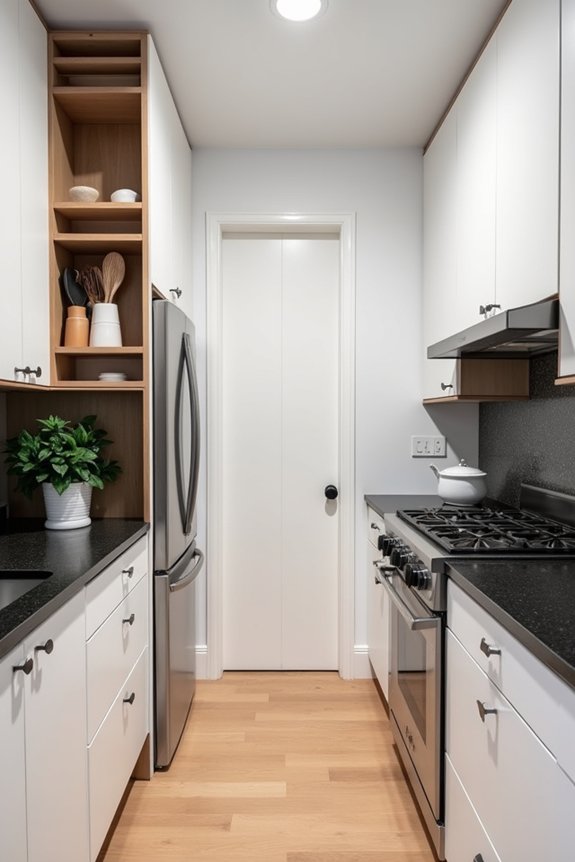
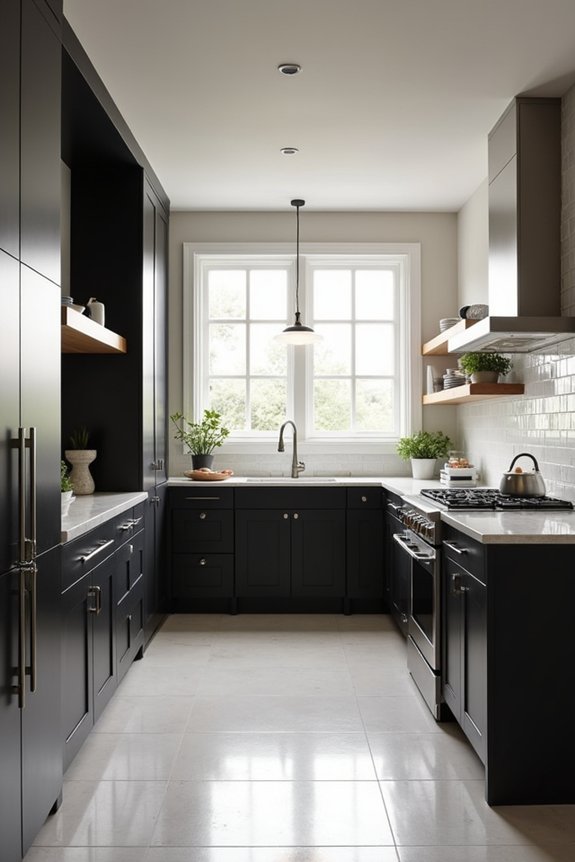
How do you squeeze maximum functionality into a kitchen that feels more like a hallway? A galley kitchen might be your answer. This efficient layout features two parallel walls with appliances and workstations positioned within arm’s reach, creating a streamlined workflow for compact design.
What makes this galley kitchen approach so smart? You’re minimizing wasted steps. Everything you need sits along those two walls, leaving a clear central path for easy movement. Storage maximizes both sides while keeping clutter at bay.
It’s not fancy, but it works. Urban renovations frequently use this layout because it delivers real functionality in tight spaces. If you’re cooking solo in a narrow apartment, this efficient layout makes your kitchen purposeful and livable.
One-Wall Kitchens: Compact Efficiency for Minimal Footprints
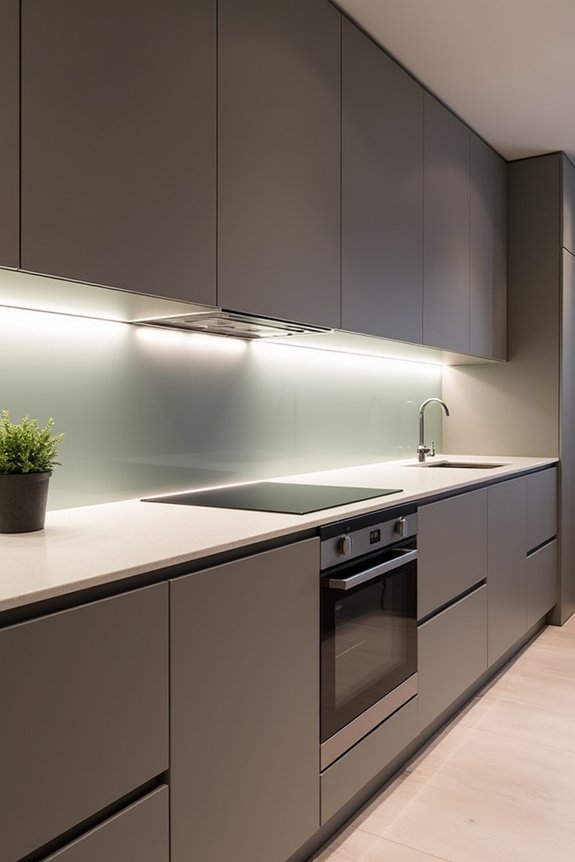
Now we’re looking at one-wall kitchens, where you’ll find everything—your sink, stove, and refrigerator—lined up along a single wall, which is practical if you’re working with limited square footage. I’ve found that keeping this setup between 8–10 feet wide helps you avoid that exhausting shuffle between appliances, and it opens up your whole room since there’s no cabinetry eating into the center of your space. The trick here is getting creative with your storage and counter real estate, since you’re trading some workspace for that extra breathing room you get with a minimal footprint.
Single Wall Setup
When you’re working with limited square footage, there’s something clever about pushing everything onto one wall—and I mean everything. A one-wall kitchen places your stove, sink, and refrigerator in a straight line, creating a linear layout that’s refreshingly straightforward. You’ll appreciate how this setup optimizes your workflow; everything you need sits within arm’s reach, no zigzagging required. Sure, counter space gets tight, but you’re gaining precious floor room that makes your whole space feel bigger and more open. The work triangle—that invisible path between your three main zones—stays compact and efficient on a single wall. It’s honest design: no pretension, just smart planning that respects your space and your time.
Space Maximization Strategies
You’ve got the bones of an efficient kitchen with your single wall, and now comes the fun part—squeezing every ounce of functionality out of that tight footprint.
Smart space optimization starts with vertical storage. Install shelving above counters and use wall-mounted organizers to keep essentials accessible without eating floor space. Your work triangle—fridge, sink, and hob—stays compact and connected along one kitchen layout, letting you move smoothly between tasks.
Consider pull-out drawers and corner carousels that maximize hidden storage. A narrow one-wall kitchen works well when everything has a designated spot. Peninsula additions extend counter space while keeping your main wall as the command center.
This approach makes limited square footage into a kitchen that works for you.
Open-Concept Kitchen Layouts: When Entertaining Matters More Than Efficiency
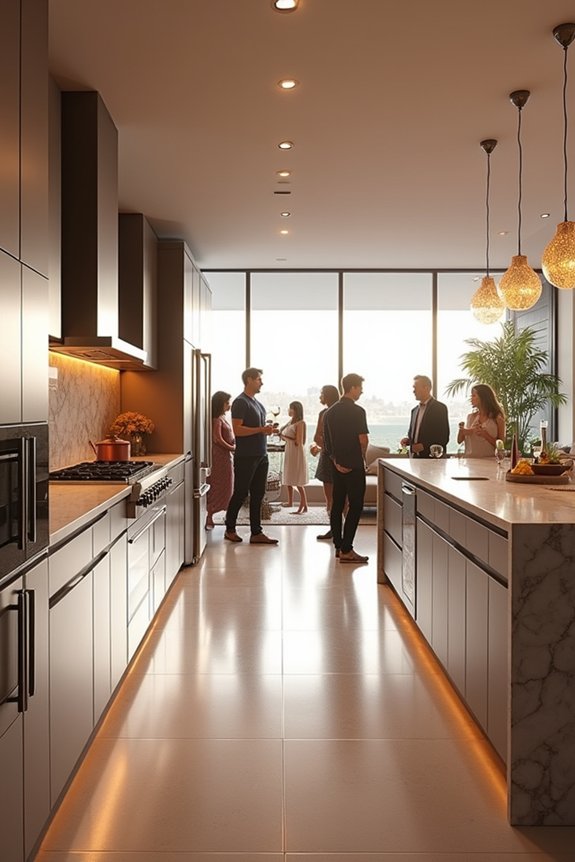
Have you ever hosted a dinner party where you felt trapped behind a closed kitchen door, missing all the conversation? That’s where open-concept layouts work well. Removing walls creates better sightlines and natural light flow between your cooking, dining, and living zones—no more isolation while guests enjoy themselves.
| Design Element | Benefit |
|---|---|
| Eliminated walls | Enhanced natural light and sightlines |
| Large island | Visual separation and gathering spot |
| Consistent flooring | Unified, polished appearance |
Layout efficiency matters, sure, but open-concept prioritizes something equally valuable: connection. You’ll engage with guests while preparing meals. Install panel-ready appliances and align hardware finishes for cohesion. Use a large peninsula to anchor your space naturally. This design choice says you’d rather laugh with friends than work in isolation—and honestly, that’s what entertaining is really about.
Pick Your Winner: Ranking Kitchen Layouts by Your Real Priorities
- Cooking frequency: Daily meal prep demands efficiency; entertaining occasionally suits open designs
- Family size: Multiple cooks need that work triangle; solo chefs thrive in compact single-wall setups
- Space constraints: Galley layouts maximize narrow kitchens; U-shaped designs suit larger homes
- Social needs: Open-concept prioritizes connection; enclosed kitchens offer focused workspace
- Future flexibility: Planning extensions first allows your space planning to adapt as life changes
The best kitchen layout isn’t universally ranked—it’s the one matching your actual rhythms and values.