You should care because minimalist decor cuts through the mental noise cluttering your brain daily.
Fewer items mean less cleaning—saving you 20–40% of your maintenance time—plus lower costs since quality pieces last longer than trendy clutter.
Your space becomes a calm mirror of who you actually are, not who Instagram says you should be.
Plus, you’ll break the impulse-buying cycle that drains both your wallet and peace of mind.
There’s much more to discover about creating a home that genuinely works for you.
[link-whisper-related-posts]Minimalist Decor Reduces Visual Stress and Mental Clutter
Ever notice how you feel more relaxed in a calm, organized space than in a cluttered room?
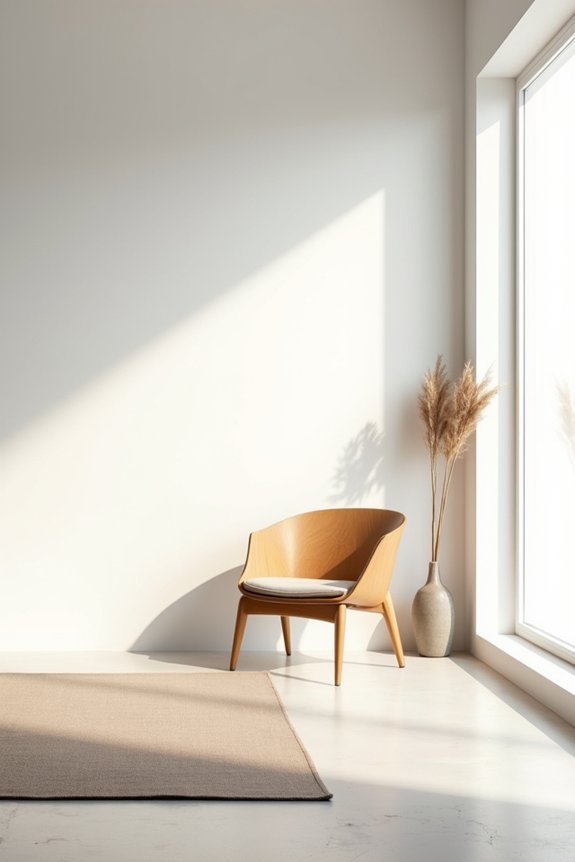
Calm, organized spaces reduce mental strain, while clutter forces your brain to work harder processing visual noise.
That’s because visual noise directly impacts your brain. When you’re surrounded by too many objects and busy patterns, your mind works overtime processing everything. Neutral tones and clean lines give your brain a break, letting you focus on what actually matters.
I’ve experienced this myself—swapping colorful decorations for a minimalist approach changed how I felt at home. By eliminating nonessential items, you’re not just organizing; you’re reducing mental clutter that weighs on you daily.
Consistent color palettes and restrained ornamentation create predictable environments. Your brain processes these spaces more efficiently, supporting relaxation and easier focus. Natural light streaming through uncluttered windows amplifies this calming effect, helping you feel grounded and present in your own home.
How a Calm Space Improves Your Daily Mood and Productivity
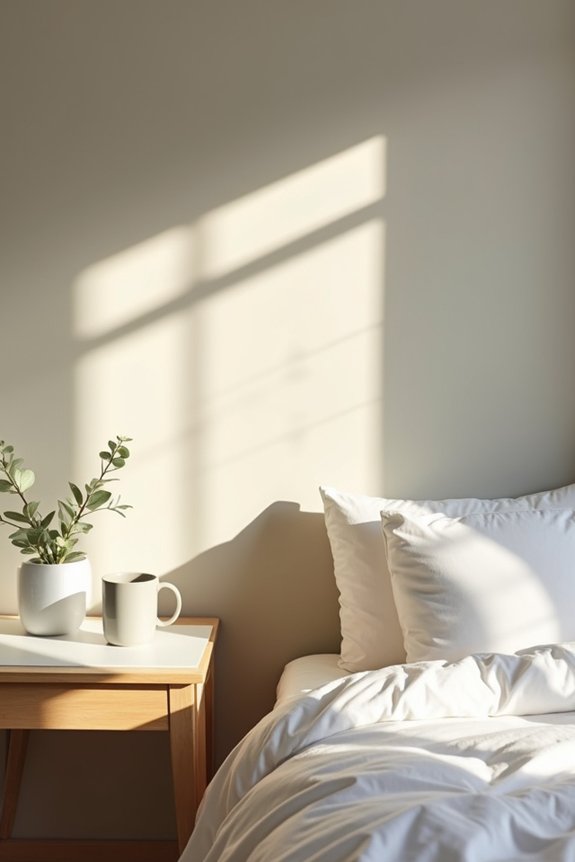
Reducing that mental noise isn’t just about feeling better in the moment—it actually changes how you show up each day. When you embrace minimalism, you’re creating an environment where your brain can function clearly. Open spaces and natural light work together to sharpen your focus, making those work sessions feel less exhausting. I’ve noticed that consistent neutrals eliminate constant visual triggers, so my mood stays steadier throughout the day. Without clutter demanding attention, I transition between tasks more easily, maintaining routines that actually stick. The best part? Warm textures and purposeful accents keep the space inviting, boosting motivation without sensory overload. A calm space isn’t luxury—it’s a productivity tool we all benefit from. You’ll find yourself accomplishing more while feeling better.
Quality Over Quantity: Why Fewer Items Cost Less Over Time
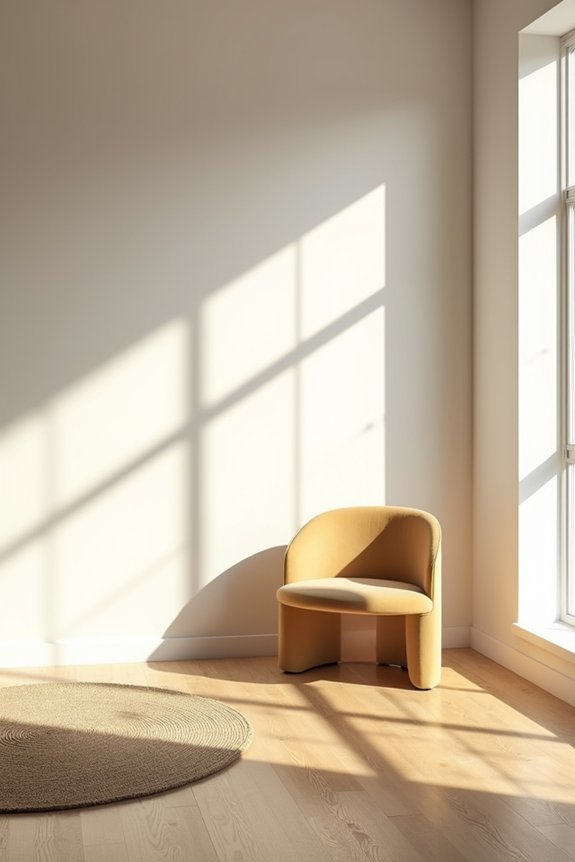
While it’s tempting to fill your home with affordable furniture and decor, I’ve learned that investing in fewer, quality pieces actually saves you money over time. Here’s why: durable items like solid wood tables and natural fiber rugs resist wear, staying functional for years without replacement. That upfront cost? It disappears when you’re not constantly buying new stuff. I’ve watched friends cycle through trendy pieces annually, while my classic-design sofa remains beautiful and relevant. Plus, fewer items mean less cleaning and organizing—real time savings. When you prioritize cost-efficiency through better materials and thoughtful choices, you build a space that reflects who you are and stands the test of time. You’ll spend less, stress less, and benefit from decisions that actually matter.
Minimalist Design Adapts to Any Space, No Matter the Size
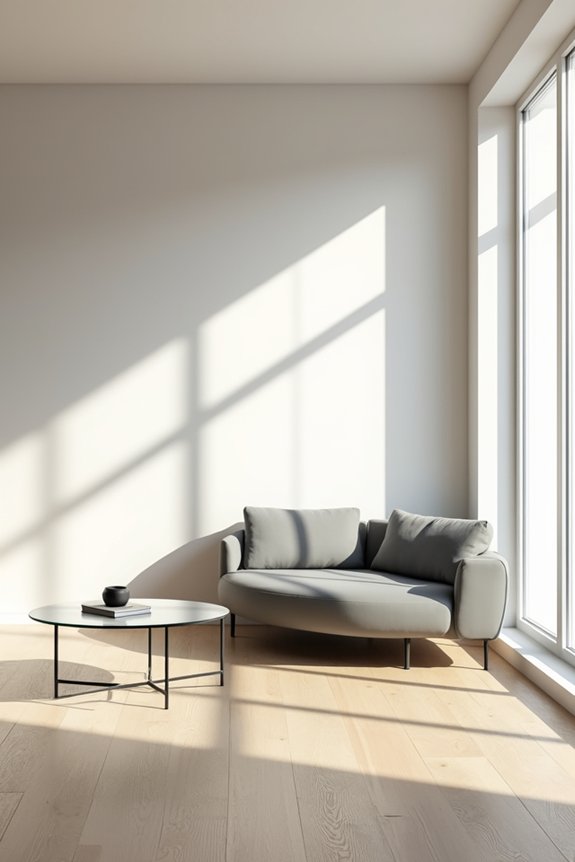
How does a 300-square-foot apartment feel as calm and spacious as a sprawling loft? Minimalist design works on any space, regardless of size. Neutral color palettes create visual continuity, making rooms feel seamlessly connected and larger than they actually are.
Maximizing natural light amplifies this effect. Sheer curtains and strategically placed mirrors bounce sunlight throughout your space, brightening even the darkest corners.
Multi-use furniture is essential for small spaces. A bed with built-in drawers, a coffee table offering storage, or a wall-mounted desk eliminates clutter while maintaining functionality. These pieces do double duty without consuming precious square footage.
When you embrace minimalism, you create breathing room. Your space adapts to your lifestyle, not the other way around.
The Real Cost of Impulse Buying and How Minimalism Stops It
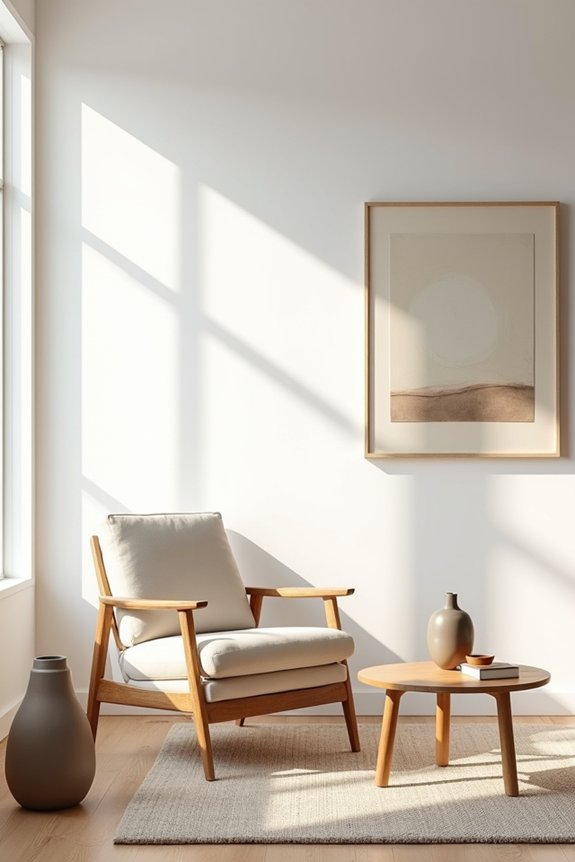
You’ve probably felt that rush when you spot something cute on sale—the feeling that whispers, “I need this”—but here’s the truth: impulse buys are quietly draining your wallet and filling your space with stuff you don’t actually love or use. When you embrace minimalism, you’re not just clearing clutter; you’re breaking the cycle that keeps pulling you back to stores and scrolling through endless options online. Let’s talk about what impulse buying really costs you, how minimalism stops it cold, and why understanding this shift can improve both your space and your financial peace of mind.
The Hidden Financial Burden
Ever notice how that cute throw pillow you grabbed on sale ends up buried in your closet after two months?
That’s where impulse buys quietly drain your wallet. When we purchase without intention, clutter accumulates—and clutter costs money. You’re replacing items you forgot you owned, paying storage fees for overflow, and constantly reorganizing spaces that feel chaotic.
Here’s what minimalism does: I ask myself three questions before buying anything. Will I love this after ten months? Will I actually use it next year? Does it fill a real need? These questions stop me from wasting cash on things I’ll abandon.
Breaking The Impulse Cycle
Why do we keep buying things we don’t need? I’ve realized that impulse control starts with pausing before checkout. When I adopted the three-decision test—”Do I love this? Do I use it? Do I want to store it for ten months?”—my spending habits shifted.
Decluttering one surface at a time gave me immediate visual relief and broke my urge to fill empty spaces. That cleared shelf stopped calling for new stuff.
Here’s what changed my approach to intentional spending:
- Swapped mood-based purchases for purposeful choices tied to my wellbeing
- Built a neutral palette so I’d stop seasonal decor swaps
- Resisted spur-of-the-moment acquisitions by asking real questions
- Reduced long-term costs dramatically
Quality over quantity isn’t just minimalist talk—it’s how I finally stopped the waste cycle and joined others who value what truly matters.
Building Long-Term Clarity
That intentionality shifted everything. Through decluttering my home systematically, I discovered what actually mattered. Suddenly, my goals became clearer. Instead of chasing trends, I invested in timeless pieces like quality textured vases and natural throws that earn their place year-round.
The real benefit? When you stop the impulse cycle, you reclaim mental space. Your home reflects your priorities, not your impulses. That’s building long-term clarity.
Timeless Decor Means You Won’t Redecorate Every Season
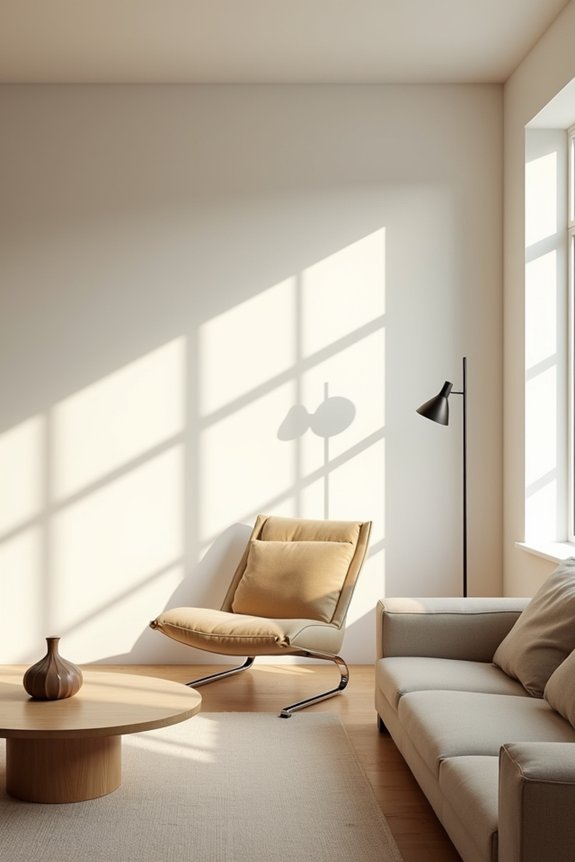
How much time and money do you spend swapping out your home’s look every few months?
How much time and money do you waste constantly redecorating? Choose timeless pieces instead.
I used to redecorate constantly, exhausted by the cycle. Then I discovered that choosing neutral palettes and timeless pieces actually frees me. A single versatile vase, warm throws, and textured accessories work beautifully year-round with simple styling tweaks.
Before buying anything new, I ask myself three questions:
- Will I love it for at least ten months?
- Can I use this next year too?
- Does it fill a meaningful space in my home?
- Is it something I’d reach for again?
These questions changed my shopping habits. Now my home feels calm and organized because I’m choosing lasting favorites over disposable trends. Year-round styling means less storage, less clutter, and less stress. That’s the minimalist decor difference.
Easier Cleaning and Maintenance in a Simplified Home
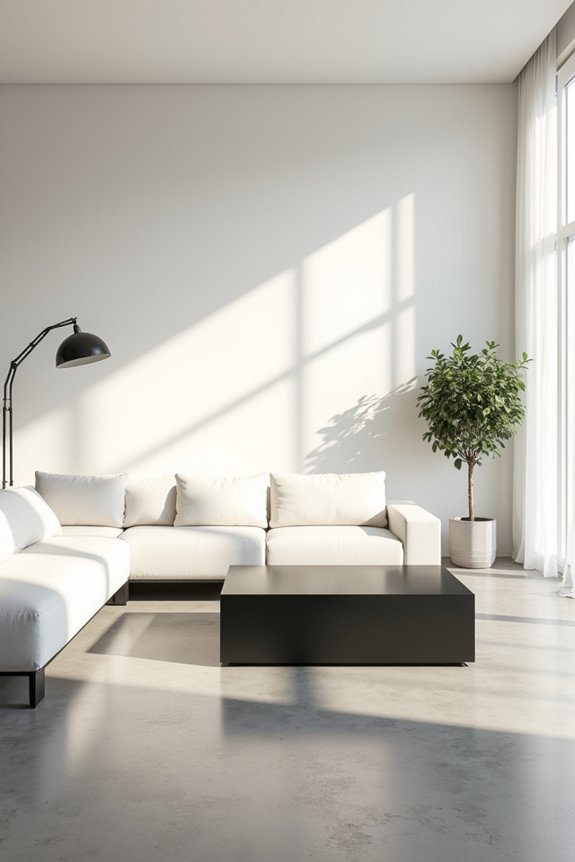
I’ll be honest—cleaning my old cluttered apartment was exhausting, but once I embraced minimalism, I discovered something valuable: fewer items meant I wasn’t constantly wrestling with dust collectors and could actually finish vacuuming in half the time. With less stuff around, my daily maintenance routine became straightforward and manageable, so I’m spending weekends doing things I actually enjoy instead of deep-cleaning forgotten corners. You’d be surprised how much easier home care gets when you’re not managing excess clutter and can focus on keeping quality pieces looking sharp.
Less Stuff, Less Time
Ever notice how your cleaning day stretches longer when you’ve got stuff everywhere?
Here’s the truth: I’ve discovered that decluttering changes my entire routine. When I embrace minimalism, I’m not wrestling with endless surfaces to dust or items blocking my path. My maintenance becomes straightforward—fewer decorative pieces mean less tedious dusting, and streamlined spaces need less frequent deep cleaning.
Consider what changes:
- Dusting takes half the time without knickknacks cluttering shelves
- Organizing vanishes as a weekly headache—no constant rearranging
- Storage becomes manageable because I’m not overstuffing drawers
- Cleaning feels purposeful instead of overwhelming
I’ve noticed that fewer belongings genuinely shrink my workload. Those durable, easy-to-clean pieces I’ve kept require minimal effort. My closets stay organized without constant sorting. The result? I reclaim hours weekly. Minimalism isn’t about deprivation—it’s about reclaiming time for what actually matters to you.
Reduced Clutter Management
What if your cleaning routine could actually feel manageable instead of like an endless battle?
Here’s the truth: reduced clutter improves your home’s maintenance efficiency. When you embrace minimalist decor, you’re not just making your space look better—you’re reclaiming your time. I’ve noticed that fewer items mean fewer surfaces demanding attention. Your vacuuming becomes faster because clear floors aren’t cluttered with objects to move around. Dusting takes minutes instead of hours when you’re not working around countless decorations.
Results happen with organization systems. Bins and trays stay tidier longer when they contain only essentials. You’ll spend less time rotating seasonal storage, since decluttering year-round eliminates that overwhelming shuffle. Plus, fewer textures and fabrics mean you need fewer cleaning products. That’s maintenance efficiency at its finest—working smarter, not harder, alongside others who understand this lifestyle shift.
Streamlined Daily Maintenance
Building on that freed-up time you’ve already gained, here’s where minimalism delivers practical benefits: your actual cleaning routine becomes faster and simpler.
When you own fewer items, maintenance becomes genuinely manageable. You’ll spend 20–40% less time cleaning daily because there’s simply less to dust, wipe, and organize. Open spaces with neutral palettes let you spot dirt instantly, making cleaning efficient. High-quality, durable pieces you’ve intentionally chosen need replacing less often, cutting ongoing maintenance tasks significantly.
Here’s what changes:
- Fewer textiles mean less laundry stress
- Minimalist décor makes fingerprints and spills visible immediately
- Open layouts let light expose grime faster
- Durable items reduce replacement headaches
You’re joining people who value time over stuff. This approach works because cleanliness doesn’t require complicated routines—just fewer surfaces demanding attention. That’s the practical advantage of minimalism.
Minimalism Aligns Your Space With Your Actual Values
How often do you look around your home and realize you’re surrounded by things you don’t actually use or love? That’s where minimalism matters. When you embrace this philosophy, you’re not just reducing clutter—you’re building a space that reflects who you are. Instead of filling rooms with impulse purchases, you choose pieces that matter to you. Each item becomes intentional, serving a real purpose in your daily life. This alignment between your space and your actual values creates something meaningful: a home that belongs to you. You’re no longer maintaining someone else’s vision of what your room should look like. You’re creating an environment where every object tells your story, making your space genuinely yours.
How Empty Walls and Open Floors Create a Sense of Breathing Room
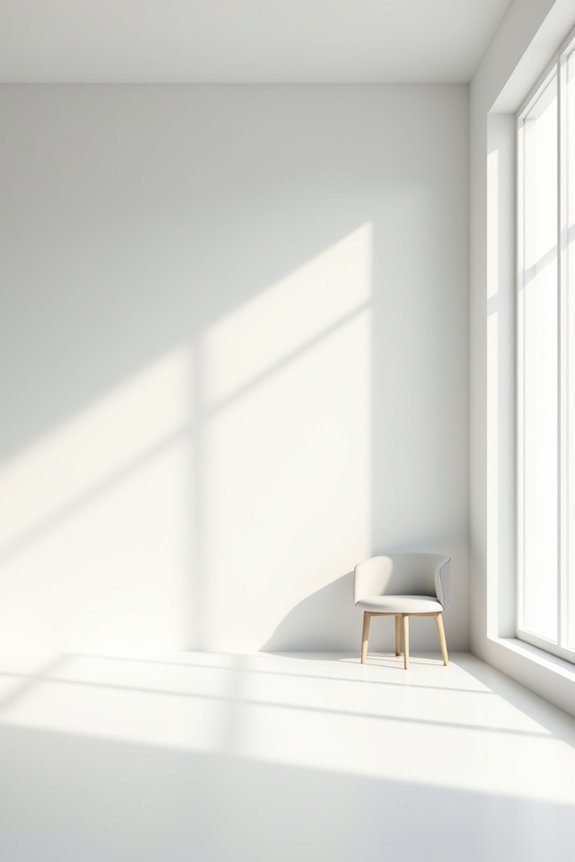
Once you’ve cleared away the things that don’t serve you, you’ll notice something remarkable: your space actually feels bigger.
When you remove what doesn’t serve you, your space transforms—it actually feels bigger, lighter, and infinitely more breathable.
When I removed the clutter from my walls and floors, I discovered what minimalism offers: breathing room. Empty walls aren’t lazy—they’re deliberate. They create negative space that lets your eyes rest and your mind settle. Open floors give you physical freedom to move without obstacle.
Here’s what this breathing room does for you:
- Reduces visual noise that exhausts your brain
- Lets natural light bounce around freely
- Makes cleaning faster (no dust collectors!)
- Gives you genuine calm, not just a tidier room
This isn’t about having nothing. It’s about having only what matters. When your walls breathe, you breathe too. You’re not alone in craving this peace—we all deserve spaces that feel spacious and welcoming.
Building a Home That Reflects Who You Are, Not What Trends Demand
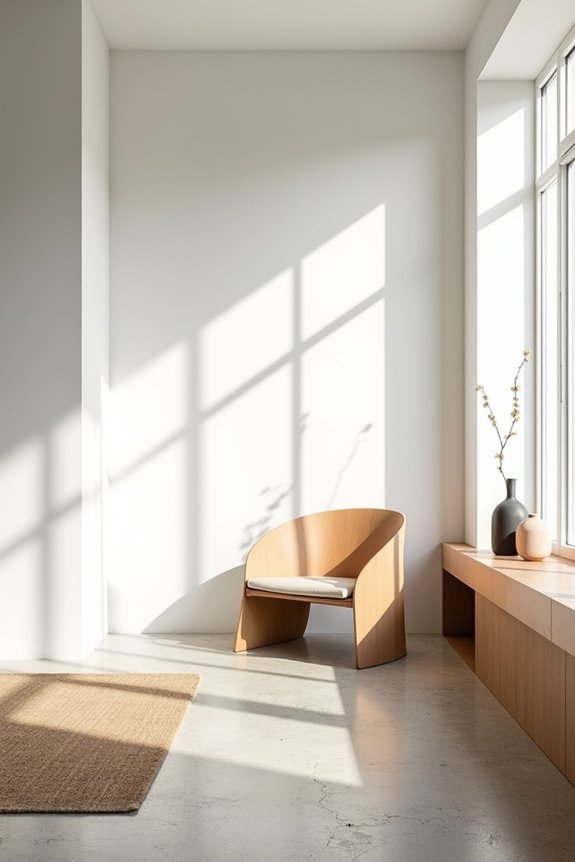
What if the most stylish choice you could make is the one that actually makes you happy?
I’ve learned that minimalist decor isn’t about following Instagram trends—it’s about intentionality. When I stopped chasing what’s popular and started choosing pieces that genuinely matter to me, my space changed. Each item now serves a purpose or brings me joy.
| What Trends Say | What You Actually Need | Your Win |
|---|---|---|
| Buy the latest color | Choose neutral palettes | Timeless, calm spaces |
| More is better | Quality over quantity | Less overwhelm, more peace |
| Follow everyone else | Honor your values | A home that’s truly yours |
Building a home that’s truly yours means moving slowly, phase by phase. You’re not rushing. You’re building something real—a space that whispers who you are, not shouts what’s trendy.