
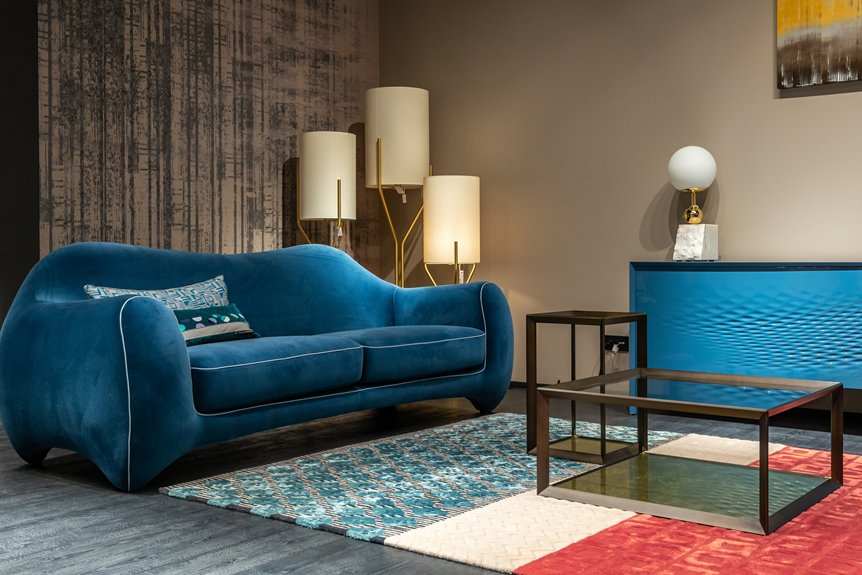
I decorate by starting with one room, stacking everything visible, then honestly asking: does this spark joy or serve a purpose? I keep only pieces that pass the test, arranging them in odd-numbered groupings of three to guide your eye naturally. I rely on quality textures—raw wood, linen, brushed metal—and calm neutrals like whites and soft grays. Negative space becomes my best design tool. Then I hang art at eye level with intentional spacing, edit regularly, and let authenticity shine without decorative noise. There’s actually a specific strategy behind every placement choice.
[link-whisper-related-posts]Start With One Room and Stack Everything Visible
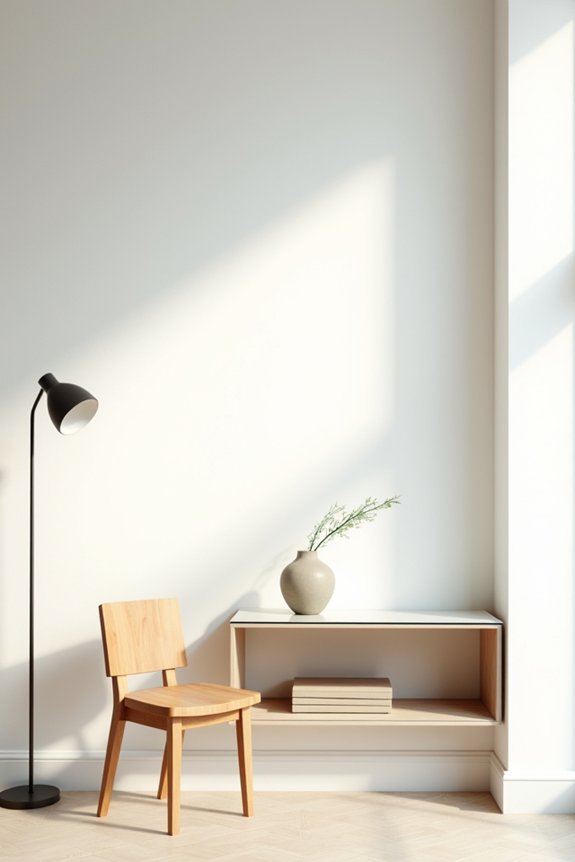
When you’re ready to adopt minimalist decor, I’d recommend picking just one room to start—your bedroom, living room, or even a small office works well. This approach keeps you focused and prevents clutter from spreading everywhere.
Next, gather every decoration in that space into one central pile. Yes, everything. Your framed pictures, shelf items, lamps, knickknacks, and wall hangings all go there. I know it looks chaotic, but that’s exactly the point. This comprehensive view shows you what you actually own.
Once stacked, you’ll evaluate each piece. Does it spark joy? Does it serve a purpose? This honest assessment helps you decide what stays and what goes.
Only after completing this room entirely should you move forward. Finishing one space fully maintains your momentum and prevents decision fatigue.
Evaluate Each Piece by Emotional Response
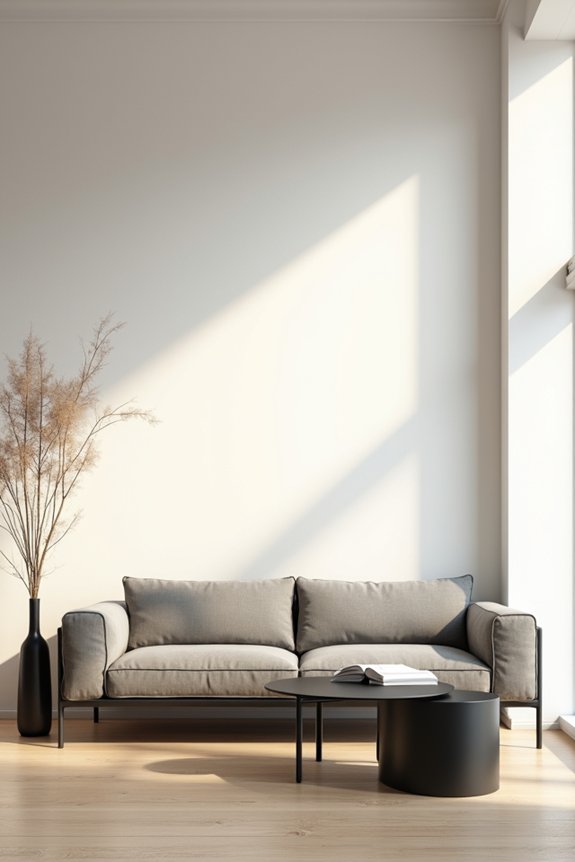
Now comes the part where you actually get to feel things—and I mean really feel them—as you pick up each item and notice what happens inside. When you hold something, ask yourself straight up: does this spark joy, or does it make you feel heavy? Once you sort everything into keep and not-keep piles based on genuine emotion rather than guilt or obligation, your space will feel lighter, and your whole room will feel clearer.
The Joy Test Method
How’d you like a reliable way to decide what stays and what goes?
I’ve found the joy test method makes decorating more enjoyable and less overwhelming. Here’s what I do: I pick up each piece individually and honestly ask myself, “Does this spark joy?” Not obligation. Not guilt. Pure, honest joy.
I sort items into two piles—keep and not keep. Then I start with my absolute favorites, the pieces that make me smile. I add remaining items one by one, reassessing how I feel after each addition. Sometimes a beloved vase loses its appeal next to something better. That’s totally okay.
This emotional approach means I’m surrounding myself only with things I genuinely love. No settling. No “maybes.” Just pieces that truly matter to me.
Sorting By Emotional Attachment
Your gut feeling matters more than you might think. When sorting by emotional attachment, you’re curating a life that feels like yours. I’ve learned that minimalist design works well when we keep only what sparks genuine joy or serves us well.
Here’s my approach:
- Pick up each piece and notice your immediate reaction—does it make you smile or feel indifferent?
- Separate items into two piles: ones that spark belonging and comfort versus those that don’t resonate with you
- Pay attention to which decorative pieces enhance your space and which ones drain your energy
This isn’t about owning less for its own sake. It’s about surrounding yourself with things that actually matter to you, creating a home that shows who you really are and where you belong.
Define Your Color Base: Calm Neutrals and Tonal Accents
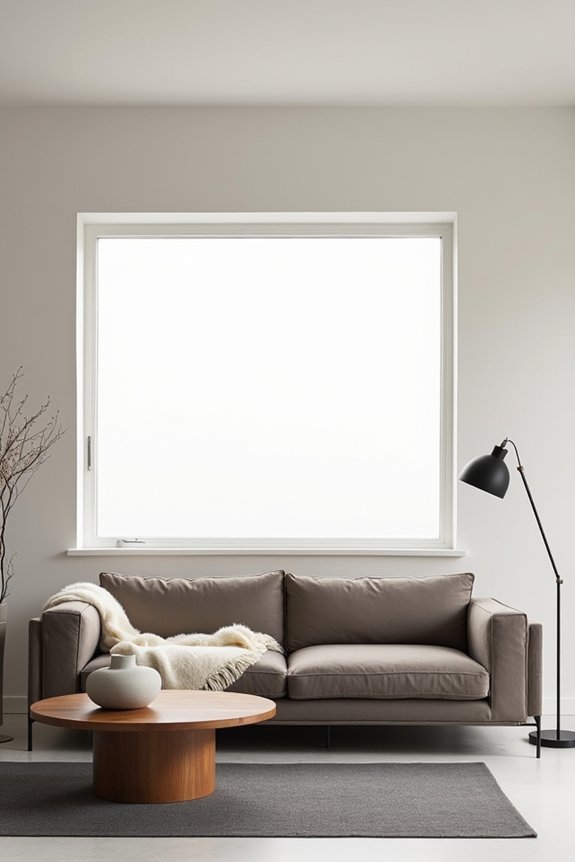
What makes a minimalist space feel both spacious and serene? It comes down to your neutral color foundation. I start with whites, beiges, and grays across my walls and furniture—they act as a blank canvas that makes rooms feel larger. Then I add subtle touches of color through pastel cushions or small décor accents rather than painting entire surfaces bold shades. This approach maintains calm without overwhelming the space. I maintain consistent tonal ranges throughout, so my textiles and wall colors work together in harmony. When I want visual interest, I rely on artwork or natural textures rather than saturated colors. This strategy allows natural lighting and quality pieces to stand out, creating that peaceful, cohesive minimalist feel.
Choose Uneven, Odd-Numbered Groupings
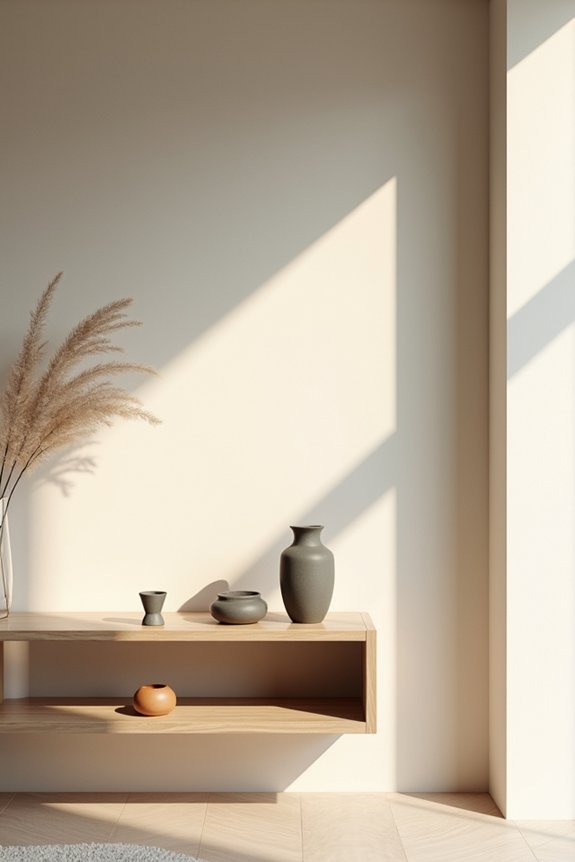
I’ve found that when I arrange three items instead of two or four, my eye instincts travel around the room rather than getting stuck on one spot, which sounds counterintuitive but works in practice. Odd numbers create a subtle sense of movement and tension that keeps a space feeling active, even when you’re going for a calm, minimalist approach. You’ll notice your room feels more deliberate and memorable once you embrace uneven groupings—it’s like your décor finally gets permission to exist without apology.
Why Odd Numbers Work
Ever notice how three candles on a shelf catch your eye more than two? That’s because odd numbers create movement and visual interest in ways even groupings simply can’t match. When I arrange items in threes, the composition feels naturally balanced without looking staged or overcrowded.
Here’s why odd-numbered groupings work so well:
- Your eye travels around the space naturally, preventing that boring, static feeling
- Three items hold attention better than pairs, making displays more memorable
- Uneven arrangements feel calculated and deliberate, not random
These groupings aren’t just design rules—they’re how our brains actually process space. Odd numbers guide us through a room with rhythm and purpose. When you use this principle, your minimalist décor becomes purposeful rather than sparse.
Visual Movement And Balance
How do you arrange objects so they actually draw your eye instead of feeling stuck in place? I’ve found that uneven groupings create the visual movement your space needs. When I display three candles of different heights—say, 4 inches, 8 inches, and 6 inches—my eye instinctively travels between them. This odd-numbered approach to minimalist decor balance works well and feels deliberate.
The trick? Varying sizes prevents that flat, boring feeling symmetry gives you. I group a tall vase with two smaller ceramic pieces, and suddenly the arrangement has life. You’re not fighting against perfect pairs that feel stiff; instead, you’re guiding viewers’ eyes on a natural journey through your space.
This strategy keeps your minimalist decor balanced without overcrowding. Three items feel just right—enough impact, zero clutter.
Use Negative Space as a Decorating Strategy
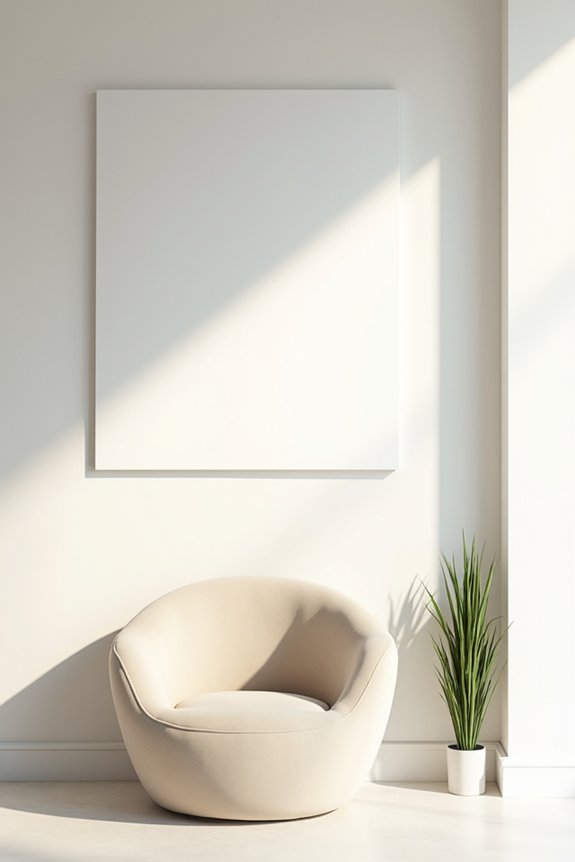
What if the best thing you could add to your home was actually nothing at all? I’ve discovered that negative space—intentionally blank areas—changes how I experience my living spaces. It’s not laziness; it’s strategy.
Here’s how I use negative space effectively:
- Clear focal points – I leave walls mostly bare so my single artwork or statement plant naturally draws attention
- Create openness – Uncluttered surfaces make rooms feel larger and brighter without renovations
- Reduce mental clutter – Calm, relaxed atmospheres happen when distractions disappear
I regularly edit my spaces, removing nonessential items before they accumulate. This practice keeps everything deliberate. You’ll notice how architectural features suddenly stand out when you’re not competing with crowded shelves. That breathing room? It’s where minimalist design works best.
Prioritize Quality Pieces and Thoughtful Finishes
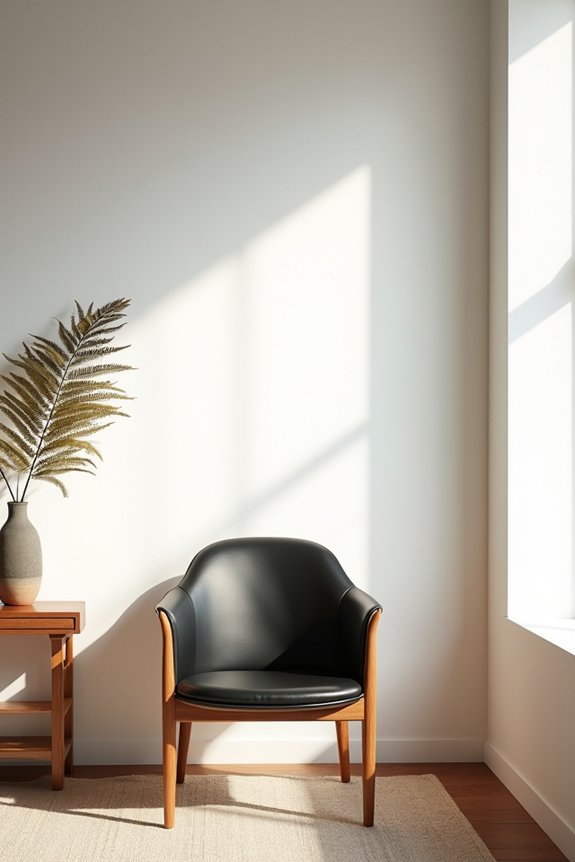
In minimalist spaces, I’ve learned that one beautiful wooden chair beats a set of five cheap ones every single time. When I stopped buying quantity, my room actually felt better. I invested in a quality duvet cover with real linen—something I’ll use every night for years. That single upgrade improved my bedroom more than ten mediocre pillows ever could.
Here’s what changed everything: I chose furniture with clean lines and real materials. Premium upholstery, solid wood, textured plaster walls—these thoughtful finishes bring warmth without clutter. I coordinated everything: matching metals on my lighting, consistent wood tones across pieces.
You’ll notice the difference right away. Fewer items mean each one matters. Your space becomes something you’ve chosen carefully, with purpose—not like you’re just filling emptiness.
Choose Texture and Shape Over Decorative Details
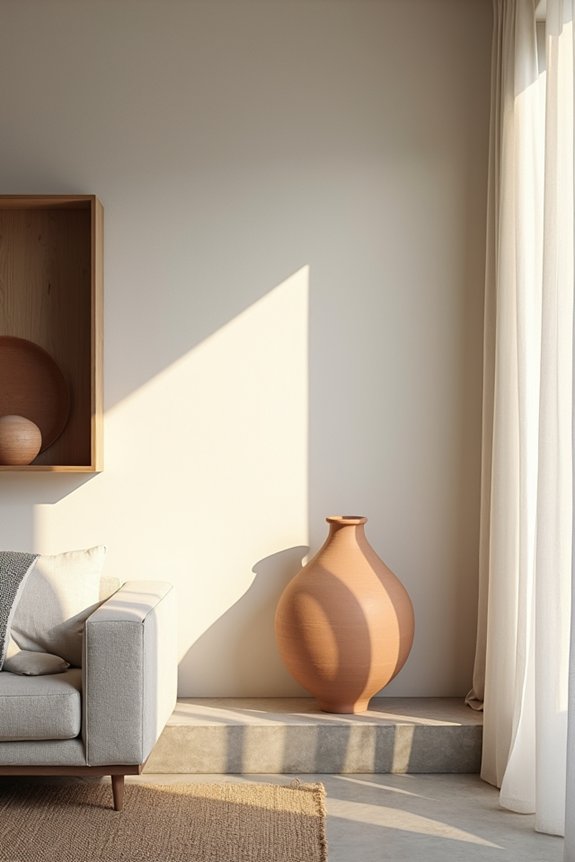
Forget the ornate picture frames and patterned throw pillows—texture and shape do the substantial work in a minimalist room. Focusing on tactile finishes creates warmth without clutter, and it’s easier than decorating with dozens of objects.
Here’s what to prioritize:
- Natural materials like raw wood, linen, and plaster that invite touch and add visual depth
- Curved and linear forms combined strategically—a rounded ceramic vase next to geometric shelving keeps things interesting
- Muted, tactile surfaces such as wool rugs and brushed metal that provide dimension through finish alone
When you choose pieces with distinct silhouettes and quality textures, your space functions as a coherent whole. You’re building an environment where every element earns its place through authentic character rather than decorative noise.
Hang Art at Eye Level, With Intentional Spacing
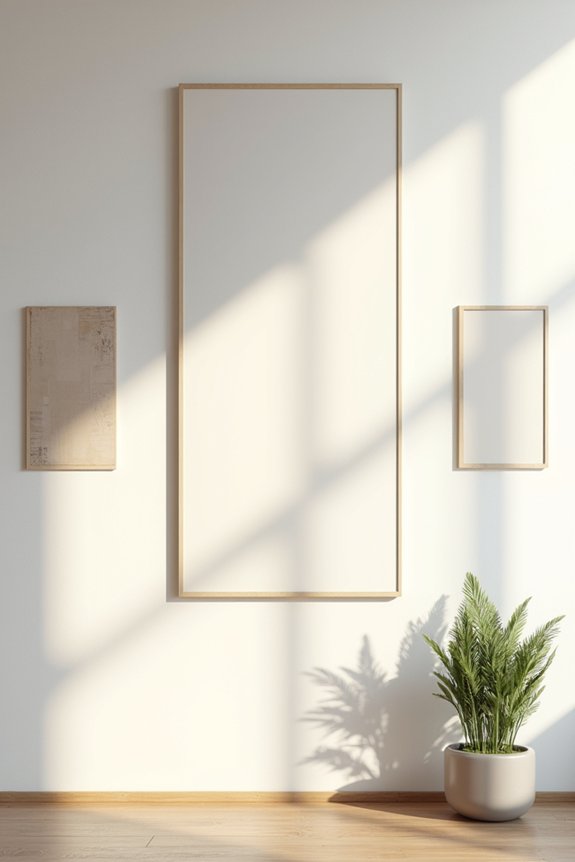
Now that you’ve mastered texture and shape, it’s time to tackle what goes on your walls—because hanging art thoughtfully matters as much as choosing what you hang. Eye level is your best friend here. In standing spaces like entryways, aim for about 57 inches off the ground, which aligns with where most people naturally look. But if you’re decorating a dining room where you’ll sit, hang pieces lower so you can actually enjoy them from your seat. Maintain 2 to 4 inches between artwork in any grouping. This consistent spacing keeps things cohesive without feeling cluttered. You’re not overwhelming your space—you’re creating deliberate moments that draw people in and make them pause.
Edit Your Space Regularly to Maintain Calm
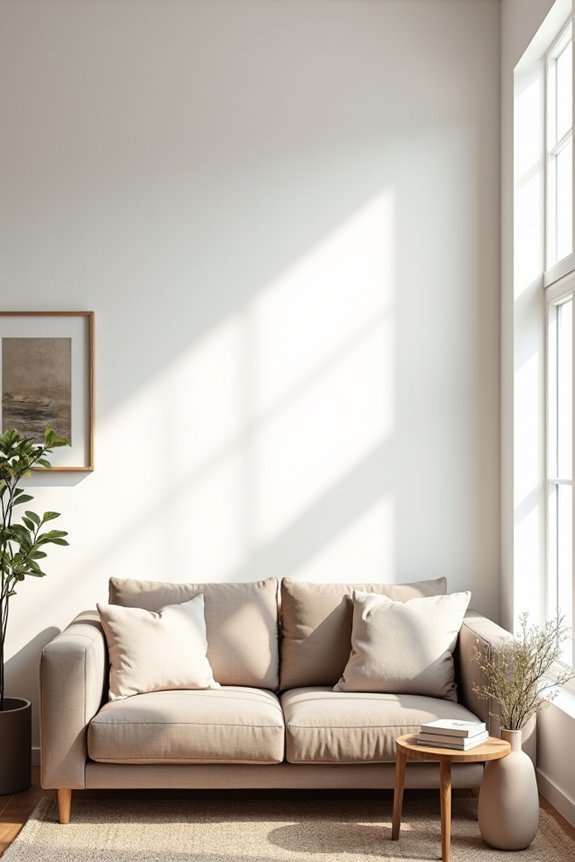
Because minimalism isn’t a one-time project, you’ve got to keep editing your space to preserve that calm you’ve worked so hard to create. I schedule reviews every few months to reassess what actually belongs in my minimalist home.
Minimalism requires ongoing maintenance—schedule regular reviews to reassess what truly belongs in your space.
Here’s what keeps me grounded:
- Room-by-room decluttering—I tackle one space at a time, centralizing items to evaluate what stays
- Honest emotional checks—I ask myself if each piece brings joy or serves a real purpose
- Surface maintenance—I rebalance decor afterward, preserving negative space so floors stay unobstructed
Tracking these changes helps me build a sustainable mindset that values quality over quantity. When I notice myself tempted by new purchases, I remember past edits. That awareness shifts everything. Regular editing isn’t tedious; it’s how I maintain the peaceful space I genuinely love living in.