

A colorful space stays minimalist when you anchor it with a neutral foundation—think soft whites, beiges, or light grays on your walls. Then you strategically place bold accent colors on meaningful pieces like pillows, artwork, or a single statement chair. This approach lets your colors work without competing for attention. Use negative space wisely so those vibrant pieces become the main focus rather than visual chaos. Stick to one or two main accent colors, test them under real lighting with peel-and-stick samples, and you’ll see how restraint combines boldness with sophistication.
[link-whisper-related-posts]The Foundation: How Colorful Spaces Stay Minimalist
How do you fill a room with vibrant hues without creating visual chaos? The answer lies in starting with a neutral palette.
I use soft whites, beiges, or light grays as my foundation—think of them as the quiet stage where color performs. This restrained color approach prevents overwhelm. Next, I introduce focal accents deliberately. Maybe one bold artwork or a colorful chair becomes my centerpiece, anchored against calm surroundings.
Natural light plays an important role here. It highlights my chosen colors without amplifying clutter. I leverage negative space generously, keeping surfaces uncluttered so my accents have room to exist. Simple silhouettes on furniture help too—they won’t compete with vibrant throws or cushions.
Balanced contrast emerges naturally when you respect emptiness. You’re not filling every corner; you’re strategically placing color where it matters most.
Which Colors Work Best in a Minimalist Room
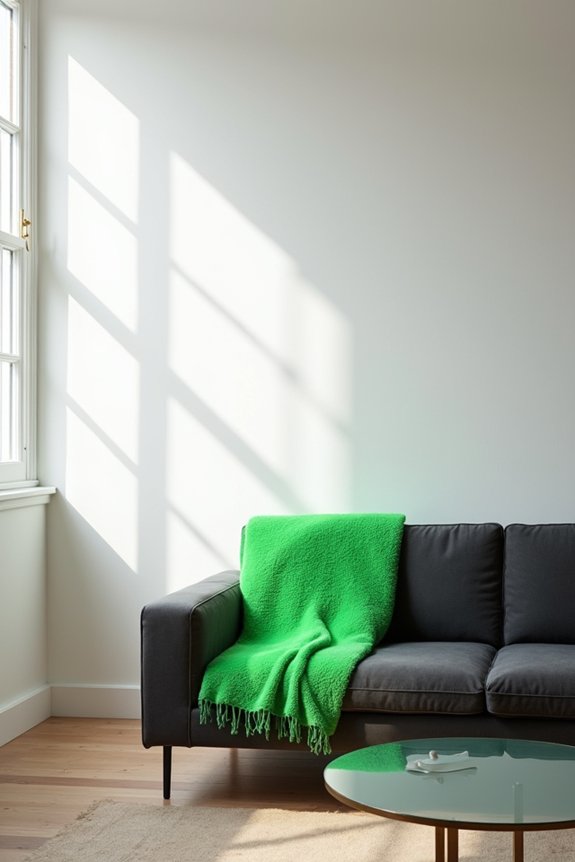
I’ve found that choosing a palette strategically and sticking with it works well for a colorful minimalist room. Start with a neutral foundation (think soft whites, warm beiges, or light grays) that lets your accent colors shine without competing for attention, then layer in one or two main colors through throws, cushions, and art pieces. By adding depth through subtle variants of your chosen colors—like pairing a warm taupe wall with deeper charcoal accents and natural wood tones—you create visual interest while keeping the space calm and intentional.
Neutral Foundation Palettes
The foundation of any minimalist space is its neutral palette—and it’s worth getting right. Starting with a soft neutral base—whites, creams, beiges, or warm grays—creates a canvas for your entire room. This neutral foundation keeps things calm and connected, letting your space breathe without visual clutter.
Depth comes from introducing muted tones that add subtle variation without overwhelming the room. Think slightly lighter or darker shades of your chosen neutral, creating layers that feel deliberate rather than monotonous. This approach lets you reserve bold hues for focal points, keeping everything else in soft neutrals for balance.
| Color | Best For | Mood |
|---|---|---|
| Cream | Walls | Warm |
| Gray | Trim | Cool |
| Beige | Ceilings | Calm |
| Taupe | Accents | Sophisticated |
Testing samples under different lighting conditions allows your cohesive palette to work as intended.
Accent Colors Strategically
While neutrals form your calm foundation, accent colors bring personality and visual interest to your minimalist space—but you’ve got to use them thoughtfully. I’ve learned that selecting one or two main colors works best. Think deep navy paired with warm terracotta, or soft sage with charcoal gray.
The key? Controlled measures. Place your accent colors strategically on meaningful items like artwork, a statement chair, or throw pillows against your neutral base. This creates subdued contrast without chaos. Your balanced palette stays harmonious when accent colors don’t compete for attention.
I anchor mine through a bold piece—perhaps a modern painting or upholstered bench. This approach keeps everything working together, reinforcing the calm, intentional feeling that makes minimalism feel like home, not sterile.
Depth Through Subtle Variants
How do you create depth in a minimalist room without introducing visual clutter? Subtle variants within your neutral palette are your covert advantage. Instead of stark whites, layer soft taupe, pale greige, and light greys together. These muted tones work beautifully with natural materials like linen and wood, creating richness without chaos.
| Color | Best Use | Lighting Reflection |
|---|---|---|
| Soft Taupe | Walls | Warm, inviting glow |
| Pale Greige | Textiles | Subtle depth layers |
| Light Grey | Accents | Cool, calming effect |
| Cream | Natural materials | Soft, diffused warmth |
Test your color strategy using large-format swatches under different times of day. You’ll notice how lighting reflections shift each shade. This restrained approach keeps your space feeling calm while building visual interest through depth rather than bold decisions.
Strategic Color Placement: Using Bold Accents Sparingly
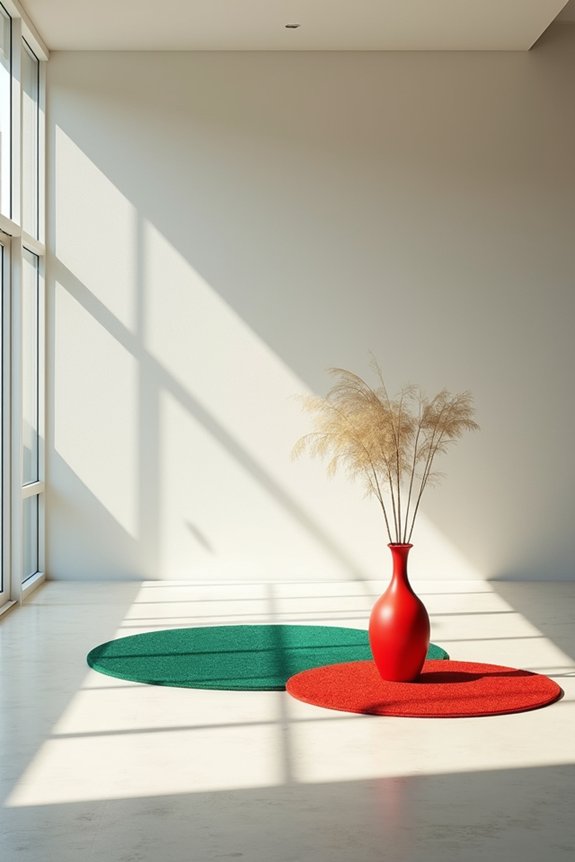
Ever wonder why some colorful spaces feel chaotic while others feel organized and calm? The answer lies in strategic color placement. You’ll want a neutral base—think soft whites, beiges, or light grays—that grounds your bold accents perfectly. Here’s the thing: selective accents matter. Rather than scattering colors everywhere, I choose one or two main hues and repeat them in controlled measures through throws, cushions, and art. This creates a cohesive palette that avoids clutter. Try pairing cool and warm tones together, like navy with mustard, for dynamic contrast. When you’re thoughtful about where color lives in your space, restraint becomes your superpower. That’s when minimalism and boldness finally work together.
Negative Space as Your Secret Weapon
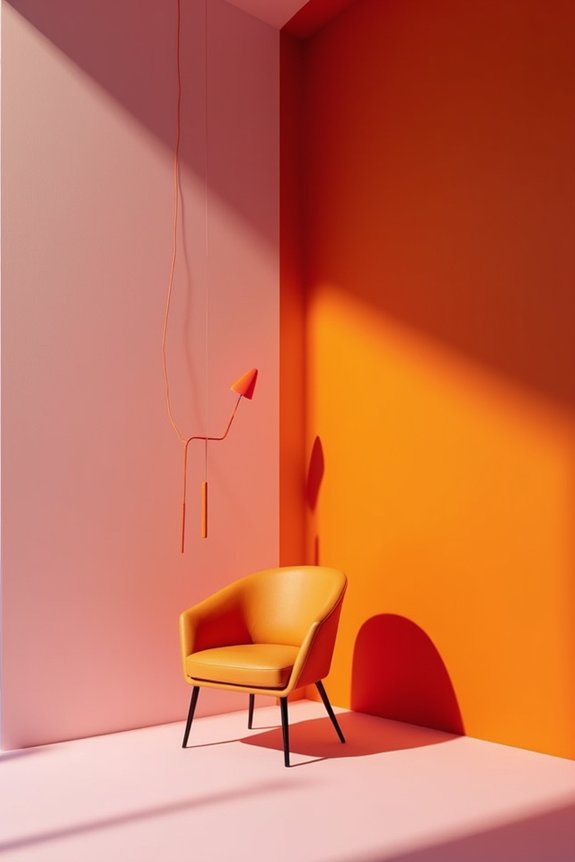
What if I told you that the emptiness in your room matters just as much as what you put in it? I’ve learned that negative space creates balance in a colorful minimalist home.
You see, a neutral palette paired with strategic color accents needs breathing room to work. By leaving clean lines between furniture pieces and keeping walls partially bare, you’re not being lazy—you’re being deliberate. This contrast actually makes your bold colors stand out more.
Think of negative space like silence in music. It’s the pause that lets the melody land differently. Sparse shelving and open corridors create simplicity and calm, guiding your eye exactly where you want it to go. Your colorful accents become the focal points when they’ve got space around them.
Texture and Materials That Add Depth Without Clutter
Here’s the thing about minimalist spaces—they can feel flat and cold if you’re not intentional with your material choices. I’ve learned that texture and materials are your secret allies for creating depth without clutter. By layering tactile elements thoughtfully, you build a sparse room into something inviting.
Consider these approaches:
- Natural wood pieces with visible grain patterns that warm neutral color palettes
- Linen throws and cushions in soft tones that invite you to touch and relax
- Stone or concrete accents that ground your space with subtle visual interest
- Matte textiles that catch light beautifully without adding busy patterns
When you combine these materials with neutral colors, you’re not sacrificing personality—you’re creating a clutter-free sanctuary. The depth comes from honest surfaces, not from stuffing your space. That’s minimalism done right.
Choosing Paint Color for a Calm, Minimalist Space
I’ve learned that a calm, minimalist space begins with choosing the right neutral base—think whites like Simply White or Chantilly Lace, paired with soft beiges or grays that feel foundational rather than boring. Test your color picks in your actual space using Samplize peel-and-stick samples under different lighting and times of day, because what looks perfect in the store might differ at home. Once you’ve found your calm foundation, introduce subtle depth with muted color variants and reserve just a few quiet accent colors for warmth, keeping the whole room feeling serene and uncluttered.
Neutral Tones as Foundation
The foundation of colorful minimalism starts with choosing the right neutral paint color—and I’ll be honest, this decision matters more than you’d think. When I select soft whites, beiges, or light grays, I’m creating a calming palette that lets my colorful accents stand out. This neutral base isn’t boring; it’s strategic.
Here’s why this approach works:
- Bold pillows and artwork stand out naturally against serene walls
- You’ll feel peaceful despite vibrant décor surrounding you
- Swapping accent colors becomes effortless when your foundation stays consistent
- Your space has room to develop and shows clear design choices, not clutter
I’ve learned that a cohesive backdrop prevents visual overwhelm. By keeping walls, floors, and major furniture in neutral tones, I’m building the perfect canvas for colorful pieces. This minimalist strategy means you’re never locked into permanent color choices—just the freedom to shift your style whenever you’re ready.
Testing Colors in Context
Once you’ve narrowed down your neutral candidates, here comes the part that actually matters: seeing them in your real space under real light. Paint swatches on your phone don’t work. Grab large-format Samplize peel-and-stick samples and apply two coats to your walls. This shows you true color depth without commitment.
Now test in space throughout the day. Morning light hits differently than afternoon glow. Check your neutral palette with curtains open and closed. Notice how muted accents interact with your furniture and materials.
This testing conditions phase takes patience, but it’s your investment in a calm environment. Gather honest feedback from people you trust. You’re building a subtle variations approach that feels like it belongs to you, creating a minimalist space you’ll actually love living in.
Subtle Variants for Depth
Now that you’ve tested your neutrals in real light and know what actually works in your space, it’s time to get strategic about depth. I discovered that using subtle variants within your neutral color palette creates visual interest without cluttering your minimalist environment. Here’s how I approach it:
- Layer soft whites, creams, and warm beiges to build dimension across walls and trim
- Consider light reflectivity—matte finishes feel calm while subtle sheen adds sophistication
- Apply variants to accent walls or architectural features for gentle focal points
- Trust that soft tones work together, creating cohesion that feels deliberate
The nuance emerges when you’re willing to embrace these whisper-quiet color shifts. Your space becomes layered yet peaceful, sophisticated yet uncluttered. That’s where minimalism becomes compelling.