I’ve found that bathroom accessories need precise heights to feel both functional and spacious. Mount your mirror center at 38–42 inches for eye level, towel bars at 42–48 inches for easy grabbing, and your soap dispenser at 40–48 inches to align with sink height. Position toilet paper holders 26 inches up and 8–12 inches from the rim. These specific measurements prevent wall clutter and create rhythm. Getting these details right results in a bathroom that feels less cramped and more organized—and there’s definitely more strategy involved in making it all work together.
[link-whisper-related-posts]Height Basics: Standard Measurements for Every Bathroom Accessory
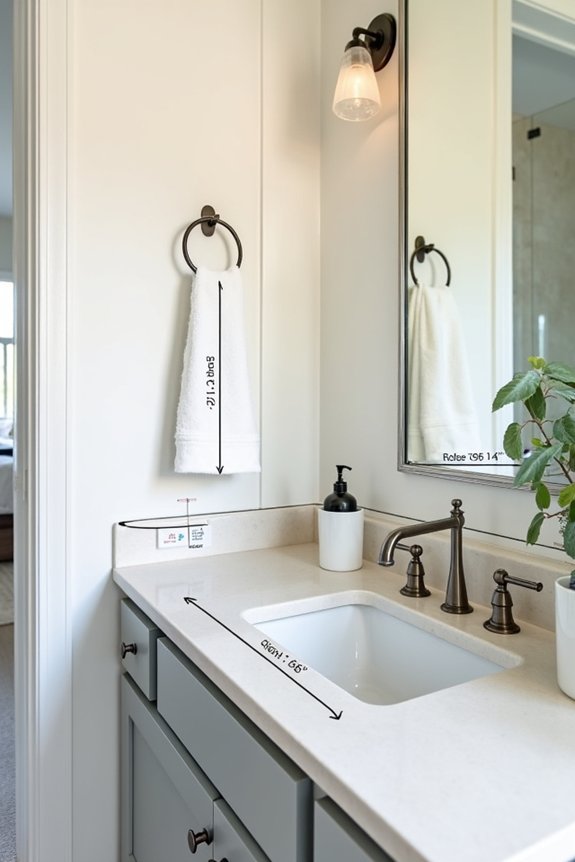
Ever wonder why some bathrooms just *feel* right while others leave you reaching or stooping awkwardly? I’ve learned that standard heights matter. Your toilet paper holder should sit 26 inches from the finished floor—right at your hip level when seated. The towel bar works best at 42–48 inches, giving you easy access without stretching too far. Your soap dispenser belongs 40–48 inches up, aligned with sink height for natural arm positioning. Mirrors should center around 38–42 inches to match average eye level. These measurements aren’t random; they’re designed so you move comfortably through your daily routine. When accessories align with these heights, your bathroom becomes more functional. It’s about creating a space that works *with* your body, not against it.
Toilet Paper Holder Placement: 26 Inches and 8–12 Inches From the Rim
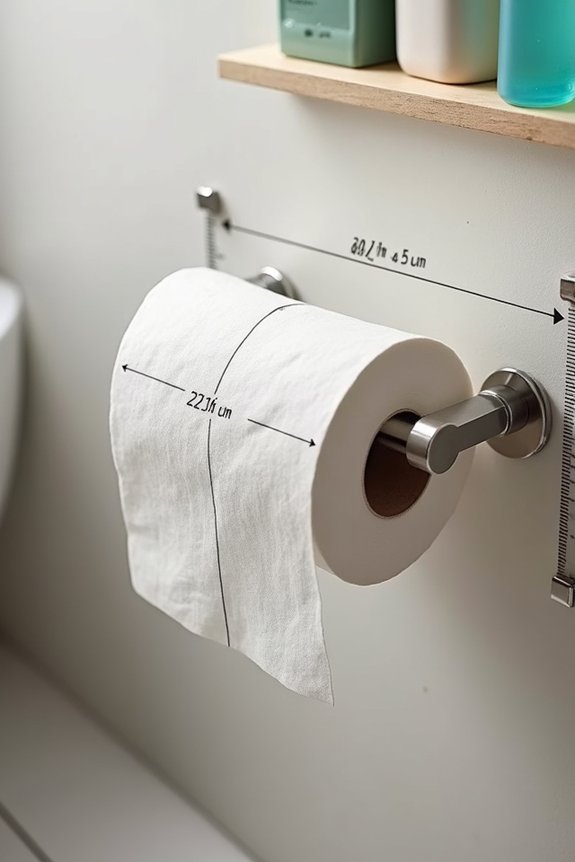
When I’m figuring out where to hang that toilet paper holder, I’ve got two key measurements to keep in mind: the standard 26 inches from the finished floor and the 8–12 inches from the front rim of the toilet seat. These measurements work together to create that optimal spot where you can comfortably reach the paper without awkwardly stretching or leaning. Getting these distances right affects how functional your bathroom actually feels, so let’s break down exactly how to nail this placement.
Standard Height Measurement
How’d you like to stop reaching awkwardly for toilet paper?
I’ve found that positioning your holder at 26 inches above the finished floor creates the perfect height for most people. It’s a practical improvement. You’ll want to mount it 8 to 12 inches from your toilet’s front rim—close enough for comfort, far enough to avoid awkwardness.
Here’s what makes this setup work:
| Measurement | Purpose |
|---|---|
| 26 inches high | Comfortable reach for most users |
| 8-12 inches out | Prevents stretching or fumbling |
| Same wall placement | Maintains accessibility |
| Towel bars nearby | Creates functional bathroom zones |
I recommend using a stud finder when mounting to keep your holder secure. This standard height works whether you’re installing traditional bars or exploring alternative solutions. Getting these measurements right improves your bathroom experience.
Distance From Toilet Rim
Why does the distance from your toilet matter so much? Getting this measurement right improves your bathroom experience. Here’s what I’ve learned: you’ll want your toilet paper holder positioned 8–12 inches from the front rim of your toilet seat. This distance prevents you from stretching awkwardly or reaching too close to the bowl. Think of it as the Goldilocks zone—not too near, not too far. Combined with that standard 26-inch height we discussed, this distance from toilet rim creates the ideal spot for comfortable access. Whether you’re mounting on the side wall or an adjacent wall, maintaining this 8–12 inch range keeps everything functional and accessible. Getting these measurements right makes daily life easier.
Towel Bars at 42–48 Inches: Why This Height Works
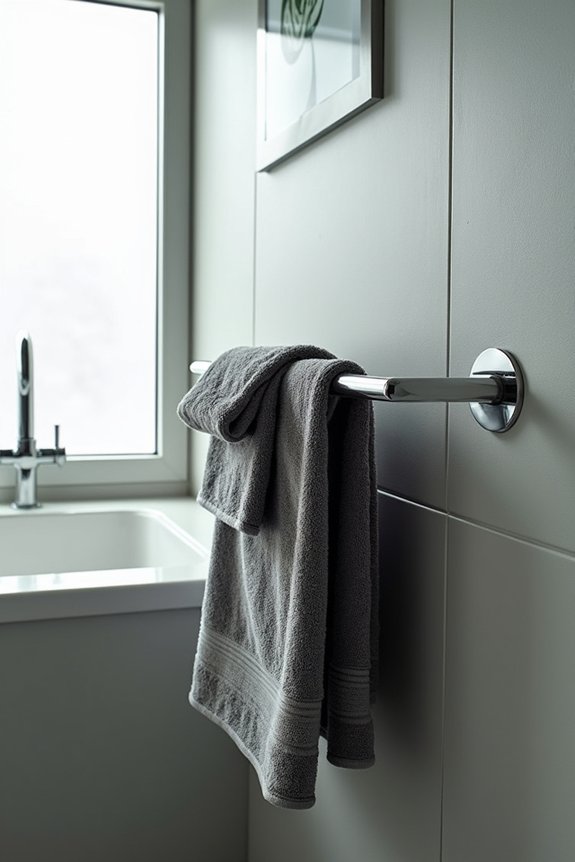
There’s a sweet spot in your bathroom where towel bars just feel right, and it’s somewhere between 42 and 48 inches from your finished floor. I’ve found this height works because it matches how your arm naturally reaches after washing your hands or face—no awkward stretching or bending required. At this elevation, your towel bars align with other bathroom accessories, creating a unified appearance. Your hand towels hang freely without touching the countertop or floor, staying clean and accessible. When you’re positioning multiple towel bars throughout your bathroom, maintaining this consistent height means everyone in your household experiences the same convenient access. This standard measurement isn’t arbitrary; it’s designed around how we actually use our bathrooms daily, making your space both functional and welcoming.
Towel Rings, Hooks, and Robe Storage: Height Differences Explained
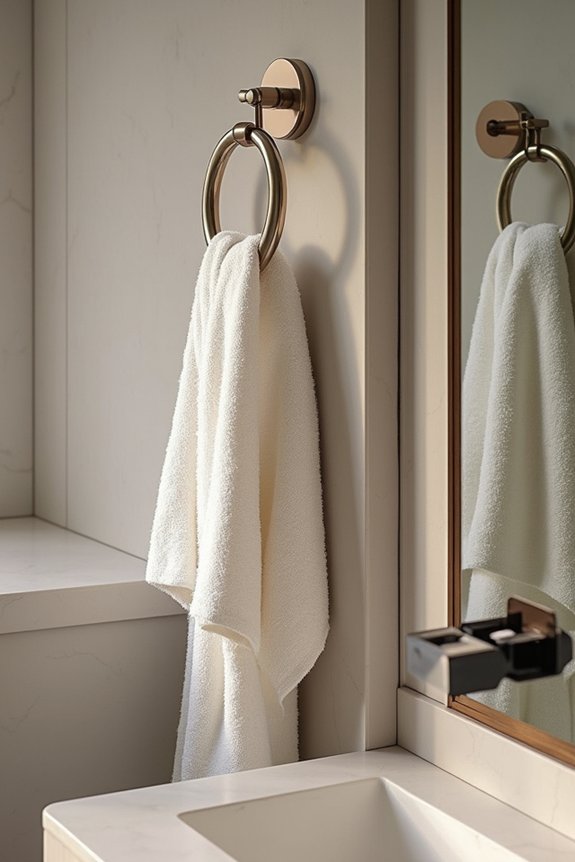
Once you’ve settled your towel bars at that comfortable 42-to-48-inch sweet spot, your bathroom needs more than one type of towel storage. Different accessories serve distinct purposes, and getting their heights right keeps your space organized and functional.
Here’s what works best:
- Towel Rings belong 20 inches above your vanity countertop, perfect for hand-drying access
- Towel Hooks fit nicely at 42-48 inches, matching your bar height for consistency
- Robe Hooks need 70 inches from the finished floor for convenient hanging
- Strategic placement keeps everything aligned with your sink area, reducing clutter
Spacing these accessories intentionally prevents that crowded feeling. When you position each piece thoughtfully, your bathroom becomes functional and practical for everyone who uses it.
Positioning Mirrors at Eye Level: The 38–42 Inch Rule
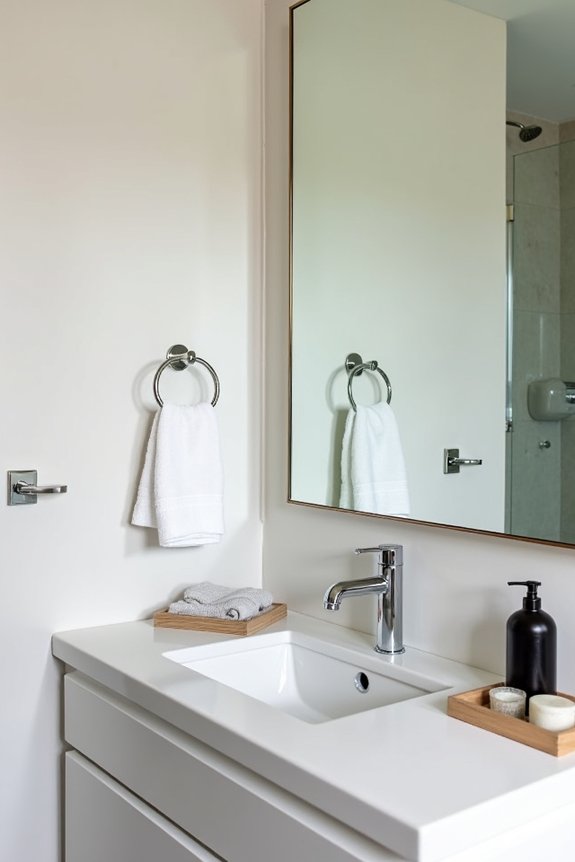
How many times have you stood at your bathroom sink and tilted your head up or down to see yourself properly in the mirror? You’re not alone. I’ve found that positioning your mirror at the right height improves your daily routine.
The sweet spot? Center your mirror between 38 and 42 inches above the finished floor. This eye level range works for most people standing at the vanity, eliminating awkward neck contortions. Think of it as the Goldilocks zone—not too high, not too low.
When you mount mirrors at this mirror height, you’re joining countless homeowners who’ve solved this common problem. Your eye level determines comfort, so measure twice before hanging. If you’ve got ceiling constraints, stay within that 38–42 inch band. You’ll notice a difference when everything aligns properly.
Soap Dispensers and Countertop Accessories at Sink Level
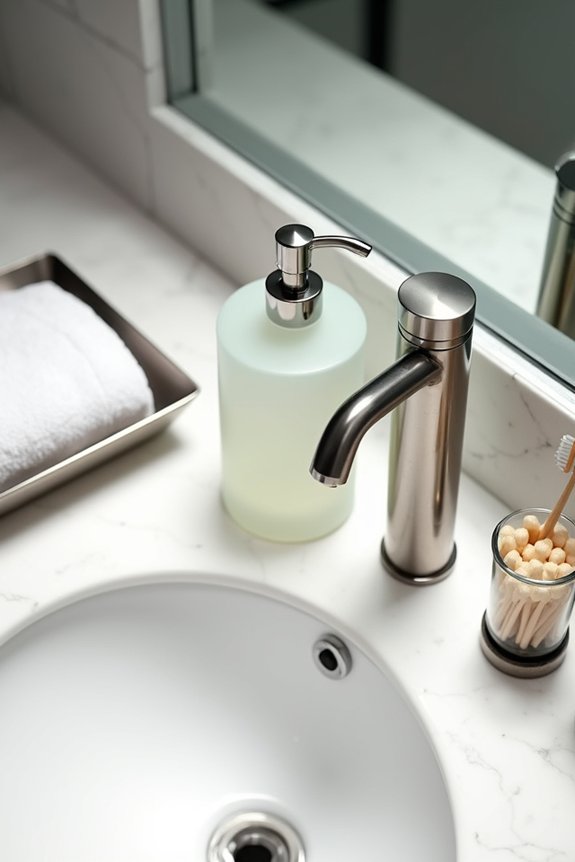
Mount your soap dispenser at 40–48 inches high on the wall near your sink to keep your countertop clear and position it at hand level. Choose a finish like Chrome or Brushed Nickel that resists bathroom moisture, and pair it with a matching pump soap set for a coordinated sink area.
Height Placement Standards
Where exactly should you mount that soap dispenser so you’re not awkwardly reaching or stooping every time you wash your hands?
Getting the height right matters for your daily routine. Here’s what works:
- Mount your soap dispenser 40–48 inches from the finished floor
- Position it at comfortable arm’s reach while standing at your vanity
- Keep all countertop accessories within easy grabbing distance
- Use the finished floor as your measurement baseline for consistency
Your shower head and soap dispenser should work together, creating an organized sink area that feels natural. When accessories sit at the right height, you’ll move through your morning routine without unnecessary bending or stretching. That’s when a bathroom works for you.
Countertop Organization Strategies
Once you’ve nailed the height of your soap dispenser, it’s time to think about what else lives on your countertop and how to arrange it all so nothing feels cramped or chaotic. I’d recommend using wall-mounted dispensers to keep your sink area tidy and accessible. Think of your countertop organization like a well-designed kitchen—everything needs its place. Multiple slots or openings prevent clutter from taking over. Choose finishes like Chrome or Brushed Nickel; they’re easier to clean and maintain sanitation around your soap dispenser and accessories. Make sure everything fits within available space without blocking your faucet operation. When you organize thoughtfully, you’re creating a bathroom that actually works for you, not against you.
Material and Finish Selection
What makes the difference between a bathroom that looks polished and one that feels like a mismatch of leftover parts? It’s choosing the right finish for your soap dispensers and countertop accessories.
Here’s what works:
- Select moisture-resistant finishes like Chrome, Satin, or Brushed Nickel that withstand bathroom humidity
- Coordinate your soap dispenser finish with other accessories for visual harmony
- Avoid cheap materials that tarnish or corrode from daily water exposure
- Match finishes across faucets, towel bars, and dispensers for consistency
When you invest in quality finishes, your bathroom looks deliberate and unified. These durable materials protect your accessories from moisture damage while creating the polished aesthetic you want. Your bathroom deserves accessories that last and look good doing it.
Shower Soap Dishes and Wall Shelving in Wet Zones
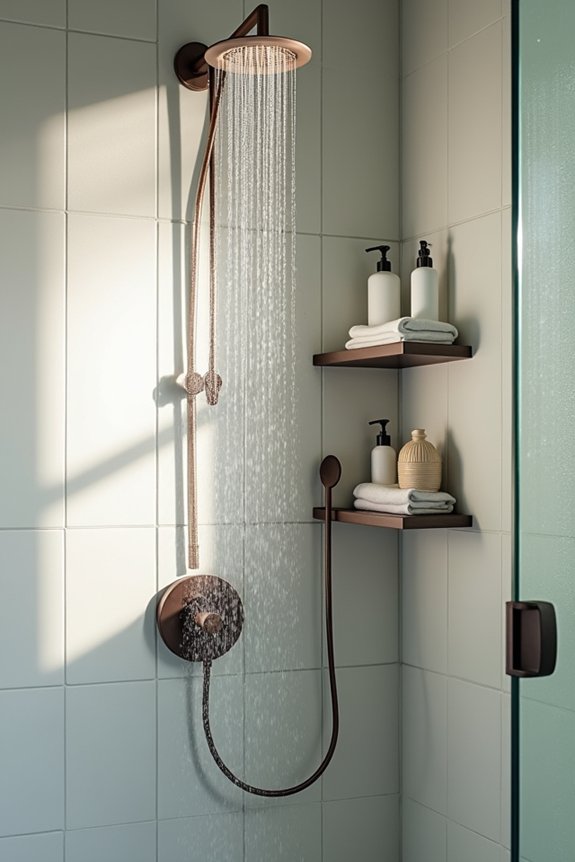
How you arrange your shower’s storage affects whether the space stays functional and organized or becomes cluttered. Install shower soap dishes at 44–54 inches from the floor—right where you can grab them without stretching awkwardly. Wall shelving works best when the bottom edge sits around 54 inches high, keeping your counter clear and items within easy reach.
Choose moisture-resistant materials like stainless steel or chrome for both soap dishes and shelves. They’ll handle humidity and frequent cleaning without deteriorating. Position everything to avoid clutter near the shower edge while allowing one-handed access. Make sure water drains away from you and any grab bars. This thoughtful placement keeps your shower organized and safe for daily use.
What to Check Before You Install: Studs, Plumbing, and Outlets
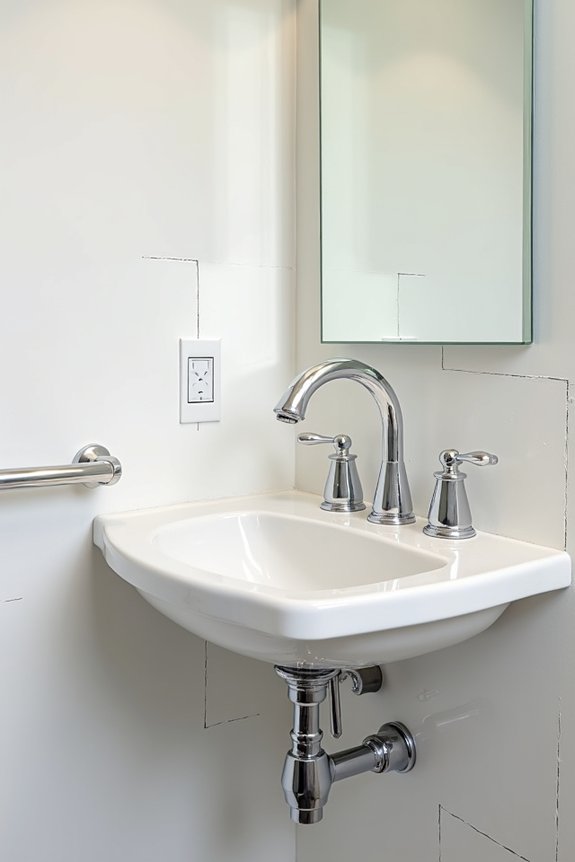
Before you pick up your drill and start making holes in your bathroom walls, you’ll want to find out what’s hiding behind that drywall—and I’m not just talking about dust.
I’ve learned the hard way that skipping this step leads to expensive mistakes. Here’s what you need to check:
- Locate studs using a stud finder to secure mounting for heavy items like towel bars
- Mark plumbing lines behind walls to avoid puncturing pipes during installation
- Identify electrical outlets to prevent drilling into live wiring
- Test wall integrity by gently tapping to confirm solid backing
Take time mapping out your bathroom’s hidden infrastructure. A quick inspection with basic tools saves you from costly repairs later. Verify before you drill, and your accessories will stay safely in place for years.
Fitting Accessories Into Your Counter Depth and Vanity Layout
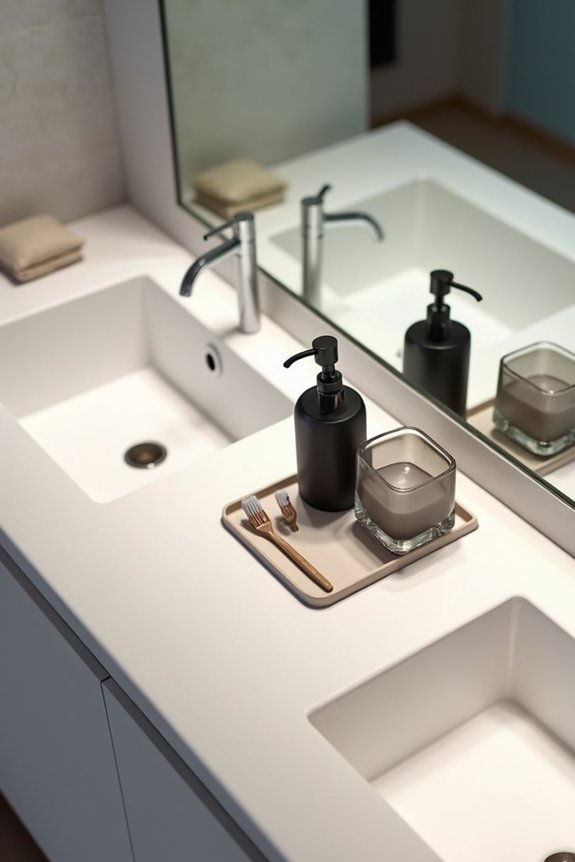
Once you’ve confirmed what’s behind your walls, it’s time to think strategically about how your accessories fit into the actual layout you’re working with. I keep my soap and toothbrush holder within a couple centimeters of the sink edge—this simple move keeps my counter clean and everything stays reachable without stretching. A wall-mounted soap dispenser positioned at 40–48 inches from the floor aligns perfectly with sink height, so I’m not awkwardly reaching or bending. Similarly, I place my mirror’s center at 38–42 inches to match eye level when standing at the vanity. Towel rings go around 20 inches above the countertop, while standard bars sit at 42–48 inches for easy grabbing. Wall-mounted shelves with bottoms near 54 inches preserve counter space while keeping essentials accessible.
Spacing Accessories So Your Bathroom Looks Balanced
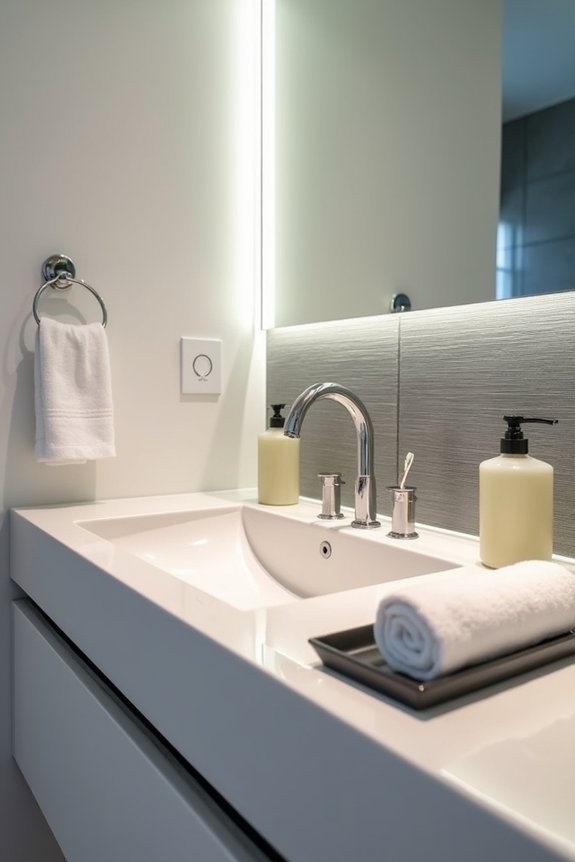
When you’re spacing your bathroom accessories, thinking about proportional distance really matters—you’ll want to spread items like your towel bar, mirror, and soap dispenser so they don’t crowd together and make your wall feel cluttered. Visual weight distribution is important here, meaning heavier or darker fixtures (like wall cabinets at 54 inches) should balance lighter touches like soap dishes, creating a pleasing rhythm as you move around the room. Taking a step back and imagining invisible lines connecting your accessories helps you achieve that balanced, deliberate look instead of a haphazard arrangement.
Proportional Distance Planning
Creating balance in your bathroom requires understanding a few key measurements that’ll make everything feel deliberate rather than random.
Spacing accessories proportionally creates a cohesive space where everything works together. Here’s what works:
- Position towel rails 20 inches above your vanity countertop for visual alignment
- Mount mirrors with centers at 38–42 inches to establish your eye-level anchor point
- Install soap dispensers at 40–48 inches, coordinating with nearby fixtures
- Space toilet paper holders 26 inches from the floor for comfortable access
When you align these heights thoughtfully, your bathroom develops rhythm. Each accessory supports the others, creating harmony that makes your space feel professionally designed. You’re not just hanging things randomly—you’re building deliberate relationships between every element.
Visual Weight Distribution
How do you keep your bathroom from feeling lopsided? Visual weight distribution matters more than you’d think. When I place a heavy mirror on one wall, I balance it by positioning lighter accessories—like small soap dishes—on the opposite side. Think of it like a seesaw: distribute items so neither side feels crowded.
I stagger my accessories at different heights between 20 and 70 inches from the floor, which prevents everything from clumping together. A large mirror at 38-42 inches pairs nicely with a towel ring at 20 inches above the vanity and a soap holder at 44-54 inches. This creates visual lines that feel balanced.
The result? Your bathroom looks purposefully arranged, not randomly cluttered.
Making Placements Work for Different Users and Reach Needs
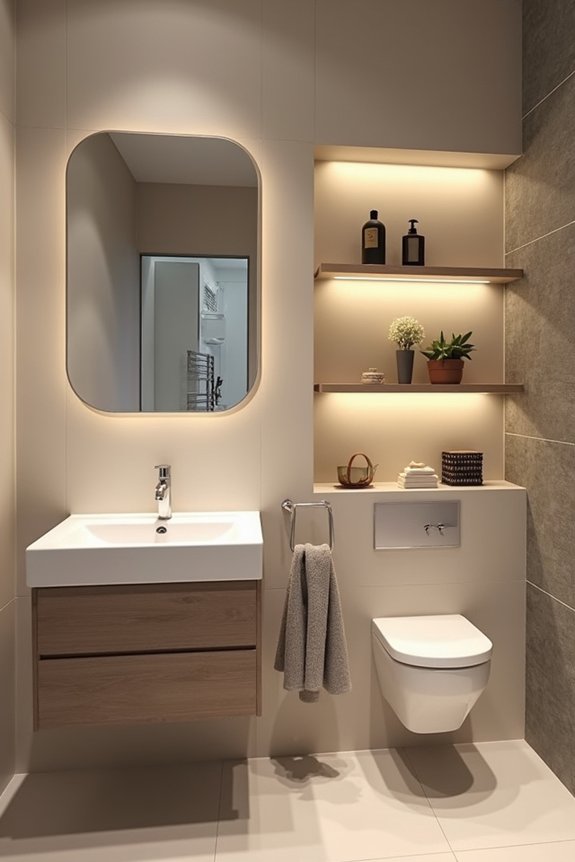
Why should one person’s ideal bathroom setup work for everyone else’s? It shouldn’t. I’ve learned that reach accessibility varies greatly depending on height, mobility, and daily habits. That’s why I think about multiple users when planning placements.
Consider these key adjustments:
- Install towel placement at varying heights—Towel Rings at 20 inches above counters and Towel Bars at 42–48 inches accommodate different reach abilities
- Position the Mirror’s center at 38–42 inches for average eye level, yet low enough for children and wheelchair users
- Mount Soap Dispensers at 40–48 inches, balancing convenience for most people
- Place Toilet Paper Holders at 26 inches, providing comfortable access for all body types
When I design bathrooms for families, I remember that accessibility isn’t compromise—it’s thoughtful planning. Everyone deserves a space that works naturally for them.
How Design Style Influences Placement Decisions
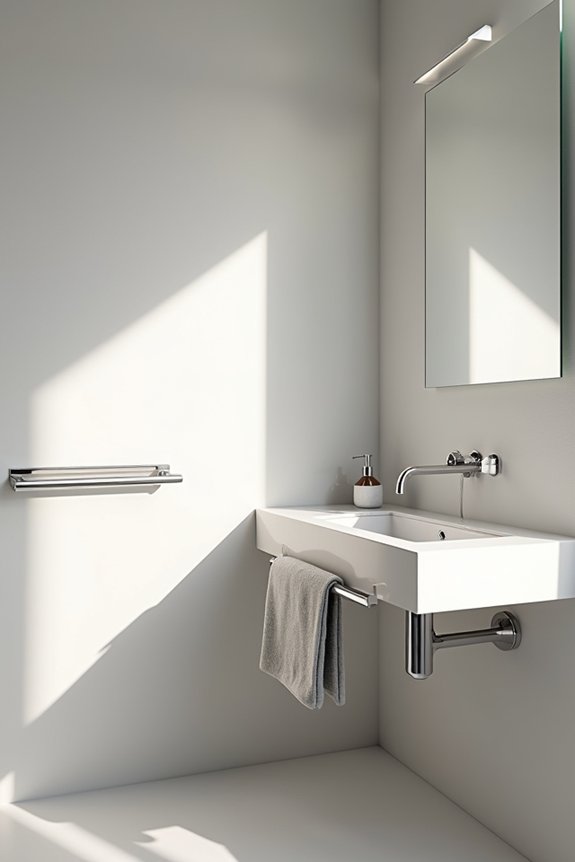
Your bathroom’s style—whether modern, classic, or somewhere in between—shapes where you’ll want to place each accessory, and selecting the right materials matters. If you’re going modern, you’ll probably gravitate toward sleek metal finishes like chrome or brushed nickel for your soap dispensers (mounted at 40-48 inches) and mirrors (centered at 38-42 inches), while classic styles call for more decorative brass or oil-rubbed bronze pieces that establish the room’s character. The key is matching these finishes with your existing fixtures so everything appears deliberately placed rather than randomly scattered around your walls.
Style-Specific Placement Strategies
When you’re designing your bathroom, the style you choose—whether it’s sleek modern, timeless classic, or minimalist Scandinavian—actually dictates where your accessories should go and what materials they’re made from.
Each style has its own personality:
- Modern designs favor metal wall-mounted pieces, like soap dispensers at 40–48 inches, creating clean, purposeful lines
- Classic bathrooms use chrome or brushed nickel finishes with practical touchpoints—think towel bars positioned at 42–48 inches
- Minimalist spaces demand multi-slot organizers placed near your sink to eliminate clutter and maximize simplicity
- Industrial schemes showcase stainless steel or chrome-plated shelving with sturdy wall-mounted storage around 54 inches
The key? Respecting your chosen style’s finish family makes everything work together cohesively, with each piece serving a specific purpose.
Material And Finish Coordination
Now that you’ve picked your style, it’s time to think about what your accessories are actually made of—because the materials and finishes you choose directly impact where they’ll work best in your bathroom.
I’d recommend sticking with durable, moisture-resistant finishes like Chrome, Satin, or Brushed Nickel. These metals handle humidity without corroding, making them ideal for wall-mounted accessories near your shower or sink. Here’s the thing: finish coordination doesn’t mean everything matches perfectly. You can confidently blend Chrome with Brushed Nickel to match your design style while keeping accessories strategically placed.
Water-resistant ceramics and glass work beautifully alongside metal pieces too. The key is aligning your chosen materials with placement zones. Your vanity deserves different considerations than high-humidity shower areas. When everything coordinates visually, your bathroom has a well-planned appearance.
Common Mistakes That Make Bathrooms Feel Cramped or Unbalanced
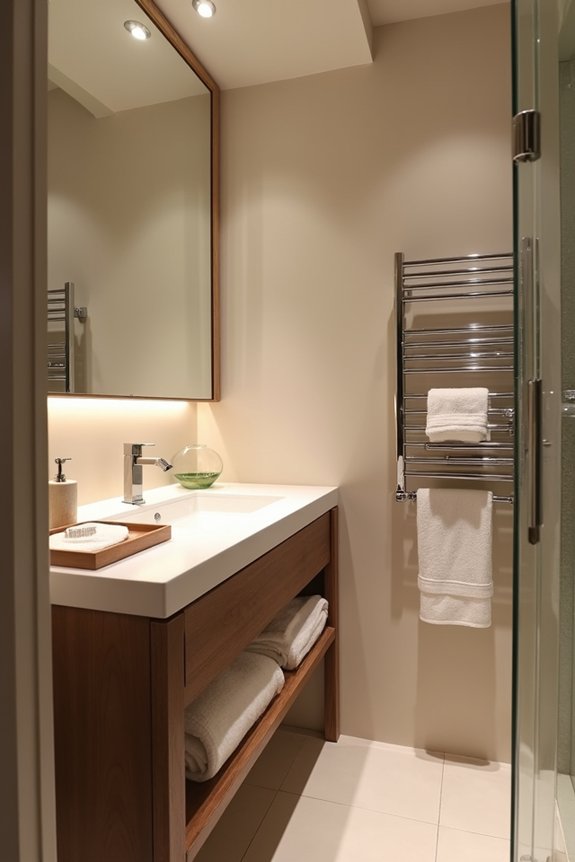
Have you ever walked into a bathroom and felt like everything’s fighting for space? I’ve learned that common placement mistakes create that cramped feeling we’re all trying to avoid.
Here’s what I’m talking about:
- Towel placement too high or low makes reaching awkward—standard rings should sit about 20 inches above your vanity
- Countertop clutter from soap dispensers and accessories that belong on walls instead
- Toilet paper holders positioned too far from the toilet, forcing you to stretch
- Mirror placement at uncomfortable heights, making the space feel visually off-balance
The solution? Think vertical. Mount your soap dispensers around 40–48 inches high, keep your mirror centered at eye level (38–42 inches), and use wall-mounted accessories everywhere possible. When you space things thoughtfully, your bathroom feels bigger and more welcoming. Your future self will appreciate the breathing room.
Your Placement Checklist: Tools, Fasteners, and Installation Order
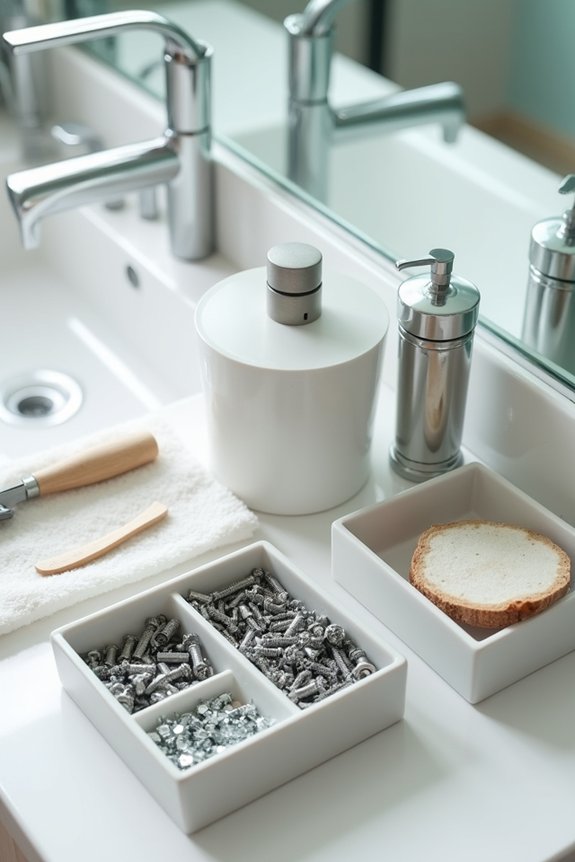
Before you grab your drill and start making holes in your walls, let’s make sure you’ve got everything lined up—because nothing’s worse than getting halfway through and realizing you’re missing the right fasteners or haven’t thought through your installation order.
Gather your tools first: a level, drill, stud finder, and the specific mounting hardware each accessory requires. I recommend installing your mirror next, since it anchors your layout. Then mount the soap dispenser, followed by towel bars and rings. Save the toilet paper holder for last—it’s the easiest adjustment if spacing feels off.
This installation order keeps you working logically across your bathroom while preventing mistakes. With bathroom accessories properly sequenced, you’ll feel confident tackling each step.