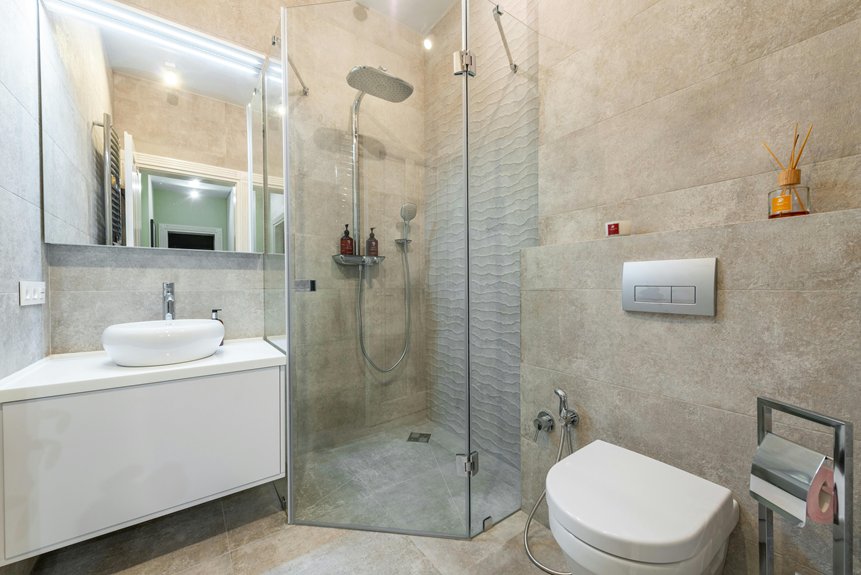
In 2026, you’re looking at anywhere from $3,000 for minor updates to $80,000 for a full overhaul—most folks spend around $26,000.
Your budget breaks down into three main categories: fixtures like vanities ($300–$5,000+), materials like tile ($1–$50 per sq ft), and labor (typically 40–60% of costs).
A practical approach? Get three contractor bids, plan a 20% cushion for unexpected expenses, and consider quality fixtures that’ll boost resale value.
The breakdown of where your money goes might catch you off guard.
[link-whisper-related-posts]2026 Bathroom Decorating Costs at a Glance
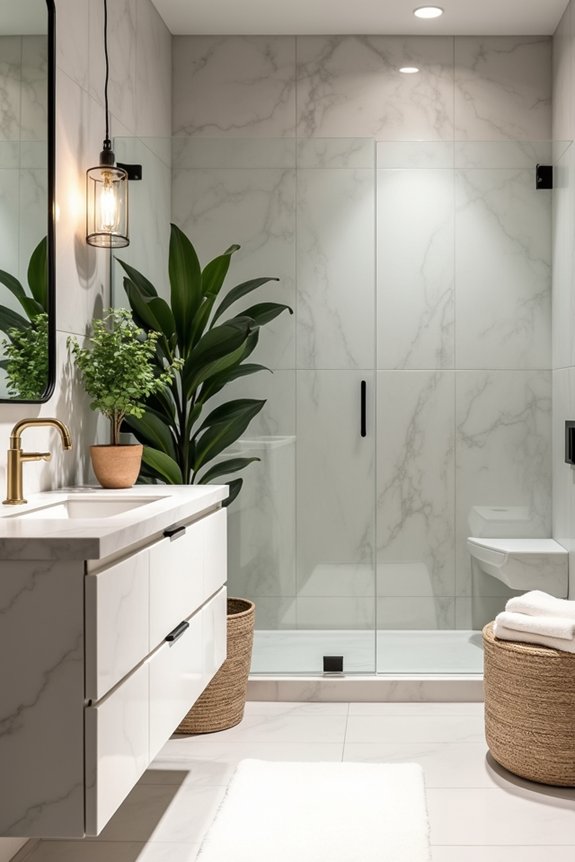
How much should you actually expect to spend when updating your bathroom? I’ll be honest—it depends on what you’re doing. A full bathroom remodeling project nationally runs anywhere from $3,000 to $80,000, with most folks spending around $26,000 in 2026. Your per-square-foot costs shift based on materials you choose: entry-level finishes cost $70–$100, mid-range runs $100–$175, and high-end hits $175–$250. The project scope matters significantly too. Minor cosmetic updates might cost just $3,000–$10,000, but if you’re moving plumbing or redesigning your layout, you’re looking at substantial expenses. I’d recommend planning a 20% cushion for surprises and grabbing three contractor estimates before committing.
What Actually Costs Money in a Bathroom Remodel?
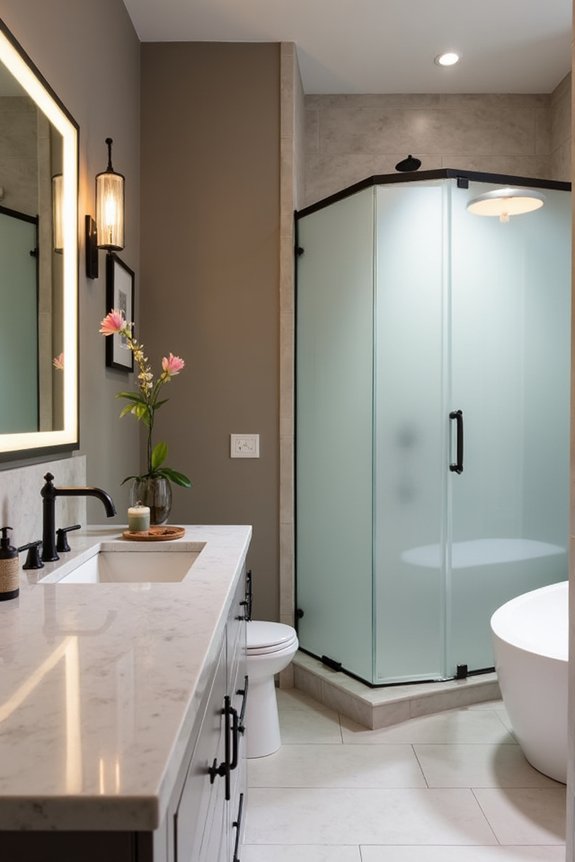
When you’re planning your bathroom refresh, I’ve found that three main areas eat up most of your budget: the fixtures and hardware you choose (like your vanity, faucet, and mirror), the materials covering your surfaces (think tile, paint, and countertops), and the labor costs to install everything properly. You’ll want to understand how each of these pieces affects your total spending, because picking a $200 faucet versus a $1,200 one, or choosing ceramic tile at $3 per square foot instead of marble at $40 per square foot, creates huge differences in your final bill. Let’s break down where your money actually goes so you can make smart choices that match both your vision and your budget.
Fixtures And Hardware Investments
The real money in a bathroom remodel sinks into the stuff you actually touch and use every day—your vanities, countertops, plumbing fixtures, tile, lighting, and hardware finishes.
| Category | Price Range | Impact |
|---|---|---|
| Vanities | $300–$5,000+ | Sets the tone |
| Plumbing Fixtures | $100–$800 each | Daily use essentials |
| Tile & Surfaces | $1–$50+ per sq ft | Visual anchor |
| Lighting Fixtures | $200–$3,000+ | Changes the room’s character |
| Hardware Finishes | Varies by material | Long-term maintenance |
Fixtures drive your budget significantly. A basic toilet costs around $150, but designer options climb fast. Your tile choice matters too—ceramic runs $1 per square foot, while natural stone hits $20–$50. Lighting deserves attention; oversized sculptural lamps add hundreds. Hardware finishes like unlacquered brass cost more upfront but reward you with distinct style and durability. These touchpoints define your bathroom’s personality and function.
Materials And Surface Selections
Where your bathroom budget really gets spent is on the surfaces you see and touch every single day—and I mean *really* see, since you’re staring at those walls while you brush your teeth. Tile costs range from $1–$15 per square foot for basic ceramic or porcelain, but natural stone jumps to $20–$50+ per square foot. That’s where costs accumulate quickly. I’d recommend investing in finishes that feel good: honed stone, plaster, and zellige create warmth that cool grays cannot match. Wall treatments like bold wallpapers and gallery elements give your space personality. Consider herringbone patterns or geometric mosaics as standout features. Mix textures thoughtfully—curved vanities in natural materials bring sculptural movement that makes your bathroom distinctly your own.
Labor And Installation Expenses
How much of your bathroom budget actually goes toward the people doing the work? I’d say it’s substantial—labor typically claims 40% to 60% of your total remodel costs. Contractors charge $50–$100 hourly, while plumbers and electricians run $75–$150, depending on your region and project complexity.
Moving plumbing lines, rewiring electricity, and building new shower enclosures drive expenses higher than simple cosmetic updates. Tile installation and flooring labor alone represent 10%–20% of total costs, especially with intricate layouts.
Here’s a practical option: you can reduce labor expenses by 20%–30% through a hybrid approach. Handle prep work and cleanup yourself, then hire professionals for plumbing, electrical, and tile work. You’ll preserve quality while keeping costs manageable—that’s smart budgeting.
Budget Breakdown: Small Updates vs. Full Renovations
When you’re staring at your bathroom mirror wondering if a fresh coat of paint could save the day, you’re probably asking yourself: what’s this actually going to cost me?
Here’s the reality: bathroom remodel costs vary widely depending on what you’re tackling. Small bathroom updates run $3,000–$10,000 for cosmetic refreshes. Mid-range projects hit $10,000–$25,000 with new vanities and flooring. Full remodels? Those climb to $25,000–$80,000+ when you’re gutting everything.
Your budget breakdown should include:
- Paint, hardware, and lighting updates
- New vanity and flooring installation
- Plumbing or footprint changes
- Labor and professional fees
- A 20% cushion for surprises
Budgeting and financing through home improvement loans or HELOCs keeps you covered. Understanding where your bathroom remodel cost lands helps you plan smartly and avoid money stress.
Materials by Price Point: Trending Finishes at Every Budget
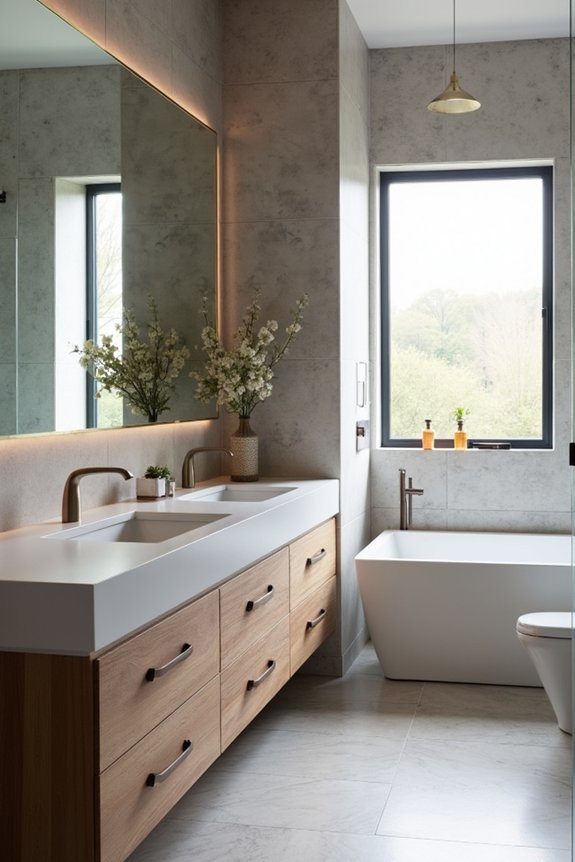
The key to bathroom design is spending wisely at whatever level fits your budget. Trending finishes are available at every price point, and you don’t need luxury materials to achieve style.
| Budget Level | Materials | Price Range | Style Impact |
|---|---|---|---|
| Entry-Level | Ceramic tile, basic vanities | $1–$15/sq ft | Clean, functional |
| Mid-Range | Porcelain tile, pre-fab vanities | $2,000–$5,000 | Modern, polished |
| High-End | Natural stone, mixed metals | $20–$50+/sq ft | Luxe, statement |
| Budget Remodel | Vinyl flooring, wallpaper | Variable | Trendy, warm |
Your bathroom materials choice shapes the entire vibe. Vinyl flooring mimics real wood at a lower cost, while warm brass fixtures enhance any bathroom materials selection. Whether you’re choosing ceramic or marble, these finishes help you create a space that works for you and your needs.
Where to Save Without Cutting Corners
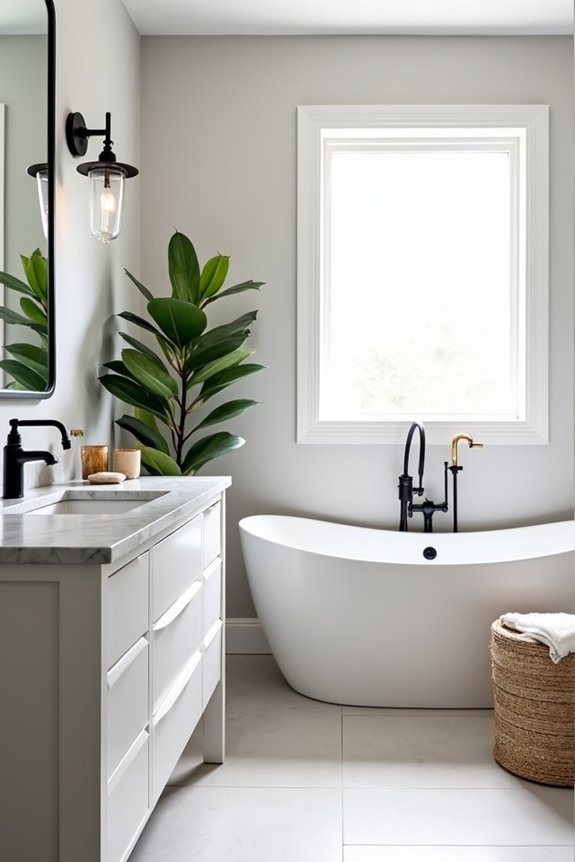
You don’t have to choose between a beautiful bathroom and staying within budget—strategic choices let you do both. Renovation costs drop markedly when you prioritize smartly. Here’s where to save:
- Handle demolition yourself: DIY savings reach 20–30% when you tackle prep work and painting
- Choose ceramic over natural stone: Tile costs range from $1–$15 per sf versus $20–$50+ for marble
- Skip plumbing electrical upgrades unless essential: Moving pipes and rewiring pushes costs way higher
- Select prefabricated vanities: Custom options cost significantly more than ready-made alternatives
- Focus on the wet area: A targeted shower remodel ($500–$20,000) beats full gut renovations
High-End Fixtures That Deliver ROI
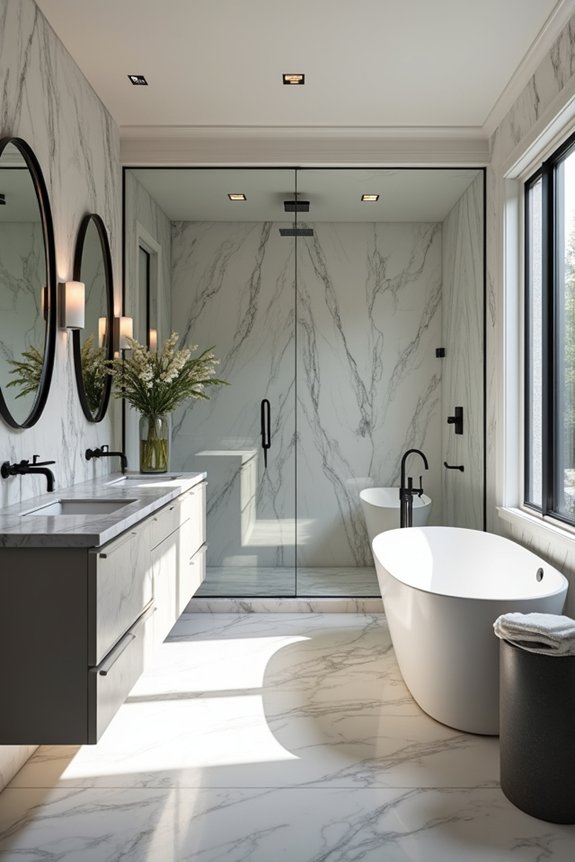
When you invest in premium fixtures like Moen faucets with warm metallics or Bertch vanities paired with engineered quartz countertops, you’re not just buying durability—you’re boosting your bathroom’s resale appeal and perceived luxury. I’ve found that quality materials and timeless finishes hold up better over time, meaning you’ll spend less on replacements and repairs down the line. These high-end choices improve how your space looks and functions, making them worth the upfront cost if you’re serious about long-term value.
Premium Fixture Investment Value
Investing in high-end bathroom fixtures isn’t just about making your space look fancy—it’s about making a smart choice that’ll pay dividends down the road. When you go premium, you’re getting more than aesthetics; you’re building long-term value into your home.
Here’s what sets premium fixtures apart:
- Moen systems with warm metals create tactile warmth that signals quality to potential buyers
- Bertch furniture-style vanities with engineered stone countertops deliver luxury and durability
- Mixed metal finishes reduce replacement frequency, saving you money over time
- Spa-like shower systems significantly boost resale appeal and perceived value
- Installation complexity reflects craftsmanship that justifies your investment
Yes, high-end finishes cost more upfront. But that installation complexity and material quality? They’re not expenses—they’re investments. You’re building long-term value into your bathroom while enjoying it today.
Quality Materials and Longevity
Why do some bathroom fixtures last decades while others start falling apart after five years? It comes down to quality materials and longevity. When you invest in premium fixtures like Moen with warm metal finishes and Bertch vanities, you’re choosing bathroom design that actually stands the test of time. These quality materials—think engineered stone countertops and unlacquered brass hardware—age gracefully instead of showing wear. Sure, the upfront cost is higher, but you’ll replace cheap fixtures repeatedly, while premium ones deliver genuine ROI. Bertch’s furniture-grade styling combines luxury appeal with practical storage, making your daily routine smoother. Upgrading to aged finishes means less maintenance headaches down the road. You’re not just decorating; you’re building something your future self will appreciate.
Financing Options for Your Remodel
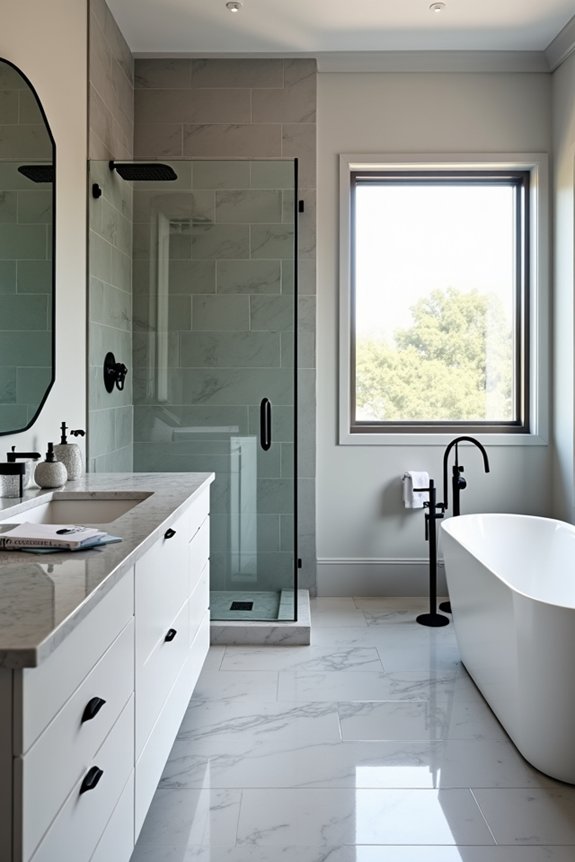
How’ll you actually pay for that bathroom makeover? The costs add up fast, and you need a solid plan. Let me walk you through your financing options so you can tackle this project with confidence.
Here’s what I’d consider:
- SoFi personal loans for large amounts without tapping home equity
- Home improvement loans ranging from $5,000 to $100,000 based on your scope
- HELOCs if you’ve built equity and want flexible access to funds
- Cash plus loans strategy—use savings first, then borrow for the remainder
- Build a budget cushion of 20% for those surprise expenses that come up
Get contractor bids first. They’ll clarify exactly what you’re financing. Avoid those high-interest credit cards. You have better options, and a smart financial approach to your bathroom project matters.
Timeline and Contingency Planning
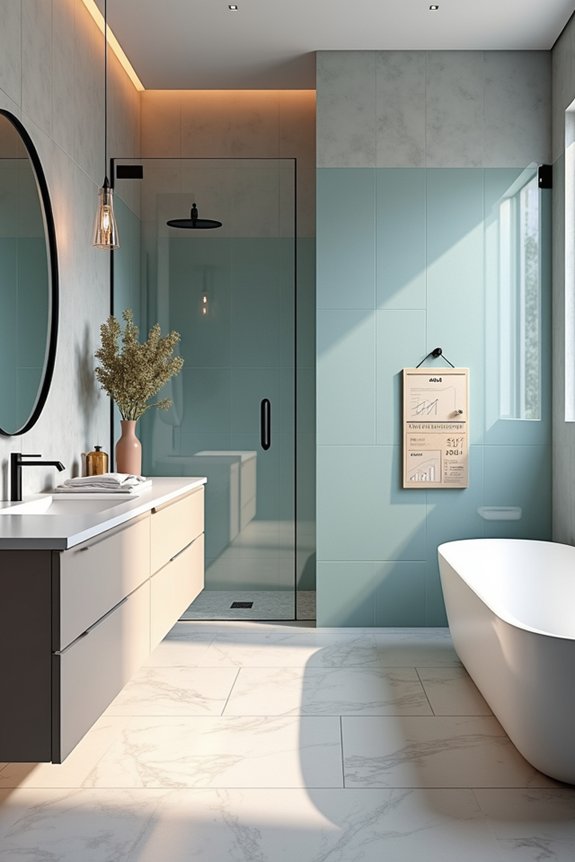
Once you’ve locked in your financing strategy, you’re ready to map out the actual timeline—because knowing how long your bathroom project takes matters just as much as knowing what it costs.
Knowing your bathroom project timeline matters as much as understanding the costs involved.
Minor refreshes typically run 2–3 weeks, while extensive remodels stretch 6–8 weeks. That’s construction time only. Add several weeks for design, bidding, and permits—especially if you’re moving plumbing or walls, which require inspections.
Here’s the part everyone overlooks: build a 20% contingency cushion into your budget. Unforeseen issues happen. Hidden water damage appears. Materials shift in price. That cushion protects you.
Before breaking ground, obtain three separate licensed contractor estimates. They’ll clarify your timeline and help you understand permit requirements for your location. Planning ahead reduces stress and builds confidence.
Next Steps: Getting Bids and Locking Your Budget
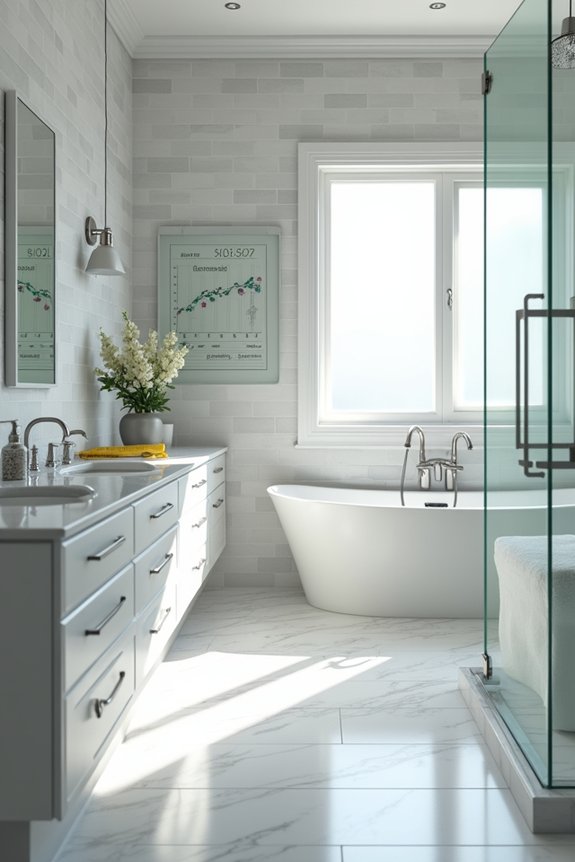
Ready to turn your vision into actual numbers? I’ll help you gather bids and lock down your budget with confidence.
Start by collecting at least three licensed contractor estimates. Here’s what I recommend:
- Request itemized bids separating materials, labor, permits, and fixtures
- Clarify your scope early—full remodels cost more than cosmetic updates
- Compare pricing across the $3,000–$80,000 range depending on your project size
- Add a 20% contingency buffer for surprises (we’ve all been there)
- Ask about financing options like home equity lines of credit
Once you’ve reviewed all bids, you’ll spot patterns in pricing. This transparency helps you confidently choose your contractor. You’re building something meaningful here—taking time now prevents budget stress later. Let’s make this bathroom project happen.